
US interest rate shock in 2026 are tightening loan approvals and increasing costs. Learn why banks are changing rules and what you must do now. Let’s talk about the topic – US Interest Rate Shock 2026
INTRO
Loan getting rejected again.
Credit card limit not increasing.
Your FICO score looks okay, but banks still hesitate.
This is happening to thousands of Americans right now.
Even with stable income and decent credit usage, approvals are slowing down, interest rates are rising, and financial pressure is building silently.
QUICK UPDATE BOX
What Changed:
Banks are tightening lending rules due to high interest rates and risk control
Who Is Affected:
Middle-class borrowers, first-time loan users, credit card applicants
What To Do Immediately:
Check your credit utilization, avoid new debt, and apply only with high-probability lenders
1. WHAT’S HAPPENING RIGHT NOW
Across the United States, something unusual is happening in the financial system.
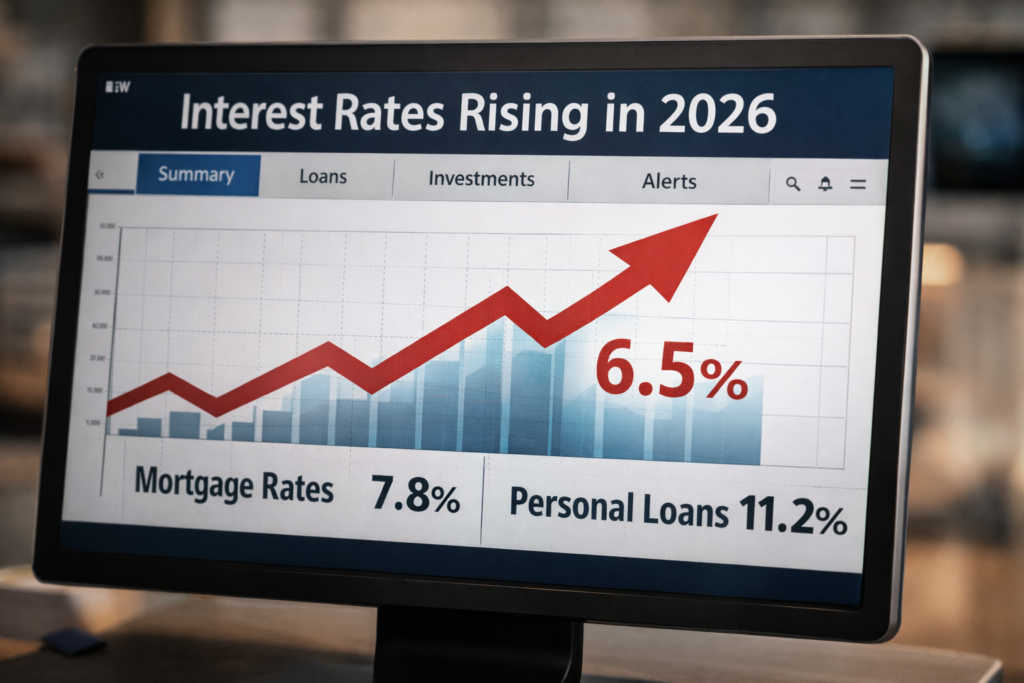
Interest rates have remained higher than expected into 2026. While many expected cuts, banks are behaving cautiously instead of relaxing.
Major financial institutions like Federal Reserve have kept monetary policy tight to control inflation. But here’s the twist:
Banks are not just charging higher interest.
They are reducing risk exposure quietly.
This means:
- Loan approvals are stricter
- Credit limits are lower
- Background checks are deeper
- Even small red flags are causing rejections
This is not being loudly advertised, but users are feeling it.
2. WHY THIS IS HAPPENING
To understand this, you need to think like a bank.
When interest rates rise:
- Borrowing becomes expensive
- Default risk increases
- Consumers struggle with repayments
Banks don’t want bad loans.
So instead of just increasing rates, they:
- Tighten approval conditions
- Prefer low-risk customers
- Reject borderline applicants
There’s also a psychological factor.
After economic uncertainty, lenders become conservative.
Even if your profile looks “okay,” it may not meet the new stricter internal standards.
3. WHO IS AFFECTED MOST
This shift is not affecting everyone equally.
Most impacted groups:
- First-time borrowers
- People with credit score 650–720
- Gig workers / irregular income earners
- High credit utilization users
- Recent loan applicants
If you fall into any of these, banks see you as moderate risk, and in 2026, moderate risk = rejection or higher interest.
4. REAL IMPACT ON USERS
This is where it becomes serious.
1. Loan rejection rates are rising
Even decent profiles are getting declined
2. Higher APR on approvals
You may get approved, but at a costly rate
3. Lower credit limits
Credit cards are offering smaller limits than before
4. Credit score pressure
Hard inquiries + rejection = score impact
5. Financial stress cycle
More rejections → more applications → worse profile
This is a silent financial trap many are entering right now.
5. WHAT YOU SHOULD DO NOW
If you don’t adjust, you’ll keep facing rejection.
Step 1: Lower your credit utilization
Keep it below 30%, ideally under 20%
Step 2: Avoid multiple applications
Each application signals risk
Step 3: Improve payment consistency
No missed payments, even small ones
Step 4: Choose targeted lenders
Don’t apply randomly — match your profile
Step 5: Wait strategically
Sometimes waiting 30–60 days improves approval chances
6. BEFORE VS AFTER (2024 vs 2026)
| Factor | Before (2024) | Now (2026) |
|---|---|---|
| Loan Approval | Easier | Stricter |
| Interest Rates | Moderate | High |
| Credit Card Limits | Higher | Lower |
| Risk Tolerance | Flexible | Conservative |
| Approval Speed | Fast | Slower |
7. REAL-LIFE EXAMPLE
John, a 29-year-old from Texas:
- Credit Score: 710
- Income: $4,500/month
- No major defaults
In 2024, he got approved instantly.
In 2026:
- Loan rejected twice
- Credit card approved with half limit
- Offered higher APR
Why?
Because banks now see him as borderline risk due to rate environment, not profile weakness.
8. MISTAKES TO AVOID
This is where most people mess up.
Mistake 1: Applying everywhere
This kills your credit profile
Mistake 2: Ignoring utilization
High usage = high risk signal
Mistake 3: Closing old accounts
Reduces credit history strength
Mistake 4: Taking high-interest offers blindly
You may trap yourself in long-term debt
Mistake 5: Panicking after rejection
Leads to worse decisions
9. EXPERT INSIGHTS (HIDDEN TRUTH)
Here’s what most blogs won’t tell you:
Banks don’t just look at your credit score anymore.
They evaluate:
- Spending behavior
- Income stability
- Risk patterns
- Economic exposure
This is called behavioral risk profiling.
So even if your score is good, your pattern may be risky.
That’s why approvals feel unpredictable.
10. FUTURE PREDICTION
What’s coming next?
Short term (3–6 months)
- Continued strict approvals
- No major relief in interest rates
Medium term (6–12 months)
- Slight relaxation if inflation stabilizes
- More digital risk assessment tools
Long term
- Personalized lending decisions
- AI-driven approvals
This means:
Your financial behavior matters more than ever.
11. HIDDEN BANKING RULES NO ONE TELLS YOU
This is where things get interesting.
Banks don’t publicly say this, but internally they follow risk layering models.
What does that mean?
They don’t reject you for one reason.
They stack multiple small risks:
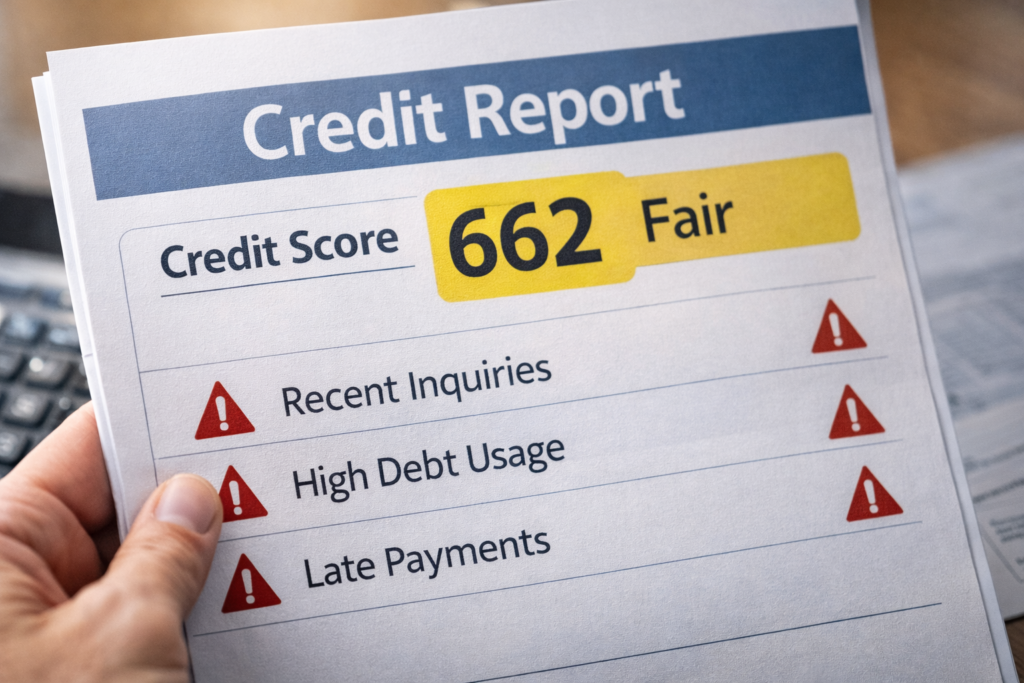
- Slightly high credit utilization
- Recent inquiry
- Medium income stability
- Rising interest rate environment
Individually = okay
Combined = rejection
New 2026 Shift:
Banks are now using “combined risk scoring” instead of single-metric approval.
That’s why people say:
“I don’t know why I got rejected.”
Because the system doesn’t show you the real reason.
12. THE “SILENT REJECTION” PATTERN IN 2026
Another dangerous trend:
Soft Declines (Hidden Rejections)
Instead of outright rejecting, banks:
- Offer lower loan amount
- Increase APR
- Delay approval
- Ask for more documents
This is still a rejection — just disguised.
Why banks do this:
- Maintain customer relationship
- Reduce complaint rates
- Control risk without saying “NO”
If you accept bad terms, banks win.
13. HOW INTEREST RATES ARE QUIETLY HURTING YOU
Most people think:
“Interest rate high hai toh EMI high hoga bas.”
Wrong.
Real Impact:
- Lower Eligibility
Higher rates reduce your borrowing capacity - Stricter Debt-to-Income Ratio (DTI)
Banks allow less debt compared to your income - Shorter Approval Window
Offers expire faster - More Documentation Checks
Banks verify everything deeply
So even if your salary is same, your loan power has reduced.
14. ADVANCED APPROVAL STRATEGY (VERY IMPORTANT)
If you want approval in 2026, stop acting like a normal applicant.
Start acting like a low-risk borrower.
Strategy Framework:
1. 30-Day Credit Reset Plan
- No new applications
- Pay down balances
- Keep utilization under 20%
2. Credit Behavior Optimization
- Use card but pay early (not just on due date)
- Avoid maxing out limits
3. Timing Your Application
Best time:
- After salary credit
- After bill payments
- When utilization is lowest
4. Choose Smart Lenders
Not all lenders are equal.
Some are stricter, some are flexible.
15. LENDER PSYCHOLOGY (GAME-CHANGING INSIGHT)
Understand this and you’ll beat 90% of applicants.
Banks ask one question:
“Will this person survive high interest pressure?”
Not:
“Does this person earn well?”
They check:
- Can you manage stress financially?
- Will you default if things get worse?
- Are you already stretched?
So your job is to look stable, not rich.

16. Why Your Good Credit Score Still Fails
Because:
- Score ≠ Behavior
- Income ≠ Stability
- Approval ≠ Guarantee
Banks now trust patterns over numbers.
17. ADVANCED COMPARISON (REAL IMPACT)
| Scenario | 2024 Outcome | 2026 Outcome |
|---|---|---|
| 700 Credit Score | Easy approval | Conditional approval |
| 30% Utilization | Acceptable | Risky |
| 2 Loan Applications | Normal | Negative signal |
| Stable Job | Enough | Needs consistency proof |
| Average Income | Fine | Borderline |
18. REAL CASE STUDY
Emily, 34, California:
- Credit Score: 725
- Income: $5,200/month
- Credit Utilization: 38%
What happened:
- Applied for personal loan → Rejected
- Applied for credit card → Low limit approval
What she did:
- Reduced utilization to 18%
- Waited 45 days
- Applied again
Result:
- Approved with better terms
Lesson:
Small changes = huge difference in 2026
19. If You’ve Faced This Recently, You’re Not Alone
- Loan rejected without clear reason
- Credit card limit reduced
- APR suddenly higher
- Bank asking extra documents
This is not your fault.
This is a system shift.
20. INTERNAL IDEAS
Use these on MaintainMarket:
- “How to Increase Credit Score Fast in USA”
- “Best Credit Cards for Low Credit Score USA”
- “Loan Rejection Reasons USA Explained”
This will boost topical authority.
FINAL ADDITION
The Biggest Truth of Lending:
Banks are not rejecting you because you are weak.
They are rejecting you because they are scared.
And in a scared system, only the most stable-looking borrowers win.
WHERE TO TAKE ACTION (USA ONLY)
If you’re planning to apply, start with trusted platforms:
- Discover → https://www.discover.com/credit-cards
- Capital One → https://www.capitalone.com/credit-cards
- Chase → https://creditcards.chase.com
- Bank of America → https://www.bankofamerica.com/credit-cards
Apply only after improving your profile to increase approval chances.
WHY MAINTAINMARKET IS DIFFERENT
Most websites give generic advice.
MaintainMarket focuses on:
- Real financial behavior insights
- Data-driven strategies
- Approval-focused guidance
- Practical steps that actually work
We don’t just explain finance.
We help you win in real situations.
FINAL ACTION PLAN
Do Today:
- Check credit utilization
- Review your credit report
- Pause unnecessary applications
Do This Week:
- Pay down balances
- Track spending behavior
- Shortlist 1–2 lenders only
Avoid:
- Multiple applications
- High-interest panic loans
- Ignoring credit signals
Check Before Applying:
- Your score trend
- Income consistency
- Debt-to-income ratio
FAQ – US Interest Rate Shock
Q1. Why are loan approvals harder in 2026?
Because high interest rates increase risk, so banks tighten lending criteria.
Q2. Is my credit score enough for approval?
No. Banks now evaluate behavior, not just score.
Q3. Will interest rates go down soon?
Not immediately. Stability may take months.
Q4. Should I apply for a loan now?
Only if your profile is strong and stable.
Q5. Why did my credit card limit decrease?
Banks are reducing exposure to manage risk.
Q6. How can I improve approval chances?
Lower utilization, maintain consistency, and apply selectively.
1 thought on “US Interest Rate Shock 2026: Why Banks Are Quietly Tightening Rules (And What It Means for You)”