Credit Utilization Ratio: How to Calculate It
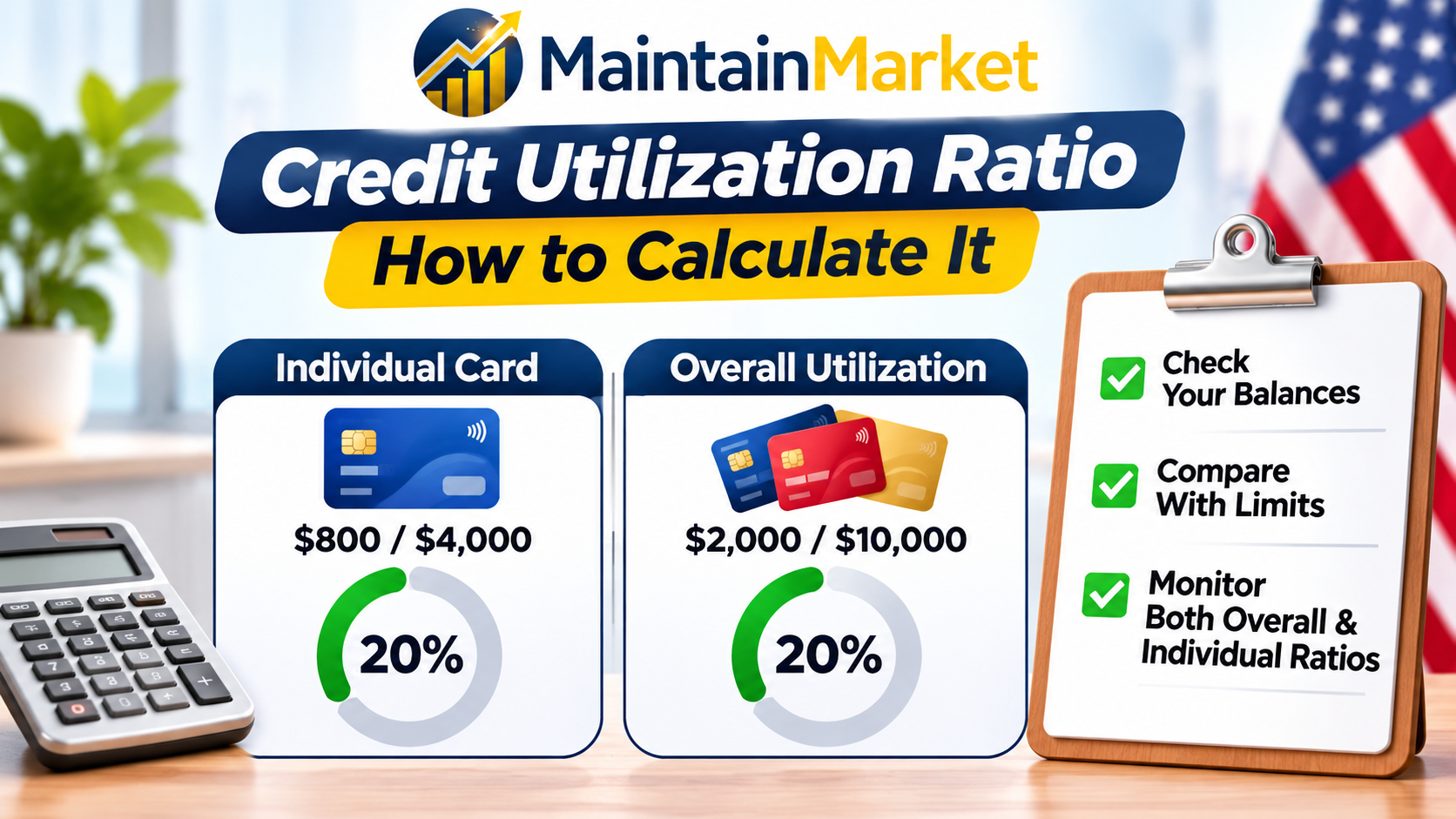
Credit utilization ratio infographic showing individual and overall credit card utilization calculations, $800 of $4,000 and $2,000 of $10,000, both resulting in 20%, with practical balance-monitoring tips | MaintainMarket

Your credit utilization ratio is an important factor that can influence your credit score in the United States. It measures how much of your available revolving credit you are using compared with your total credit limits. If your credit card balances are close to their limits, your credit score may be affected even when you make payments on time.


How to Lower Credit Utilization: 10 Practical Ways

How to lower credit utilization infographic showing a reduction from 60% to 30% through better credit card balance management.

Learning how to lower credit utilization can help you manage credit card debt and potentially improve your credit score. When your credit card balances are high compared with your available credit limits, your credit profile may be affected—even if you consistently make payments on time.

Debt Consolidation Loans in the USA: How They Work, Costs & Options

Debt Consoliadted Loan USA

Managing several debts at once can become expensive and stressful. Credit card balances, personal loans, medical bills, and other payments may leave you dealing with multiple interest rates, due dates, and monthly obligations.

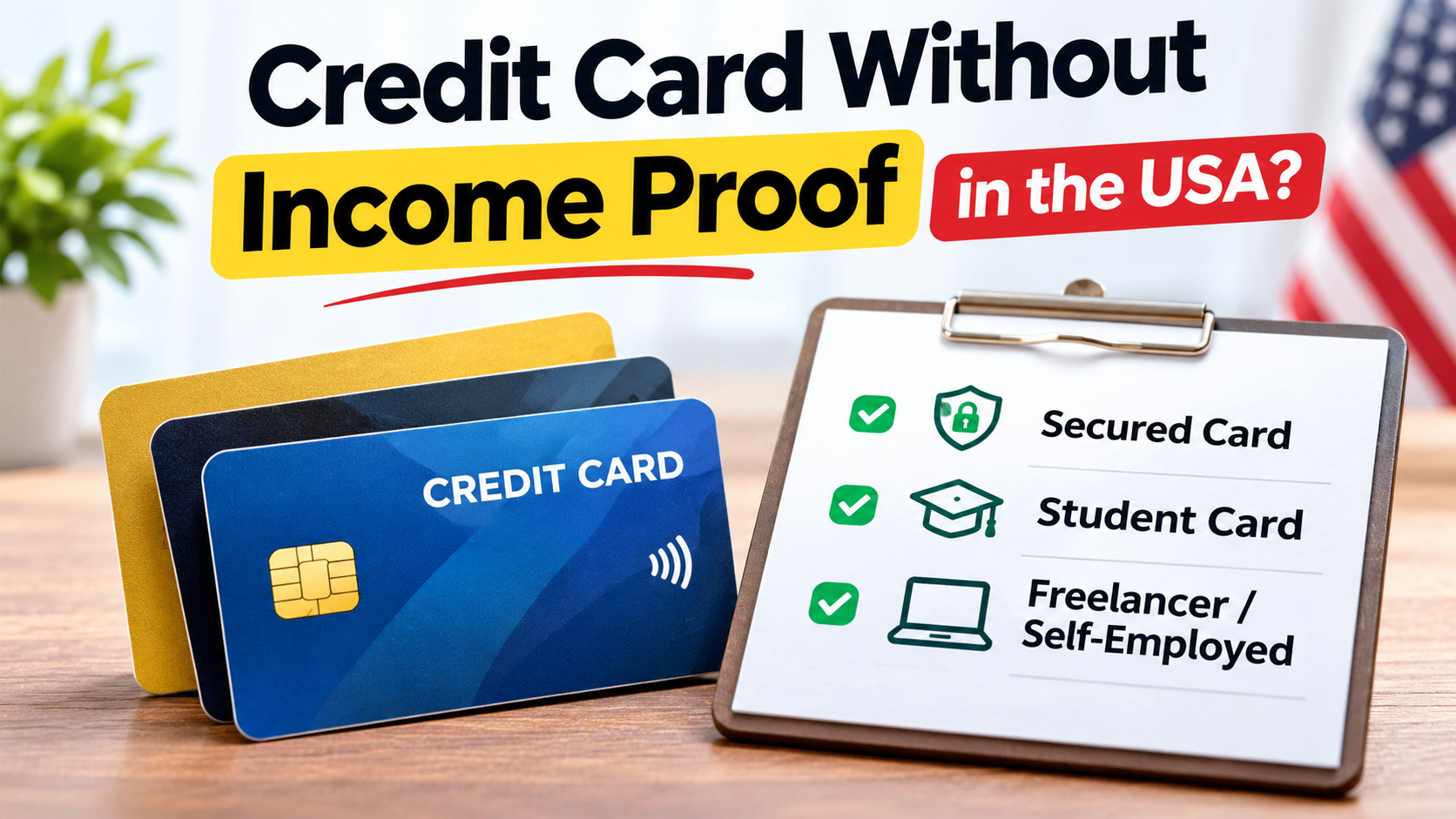
Can You Get a Credit Card Without Income Proof in the USA?

Credit card without income proof in the USA, illustrating secured credit cards, student cards, and options for freelancers and self-employed applicants.

Getting a credit card without income proof in the United States may be possible, even if you do not have traditional documents such as salary slips or employer-issued pay stubs. However, not having to upload income documents does not mean you can apply without having the financial ability to repay what you borrow.

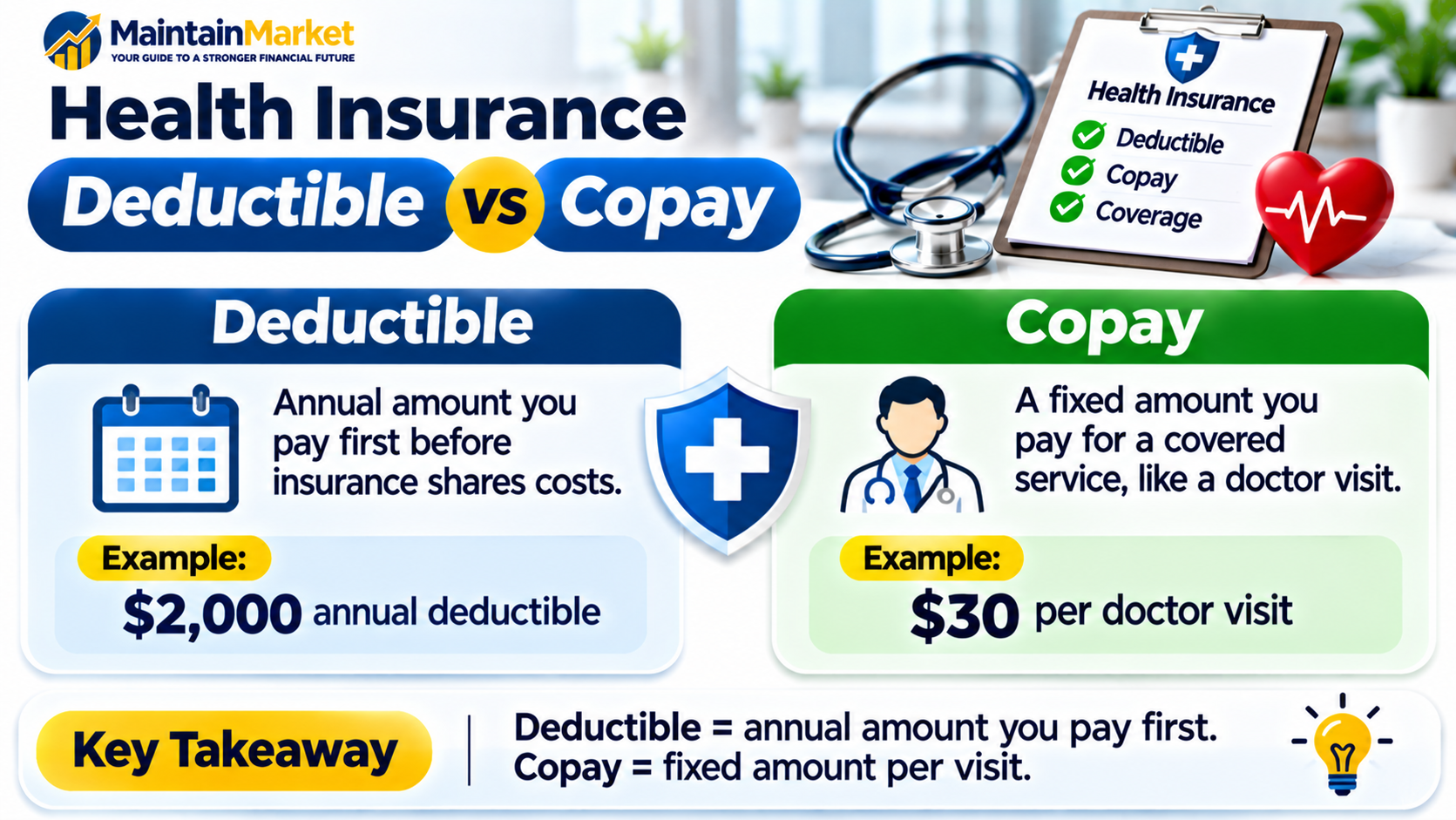
Health Insurance Deductible vs Copay: What’s the Difference?

Health insurance deductible vs copay

Understanding health insurance deductible vs copay is important when choosing a health insurance plan in the United States. Both affect how much you pay for medical care, but they work differently. A deductible is the amount you pay toward eligible covered medical expenses before your plan begins sharing certain costs.

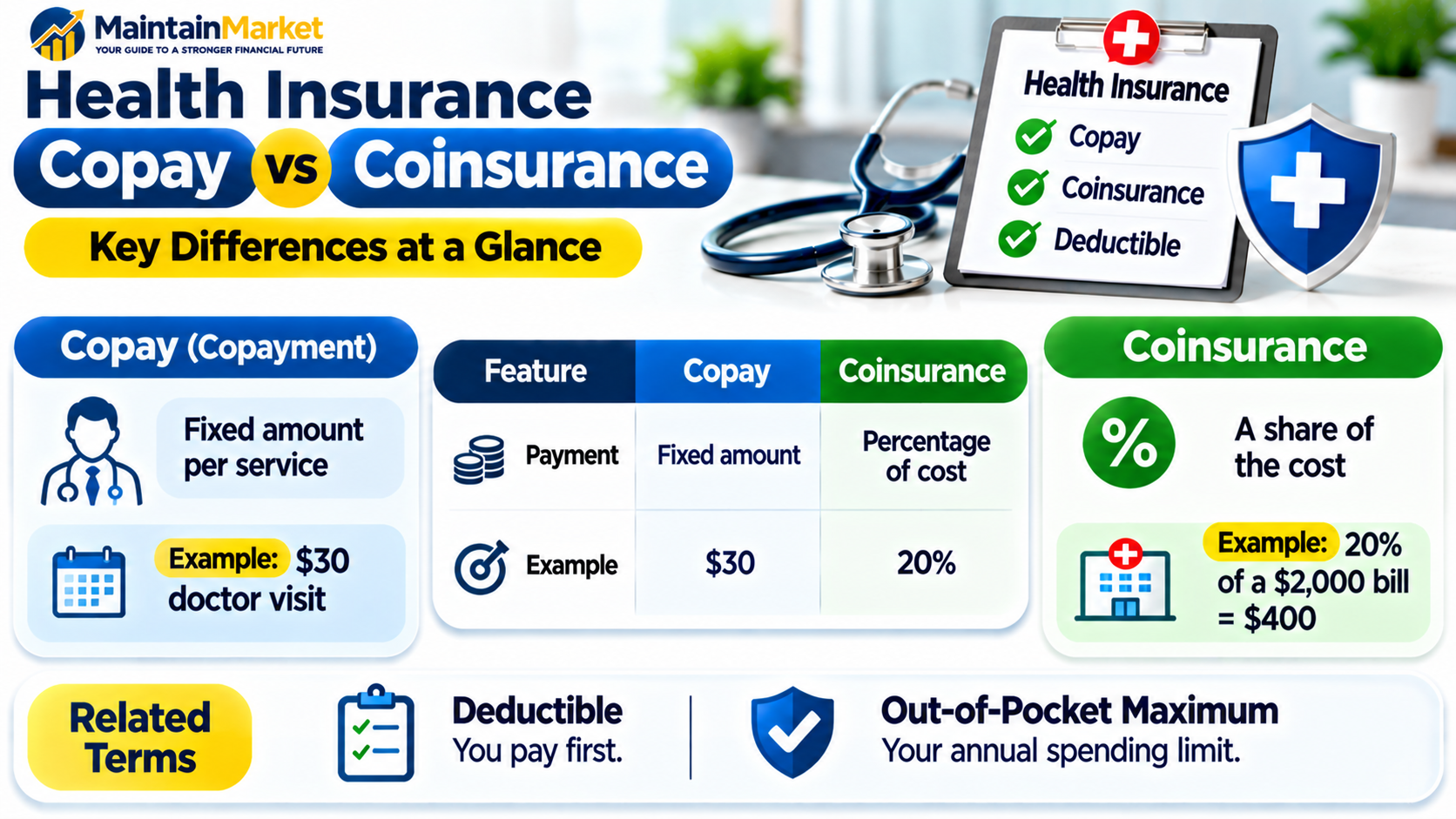
Health Insurance Copay vs Coinsurance: What’s the Difference?

Health insurance copay vs coinsurance

When choosing health insurance in the United States, understanding your out-of-pocket costs is just as important as comparing monthly premiums. Two terms you’ll frequently encounter are copay and coinsurance. Both determine how much you pay for medical services, but they work differently.

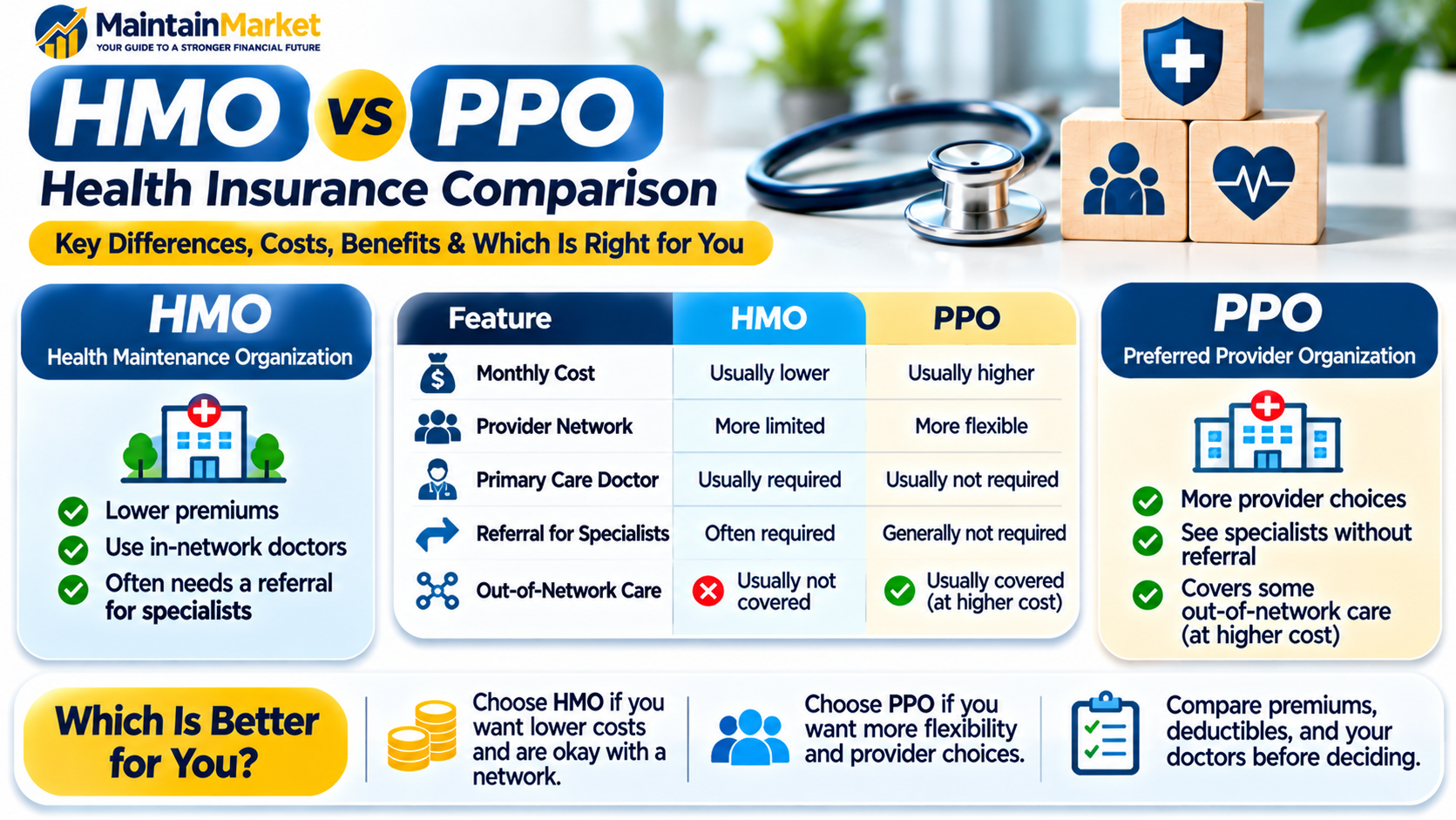
HMO vs PPO: What’s the Difference and Which Health Insurance Plan Is Better?

Hmo vs ppo health insurance comparison

Choosing health insurance can be confusing, especially when you have to decide between an HMO and a PPO plan. Both are common types of health insurance in the United States, but they differ in provider networks, referral requirements, out-of-network coverage, and costs.

Short Term Health Insurance: What It Covers, Costs, Benefits and Risks

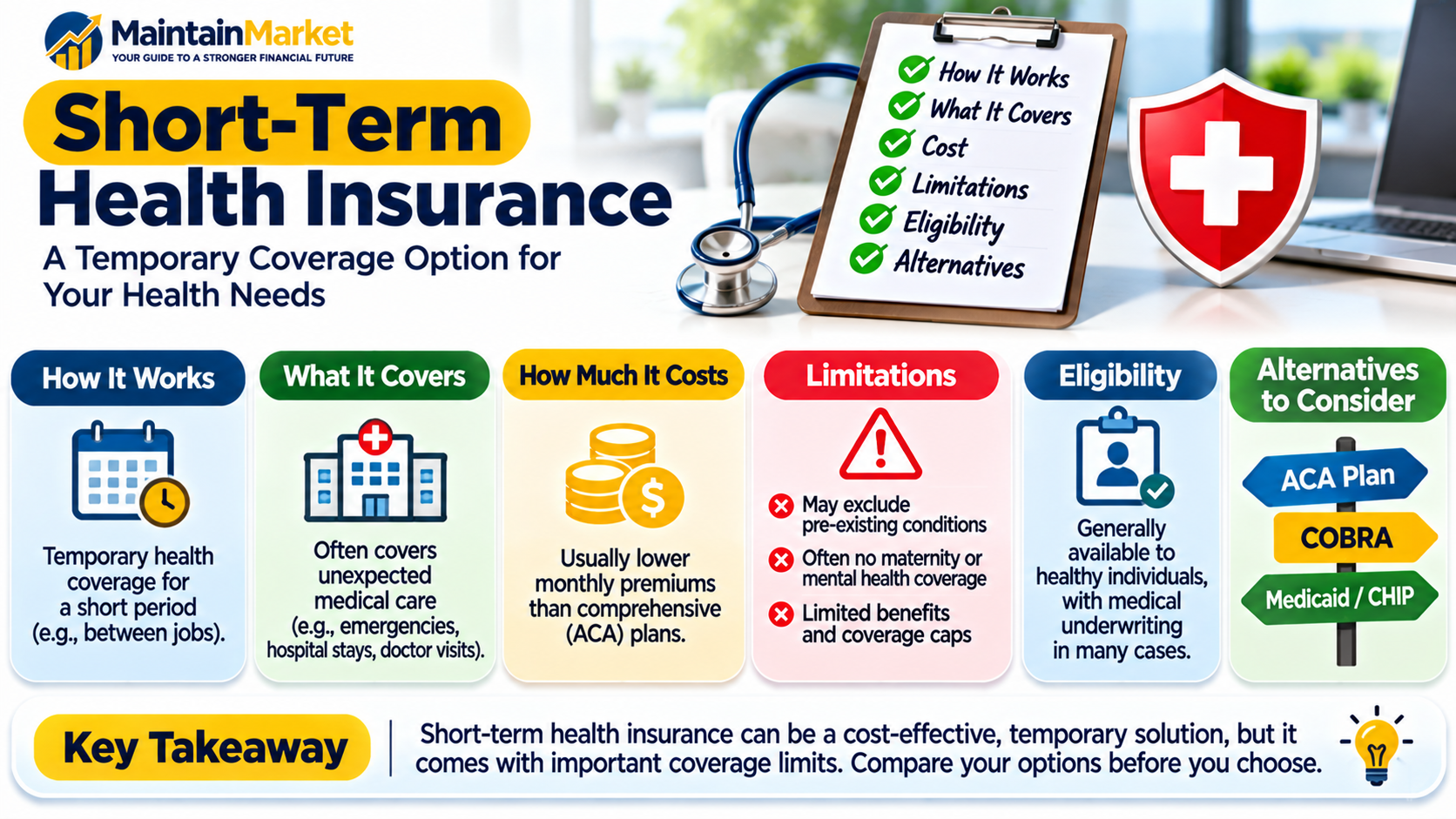
Short term health insurance guide

Looking for health insurance but don’t need a long-term policy? Short term health insurance may provide temporary medical coverage when you are between jobs, waiting for employer-sponsored insurance to begin, or experiencing a gap in your regular health coverage.

Does Homeowners Insurance Cover Storm Damage? What You Need to Know

Does homeowners insurance cover storm damage infographic showing coverage for wind, hail, lightning, fallen trees, and tornadoes, with flood damage and storm surge exclusions | Maintain Market

Severe weather can cause expensive damage to your home, from missing roof shingles and broken windows to fallen trees and water entering your property. If a storm damages your house, you may wonder: Does homeowners insurance cover storm damage?