
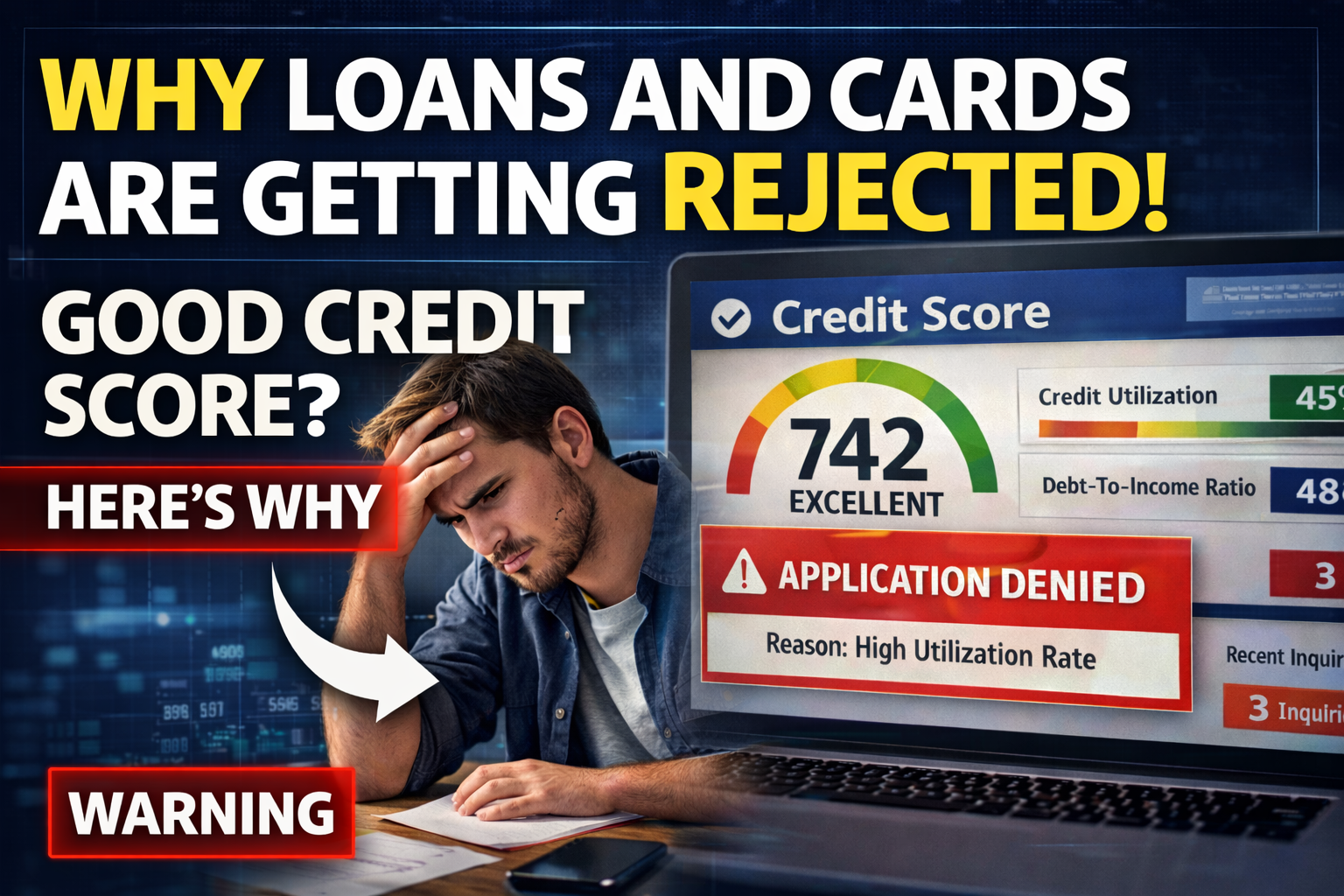
Why your loan or credit card is getting rejected in 2026 even with a good credit score. Learn the new rules, hidden checks, and what to do now.
Introduction
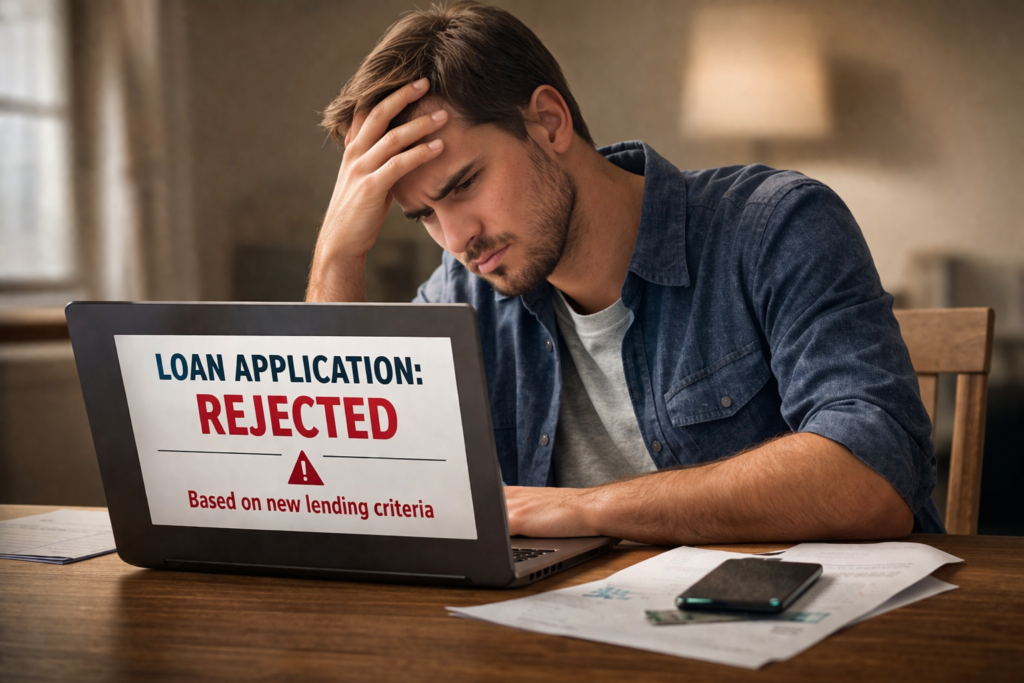
You have a good FICO score. You pay your bills on time. Still, your loan or credit card gets rejected.
It’s frustrating. You expected approval, but instead you get a decline or a high APR offer.
Across the US, borrowers with 700+ credit scores are facing unexpected denials due to stricter bank policies and hidden risk checks in 2026.
Quick Update Box
What changed:
Banks are using stricter underwriting, AI risk scoring, and income stability checks
Who is affected:
Good credit users, gig workers, high utilization users, new credit applicants
What to do immediately:
Lower utilization, avoid multiple applications, check income consistency, review full credit report
1. What’s Happening Right Now
In 2026, US banks and lenders have quietly tightened approval rules. This is not officially announced everywhere, but the impact is real.
Loan rejection rates have increased, especially for:
- Personal loans
- Credit cards with high limits
- Balance transfer cards
Even users with strong credit scores (680–780 range) are facing:
- Instant rejection
- Lower credit limits
- Higher interest rates
This shift is happening because lenders are preparing for potential economic slowdown, rising defaults, and unstable borrower behavior patterns.
In simple terms:
Your credit score alone is no longer enough.
2. Why This Is Happening (The Real System Behind It)
1. Banks Are Predicting Risk, Not Just Measuring It
Earlier, lenders focused on past behavior (credit score).
Now, they focus on future risk prediction using:
- Spending patterns
- Income consistency
- Job stability
- Debt growth trends
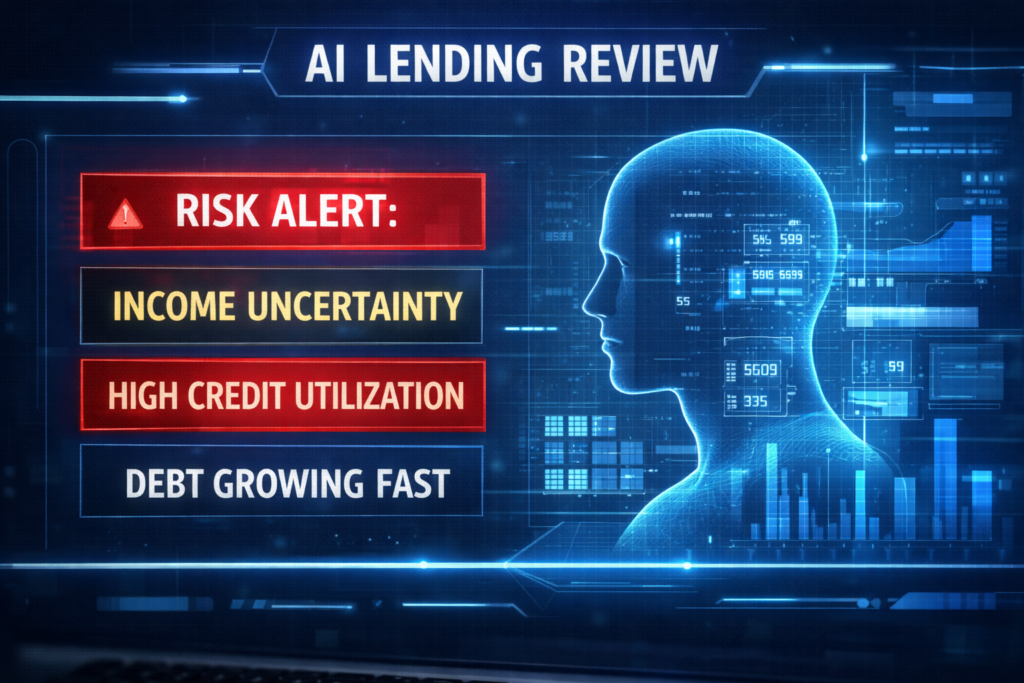
2. AI-Based Underwriting
Banks are using AI models that analyze:
- Transaction behavior
- Credit usage spikes
- Hidden financial stress signals
Even if your score is good, your behavior might signal risk.
3. Rising Credit Card Debt in the US
Americans are carrying record-high credit card balances.
This makes lenders cautious because:
- More debt = higher default risk
- High utilization = financial stress
4. Interest Rate Pressure
Higher interest rates mean:
- Loans are costlier
- Defaults are more likely
So banks are rejecting borderline applicants to reduce risk exposure.
3. Who Is Affected the Most
Not everyone is affected equally.
Most impacted groups:
1. Gig Workers / Freelancers
Irregular income = higher perceived risk
2. High Credit Utilization Users
Even 30–50% utilization can trigger rejection
3. Recent Credit Applicants
Multiple applications = “credit hungry” signal
4. Thin Credit File Users
Good score but low history = low trust
5. Users With Rising Debt Trend
Even if payments are on time
4. Real Impact on Users
This change is not small. It directly affects your money.
What users are experiencing:
- Loan rejection despite 720+ score
- Credit card approval with very low limits
- High APR (20–30%) even for good profiles
- Hard inquiries damaging credit further
Financial consequences:
- Delayed financial goals
- Increased borrowing costs
- More dependence on expensive credit
5. What You Should Do Now
If you want approval in 2026, you must adapt.
Step 1: Reduce Credit Utilization
Keep it below 30%, ideally below 20%
Step 2: Avoid Multiple Applications
Wait at least 3–6 months between applications
Step 3: Show Stable Income
Even side income should look consistent
Step 4: Pay More Than Minimum
Signals financial strength
Step 5: Check Your Full Credit Report
Not just score—look for:
- Errors
- Old collections
- Sudden balance spikes
6. Comparison Table (Before vs After 2026 Changes)
| Factor | Before 2026 | After 2026 |
|---|---|---|
| Credit Score Importance | High | Moderate |
| Income Stability | Less important | Very important |
| AI Risk Analysis | Limited | Strong |
| Approval Rate | Easier | Stricter |
| Credit Utilization Impact | Medium | High |
| Application Sensitivity | Low | High |
7. Real-Life Example
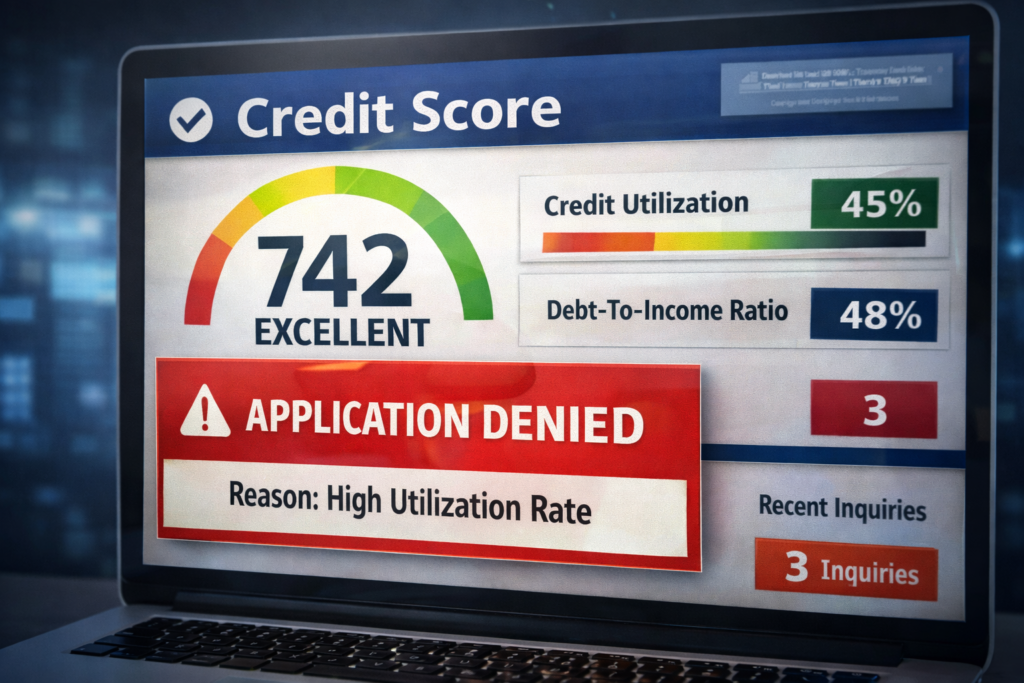
John, a 29-year-old from Texas:
- Credit Score: 742
- Income: $60,000
- Applied for a credit card
Result: Rejected
Why?
- 45% credit utilization
- 3 applications in last 2 months
- Increasing monthly balances
Even with a good score, the system flagged him as “rising risk.”
8. Mistakes to Avoid
1. Applying Multiple Times After Rejection
This worsens your profile
2. Ignoring Credit Utilization
Biggest hidden rejection factor
3. Relying Only on Credit Score
Score is just one piece
4. Closing Old Credit Cards
Reduces credit history
5. Taking Buy Now Pay Later Excessively
Signals hidden debt
9. Expert Insights (Hidden Truth)
Banks don’t reject you because of your past.
They reject you because of your future risk signal.
Key hidden factors:
- Are your balances increasing?
- Are you relying more on credit monthly?
- Is your income stable or fluctuating?
This is called behavioral risk scoring.
Even if your score is good, your behavior may not be.
10. Future Prediction
What will happen next:
- Even stricter approvals in 2026–2027
- More AI-based lending decisions
- Lower credit limits for new users
- Higher importance of income verification
In short:
Getting approved will become harder unless you optimize your financial profile.
11. Hidden Factors Banks Are Checking in 2026 (Most People Don’t Know)
These are the silent killers of your approval chances:
1. Banking Behavior (Not Just Credit Report)
Banks now analyze:
- How often your balance goes near zero
- Frequency of withdrawals
- Salary consistency
If your account looks unstable → rejection risk increases
2. Subscription Load & Monthly Obligations
Netflix, gym, SaaS tools, EMIs—everything matters now
Too many recurring payments =
👉 Less disposable income
👉 Higher perceived risk
3. Sudden Spending Spikes
If your spending jumps suddenly:
- Travel
- Electronics
- Large purchases
AI systems flag this as:
“Possible financial stress or lifestyle inflation”
4. Dormant Credit Accounts
If you have old credit cards but don’t use them:
- Banks can’t track behavior
- Your “active profile” becomes weak
5. Geographic Risk Profiling
Some US regions are currently flagged as higher default zones
Even if your profile is good:
👉 Location can slightly impact approval
12. Advanced Approval Strategy (Used by Smart Borrowers)
This is what actually works in 2026:
Strategy 1: Pre-Qualification First
Never apply directly
Use soft-check tools from:
- Discover
- Capital One
- Chase
👉 No hard inquiry
👉 Higher approval chances
Strategy 2: Credit Timing Optimization
Apply when:
- Utilization is low (right after bill payment)
- No recent inquiries (last 3 months clean)
Timing alone can increase approval chances by 20–30%
Strategy 3: Balance Distribution Trick
Instead of:
- 1 card = 80% usage
Do:
- 4 cards = 20% each
👉 Looks safer to lenders
Strategy 4: Increase “Financial Stability Signals”
Before applying:
- Keep bank balance stable for 60–90 days
- Avoid large withdrawals
- Show consistent deposits
13. Psychological Triggers Lenders Use (Very Important)
Banks don’t think like humans—they think like risk machines.
They look for patterns like:
- “Is this person becoming dependent on credit?”
- “Is their lifestyle growing faster than income?”
- “Are they preparing for financial stress?”
Even small signals like:
- Increasing minimum payments
- Frequent small borrowings
👉 Can reduce your approval chances
14. Soft Rejection vs Hard Rejection (Big Difference)
Soft Rejection (Hidden)
You are approved BUT:
- Very low limit
- Very high APR
👉 This is still a rejection in disguise
Hard Rejection
- Application declined
- Hard inquiry added
What it means:
If you’re getting:
- $500 limit on a good profile
👉 System doesn’t trust you fully
15. Debt-to-Income Ratio (DTI) – The Silent Killer
Most users ignore this completely.
Ideal DTI in 2026:
- Below 36% = Safe
- 36%–50% = Risky
- Above 50% = High rejection chances
Example:
Income: $5,000/month
Debt payments: $2,500
DTI = 50%
👉 Even with 750 score → possible rejection
16. New Credit Card Approval Trends in 2026
Trend 1: Lower Initial Limits
Banks are starting low and increasing later
Trend 2: Relationship-Based Approvals
If you already bank with them → higher chances
Trend 3: Tiered Risk Pricing
Same card, different APR based on risk
Trend 4: Income Verification Tightening
More lenders asking:
- Bank statements
- Employment proof
17. Red Flags That Instantly Reduce Approval Chances
Avoid these at all cost:
- Maxing out cards before applying
- Applying after missing even one payment
- Using cash advances
- Closing oldest account
- Sudden balance transfers
18. Smart Moves Before Applying (Checklist)
Use this checklist before any application:
✔ Credit utilization below 25%
✔ No new inquiries in last 60 days
✔ Stable income deposits
✔ No late payments (last 12 months)
✔ DTI below 40%
✔ Old accounts active
If you don’t meet at least 4–5 of these → wait
19. How Long This Situation Will Last
This is not temporary.
Expect:
- Strict approvals till at least 2027
- More AI control in lending
- Reduced easy credit access
This is a structural shift, not a short-term change
20. Final Insight (Most Important)
In 2026:
👉 Credit Score = Entry Ticket
👉 Behavior = Final Decision
If you understand this, you’ll win.
If not, you’ll keep getting rejected—even with a “good score.”
Where to Take Action (USA ONLY)
If you’re planning to apply, choose lenders strategically and check eligibility first:
- https://www.discover.com/credit-cards
- https://www.capitalone.com/credit-cards
- https://creditcards.chase.com
- https://www.bankofamerica.com/credit-cards
Apply only when your profile is strong. Avoid trial-and-error applications.
Why MaintainMarket is Different
Most blogs tell you “improve your credit score.”
MaintainMarket focuses on:
- Real approval strategies
- Data-backed insights
- Behavior-based optimization
- Practical steps that increase approval chances
We don’t just explain finance.
We help you get results.
Final Action Plan
What to do today:
- Check your credit report
- Reduce utilization below 30%
- Stop unnecessary applications
What to avoid:
- Multiple credit inquiries
- High revolving balances
- Ignoring income consistency
What to check before applying:
- Debt-to-income ratio
- Recent credit activity
- Bank-specific approval criteria
FAQ – Loan or credit card is getting rejected
Q1. Why am I getting rejected with a 700+ credit score?
Because lenders now evaluate income stability, utilization, and risk patterns beyond just score.
Q2. Does applying multiple times hurt approval chances?
Yes. Multiple inquiries signal financial stress and reduce approval probability.
Q3. What is the ideal credit utilization in 2026?
Below 30%, but under 20% is safer for approvals.
Q4. Are banks using AI for credit decisions?
Yes. Most major lenders use AI-based risk models for approvals.
Q5. Can income type affect loan approval?
Yes. Irregular income (freelancing/gig work) may reduce approval chances.
Q6. How long should I wait after a rejection?
At least 3–6 months before applying again.
People also searched for: Get Emergency Cash with Bad Credit in USA (Proven Hacks)
Also read: Emergency Loan Without Income Proof: How to Get Money Fast When Banks Say No
Get ₹20,000 Instant Loan Without CIBIL Score – Approval Even with Low Income