

Only have $100 to invest in 2026? Discover beginner-safe strategies using ETFs, Roth IRA, and low-risk assets in the US. Avoid common mistakes and grow your money smartly. Let’s talk about the article “Only $100? Here’s How Beginners Are Growing It Safely.
INTRODUCTION
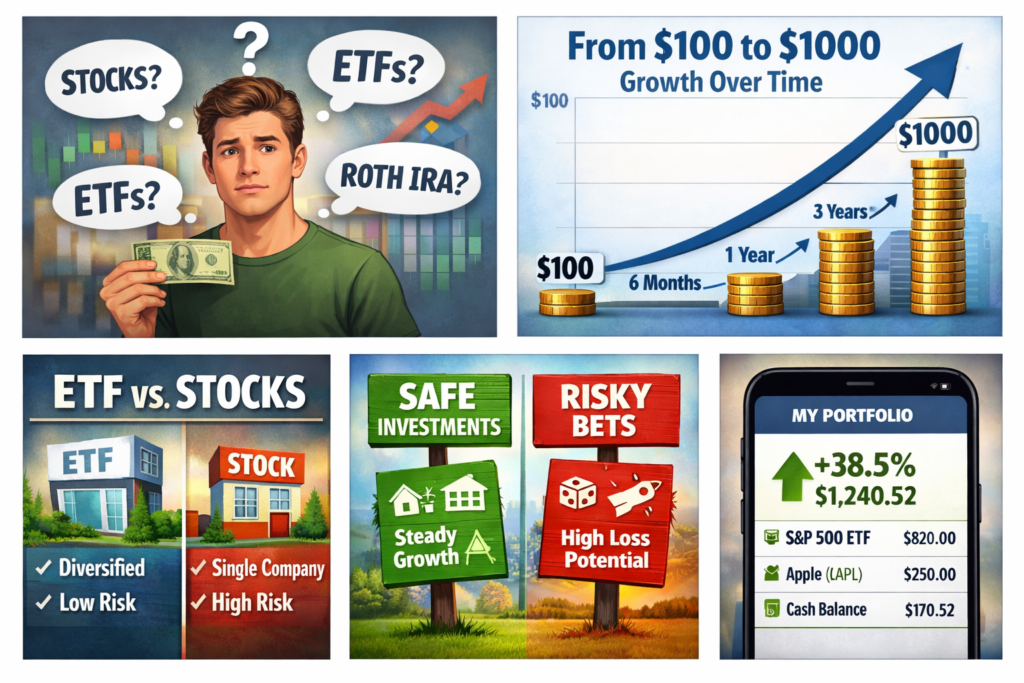
You’re confused—and honestly, that’s normal. Investing in the US feels overwhelming when you only have $100 and don’t want to lose it.
There are too many options—stocks, ETFs, Roth IRA, apps—and nobody clearly tells you what actually works.
Meanwhile, inflation is eating your savings, and you feel stuck between doing nothing and making a wrong move.
QUICK ANSWER BOX
👉 If you only have $100 in 2026:
- Start with low-cost ETFs (S&P 500 or Total Market)
- Use beginner-friendly platforms like Fidelity or Charles Schwab
- Avoid individual stocks initially
- Invest consistently (not one-time)
- Focus on compounding, not quick profits
Why Beginners Fail in US Investing
Most beginners don’t fail because they lack money—they fail because they lack clarity.
1. Too Many Choices
Stocks, crypto, options, ETFs—decision paralysis kicks in.
2. Fear of Losing Money
With just $100, even a small loss feels painful.
3. Wrong Influences
Social media promotes:
- Day trading
- Meme stocks
- Unrealistic returns
4. Ignoring Hidden Fees
Many beginners overlook:
- Expense ratios
- Fund management fees
- Spread costs
Best Investment Options (Realistic for $100)
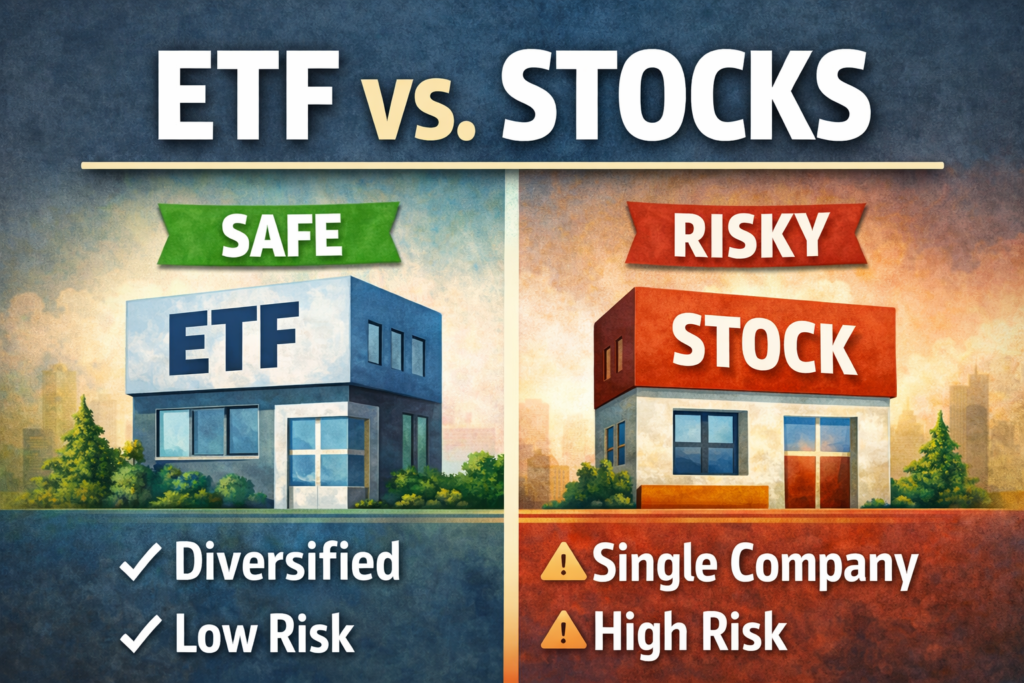
🟢 ETFs (Best Starting Point)
- Diversified
- Low cost
- Lower risk than individual stocks
Available through:
- Vanguard
- Fidelity
🟢 Fractional Shares
You can invest small amounts into big companies without buying a full share.
Platforms:
- Robinhood
- Charles Schwab
🟢 Roth IRA (Long-Term Advantage)
- Tax-free growth
- Ideal for long-term investors
Offered by:
- Fidelity
- Vanguard
🟢 Automated Investing (Robo-Advisors)
- Hands-off investing
- Automatically managed portfolio
Example:
- Wealthfront
Comparison Table
| Option | Risk Level | Beginner Friendly | Minimum | Best For |
|---|---|---|---|---|
| ETFs | Low | ⭐⭐⭐⭐⭐ | $1 | Long-term growth |
| Fractional Stocks | Medium | ⭐⭐⭐⭐ | $1 | Learning market |
| Roth IRA | Low | ⭐⭐⭐⭐⭐ | $0 | Tax-free investing |
| Robo Advisors | Low | ⭐⭐⭐⭐⭐ | $10 | Passive investing |
Step-by-Step Plan
Step 1: Choose a Platform
Start with:
- Fidelity
- Charles Schwab
Step 2: Open Your Account
- Complete verification
- Link your bank
Step 3: Invest Your First $100
Choose:
👉 S&P 500 ETF or Total Market ETF
Step 4: Add Monthly Contribution
Even $20–$50 per month builds long-term growth.
Step 5: Stay Consistent
Avoid frequent buying and selling. Let your investment grow over time.
Real Example (US Beginner)
John, 24 (Texas)
Started with $100
Approach:
- Invested in ETFs
- Added $50 monthly
After 4 years:
👉 ~$3,800 portfolio
👉 No active trading
Mistakes to Avoid
❌ Random Stock Picking
Without understanding the company
❌ Checking Daily
Leads to emotional decisions
❌ Following Hype
Trending assets can be risky
❌ Ignoring Costs
Fees reduce long-term gains
Expert Insight
Successful investing isn’t about timing the market—it’s about staying in the market.
- Emotional decisions reduce returns
- Consistency builds wealth
- Simplicity wins over complexity
Timeline Expectations
| Time | What to Expect |
|---|---|
| 3 Months | Minimal change |
| 6 Months | Small movement |
| 1 Year | 5–10% possible growth |
| 3 Years | Compounding begins |
| 5+ Years | Strong results |
Simple Strategy Breakdown
👉 70% → ETFs
👉 20% → Fractional stocks
👉 10% → Cash buffer
Where to Invest (USA Only)
Trusted platforms include:
- Vanguard
- Fidelity
- Charles Schwab
- Robinhood
- Wealthfront
Hidden Fees That Quietly Kill Your $100 Investment
Most beginners think, “It’s just $100, fees don’t matter.”
That’s exactly how returns get eaten.
Common Hidden Costs in US Investing:
- Expense Ratio (ETFs & Funds)
Even 0.5% vs 0.03% makes a big difference over years - Spread Cost (Buying/Selling)
You don’t see it—but you pay it - Account Fees (rare but exists)
👉 Platforms like Vanguard and Fidelity are known for low-cost investing.
What Happens If You Do NOTHING With $100?
Let’s be real.
If you keep $100 in savings:
- Inflation (US avg ~3–4%) reduces value
- In 5 years → your money loses purchasing power
👉 Investing isn’t about becoming rich fast
👉 It’s about not becoming poorer slowly
Beginner Confusion Breakdown (Why You Feel Stuck)
Most beginners face this loop:
- Search “best investment”
- See 100 options
- Watch YouTube videos
- Get more confused
- Do nothing
👉 Solution:
- Pick ONE strategy
- Ignore noise
- Start small
ETF vs Individual Stocks (Clarity Table)
| Factor | ETF | Individual Stocks |
|---|---|---|
| Risk | Low (diversified) | High (single company) |
| Effort | Very Low | High |
| Beginner Friendly | ⭐⭐⭐⭐⭐ | ⭐⭐ |
| Return Stability | Consistent | Unpredictable |
👉 For $100 → ETFs win. No debate.
What If Market Crashes After You Invest?
This is the biggest fear.
Reality:
- Market crashes are normal
- S&P 500 has always recovered historically
What you should do:
- Don’t sell
- Keep investing
- Lower prices = better opportunity
Power of Consistency (This Changes Everything)
Let’s compare:
| Strategy | Result After 5 Years |
|---|---|
| One-time $100 | Limited growth |
| $100 + $50/month | Strong compounding |
👉 Consistency beats amount.
Portfolio Example for Beginners ($100 Setup)
If you want simple structure:
- $70 → ETF (S&P 500)
- $20 → Fractional stock (learning purpose)
- $10 → Cash buffer
No overthinking. No complexity.
Biggest Lies Beginners Believe
❌ “I need more money to start”
No—you need discipline.
❌ “I’ll wait for perfect time”
There is no perfect time.
❌ “I’ll learn first, then invest”
You learn by investing.
Safe vs Risky Investment Mindset
| Safe Thinking | Risky Thinking |
|---|---|
| Long-term growth | Quick profit |
| Diversification | All money in one stock |
| Patience | Frequent trading |
| Consistency | Timing the market |
Should You Use Savings Account or Invest?
| Option | Growth | Risk | Best For |
|---|---|---|---|
| Savings Account | Low | None | Emergency fund |
| ETF Investing | Medium | Low | Wealth building |
👉 Use both—but don’t rely only on savings.
Reinvestment Strategy (Advanced but Simple)
When your investment grows:
👉 Don’t withdraw
👉 Reinvest gains
This creates:
- Compounding
- Faster growth
Psychological Hack (Very Powerful)
Stop checking your portfolio daily.
Instead:
👉 Check once a month
Why?
- Reduces panic
- Builds discipline
- Improves long-term returns
When Should You Increase Investment?
Once you’re comfortable:
- Increase from $50 → $100/month
- Add more ETFs
- Consider diversification
Red Flags to Avoid (Platforms & Investments)
Avoid:
- “Guaranteed returns”
- Unknown apps
- High-fee funds
- Overhyped investments
Stick to trusted platforms like:
- Fidelity
- Charles Schwab
Long-Term Vision (What $100 Can Become)
This is what matters:
- $100 today → habit building
- Habit → consistency
- Consistency → wealth
👉 It’s not about $100
👉 It’s about building an investor mindset
Extra CTA Section (Natural, Not Salesy)
If you’ve been waiting to start investing because of low money, this is your signal.
Start small. Stay consistent. Keep it simple.
That’s how beginners are actually growing money in 2026.
Why MaintainMarket is Different
Most finance blogs focus on theory and overwhelm beginners.
MaintainMarket focuses on:
- Clear, actionable steps
- Realistic beginner strategies
- Practical investing guidance
Final Action Plan
👉 Start with $100 in a low-cost ETF
👉 Use a reliable platform
👉 Add small monthly investments
👉 Avoid risky decisions
👉 Stay consistent for long-term growth
FAQs about Only $100? Here’s How Beginners Are Growing
Q1. Can I start investing with $100 in the US?
Yes, many platforms allow fractional investing.
Q2. Is $100 enough to grow wealth?
Yes, with consistency and time.
Q3. What is the safest option?
Diversified ETFs are considered safer.
Q4. Should beginners avoid stocks?
Individual stocks carry more risk than ETFs.
Q5. Is a Roth IRA worth it?
Yes, for long-term tax advantages.
Q6. How often should I invest?
Monthly contributions are effective.
Q7. Can I lose money?
Yes, but diversified investing reduces risk.
Also Read: 500 Credit Score? Get a Credit Card Approval in the USA
People also searched for: Credit Card Loan Without Income Proof