
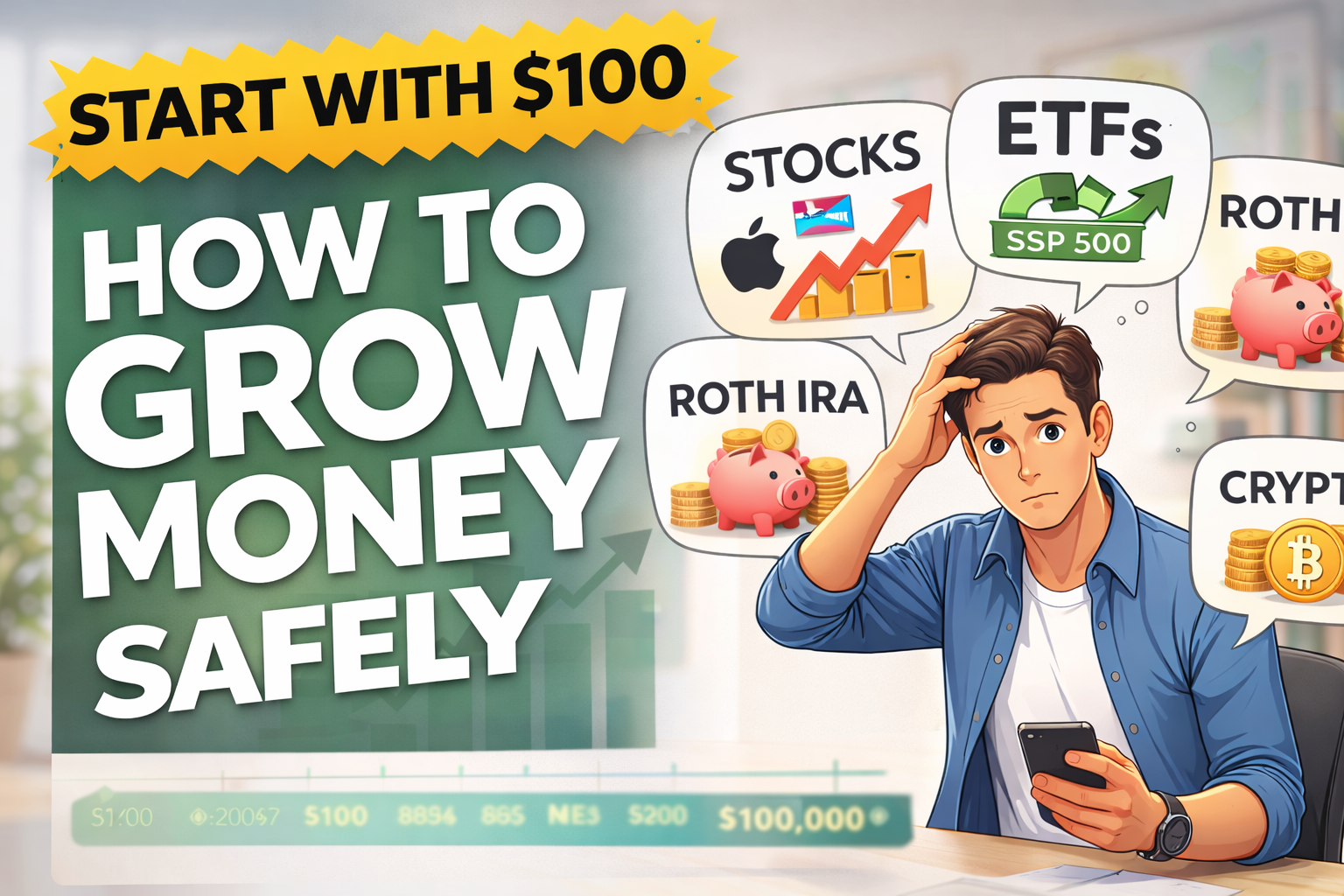
Struggling to invest your first $100 in the U.S.? Discover safe, beginner-friendly ways Americans are growing money in 2026—without costly mistakes or hidden fees. Lets talk about – Here’s How Americans Are Growing Money Without Risky.

Introduction
You want to start investing, but you’re scared of losing your money.
There are too many options—stocks, ETFs, Roth IRA—and no clear direction.
In the U.S., with inflation rising and financial pressure increasing, doing nothing feels risky… but investing blindly feels worse.
This guide is built for exactly that situation.
Quick Answer Box
If you only have $100, here’s the smartest move in 2026 (U.S.):
- Open an account with Vanguard or Fidelity
- Invest in a low-cost S&P 500 index ETF
- Automate monthly contributions ($25–$50)
- Avoid trading, stock picking, and high-fee apps
Goal: Consistent growth, not quick profits
1. Why Beginners Fail in US Investing
Most beginners in America don’t lose money because of bad luck—they lose because of confusion.
The Real Reasons:
- Too many options → Stocks, ETFs, crypto, options
- Fear of loss → Leads to overthinking or doing nothing
- Wrong advice from social media → “Get rich quick” mindset
- Hidden fees → Eating long-term returns
- Overtrading → Buying and selling frequently
Psychological Mistake
People think:
“I need to find the BEST investment”
Reality:
You need a consistent, low-risk system
2. Best Investment Options for Beginners in the US (2026)
Here’s what actually works with low money:
1. Index Funds / ETFs (Best Overall)
- Tracks entire market (S&P 500)
- Low fees (0.03%–0.10%)
- Diversified
👉 Example:
- Vanguard S&P 500 ETF (VOO)
2. Roth IRA (Tax-Free Growth)
- Invest after-tax money
- Withdraw tax-free later
- Best for long-term wealth
3. High-Yield Savings (For Safety)
- 4–5% returns (2026)
- Zero risk
- Good for emergency funds
4. Fractional Stocks (Optional)
- Buy Apple, Amazon with $10–$50
- Good for learning, not main strategy
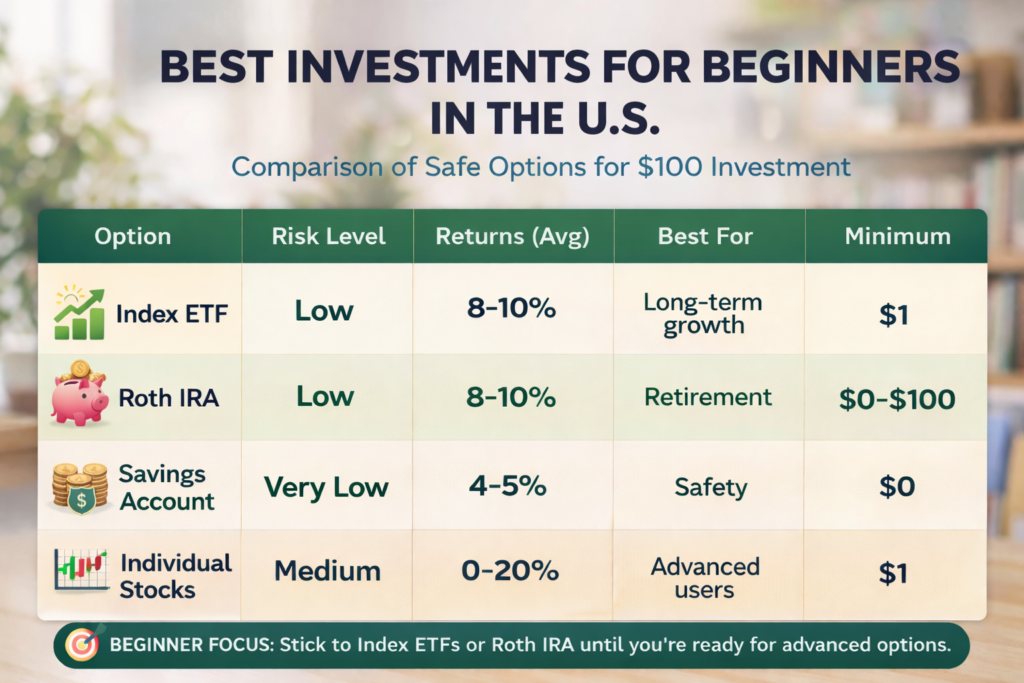
Comparison Table (Very Important)
| Option | Risk Level | Returns (Avg) | Best For | Minimum |
|---|---|---|---|---|
| Index ETF | Low | 8–10% | Long-term growth | $1 |
| Roth IRA | Low | 8–10% | Retirement | $0–$100 |
| Savings Account | Very Low | 4–5% | Safety | $0 |
| Individual Stocks | Medium | 0–20% | Advanced users | $1 |
3. Step-by-Step Plan to Start with $100
Step 1: Choose Platform
Start with beginner-friendly platforms:
- Vanguard → Best for long-term investors
- Fidelity → Zero minimum, great UI
- Charles Schwab → Strong research tools
- Robinhood → Easy, but avoid overtrading
- Wealthfront → Fully automated investing
Step 2: Deposit Your First $100
Split like this:
- $80 → Index ETF
- $20 → Keep as cash buffer
Step 3: Buy an ETF
Search:
- “S&P 500 ETF”
- Buy fractional shares
Step 4: Automate Investment
Set:
- $25/week OR
- $50/month
Step 5: Do Nothing
This is where most fail.
Let compounding work.
4. Where to Invest (USA ONLY)
Here’s the real breakdown:
1. Vanguard
- Lowest fees
- Best for serious investors
2. Fidelity
- Zero expense funds
- No minimum balance
3. Charles Schwab
- Excellent support
- Strong analytics
4. Robinhood
- Simple UI
- Dangerous if you overtrade
5. Wealthfront
- Fully automated
- Great for beginners who don’t want to think
5. Real US Example
Case: John (Age 25, Texas)
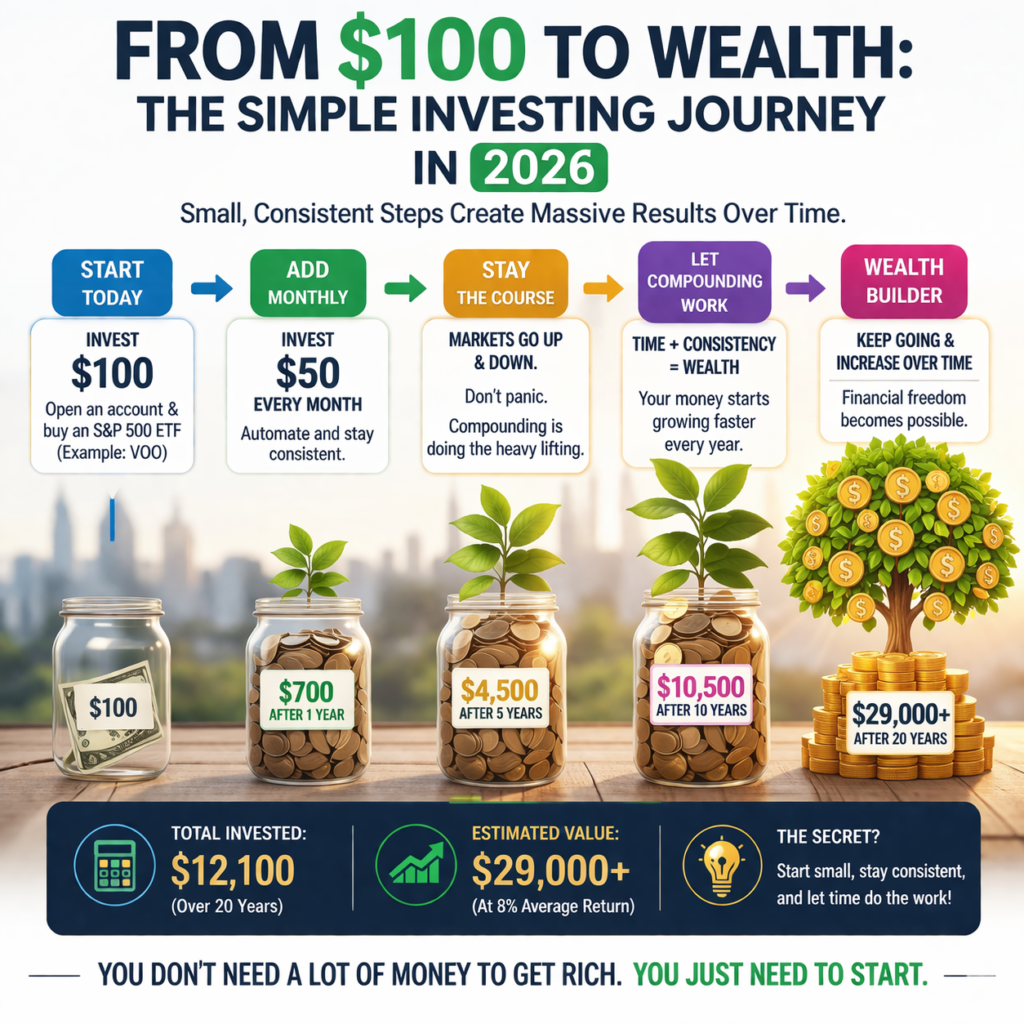
- Started with $100
- Invested in ETF (VOO)
- Added $50/month
After 5 Years:
- Invested: $3,100
- Value: ~$4,500
After 10 Years:
- Invested: $6,100
- Value: ~$10,500
No stock picking. No trading. Just consistency.
6. Mistakes to Avoid (Critical)
1. Chasing Trends
Crypto, meme stocks, hype → risky
2. Overtrading
Buying/selling daily kills returns
3. Ignoring Fees
Even 1% fee = huge loss over time
4. Timing the Market
Impossible for beginners
5. Not Investing at All
Biggest mistake = staying in cash forever
7. Expert Insight: Market Psychology
Markets reward:
- Patience
- Discipline
- Consistency
Markets punish:
- Emotion
- Fear
- Greed
Truth:
You don’t need intelligence—you need behavior control.
8. Timeline: What to Expect
| Time | What Happens |
|---|---|
| 0–6 months | Slow growth, feels useless |
| 1–2 years | Small gains visible |
| 3–5 years | Compounding begins |
| 10+ years | Wealth builds significantly |
9. Strategy Breakdown
Safe Growth Strategy (Best for Beginners)
- Invest in index ETFs
- Automate monthly
- Ignore market noise
- Increase contribution yearly
Passive Income Strategy
Once you reach:
- $10,000 → Start dividend ETFs
- $50,000 → Generate side income
10. Hidden Fees That Quietly Destroy Small Investors
Most beginners think:
“There are no fees anymore.”
That’s half true—and very dangerous.
Real Hidden Fees in the US:
1. Expense Ratios (ETF Fees)
Even 0.50% vs 0.03% matters.
| Investment | Fee | 20-Year Impact |
|---|---|---|
| Low-cost ETF | 0.03% | High returns |
| Expensive fund | 1% | Lose thousands |
👉 Platforms like Vanguard and Fidelity are known for low-cost funds.
2. Spread Cost (Hidden Trading Cost)
- You buy at a slightly higher price
- You sell at a slightly lower price
- Difference = silent loss
This is common on apps like Robinhood if you trade frequently.
3. Robo-Advisor Fees
Platforms like Wealthfront charge ~0.25% annually.
👉 Worth it for beginners, but unnecessary later.
4. Withdrawal / Transfer Fees
- Moving money between brokers can cost $50–$100
- Beginners don’t plan this
Reality Check
If you don’t understand fees, your “safe investment” becomes a slow loss machine.
11. The $100 Investing Mistake Nobody Talks About
Most people think the problem is:
“I don’t have enough money”
Wrong.
The real problem:
“You don’t build consistency”
What Beginners Do:
- Invest $100 once
- Stop
- Check returns daily
- Quit
What Smart Investors Do:
- Start with $100
- Add $50/month
- Ignore noise
👉 The second person always wins.
12. US Inflation vs Your Money (2026 Reality)
In the US, inflation is silently killing savings.
Example:
- Inflation: ~3–4%
- Savings account: ~4–5%
- Real gain: almost zero
What Happens If You Don’t Invest:
- Your money loses value every year
- $100 today ≠ $100 in 5 years
Solution:
- Combine:
- High-yield savings (short-term)
- ETFs (long-term growth)
13. Beginner Confusion: ETF vs Stock vs Mutual Fund
This confusion stops people from starting.
Simple Breakdown:
| Type | What It Means | Risk | Best For |
|---|---|---|---|
| ETF | Basket of stocks | Low | Beginners |
| Stock | Single company | High | Advanced |
| Mutual Fund | Managed fund | Medium | Long-term |
👉 Start with ETFs. Always.
14. The “Do Nothing” Strategy (Most Powerful)
This sounds lazy—but it’s the smartest move.
Why Doing Nothing Works:
- Avoids emotional decisions
- Avoids timing mistakes
- Lets compounding work
Example:
People who stayed invested during crashes:
- 2008 crisis → recovered
- 2020 crash → recovered
People who panicked:
- Locked losses permanently
15. Passive Income Reality (Don’t Get Tricked)
Social media lies:
“Earn passive income quickly”
Reality:
- Passive income takes time
- Requires capital
Truth in Numbers:
| Investment | Monthly Income |
|---|---|
| $1,000 | ~$3–$5 |
| $10,000 | ~$30–$50 |
| $100,000 | ~$300–$500 |
Smart Approach:
- Focus on growth first
- Income later
16. Risk Fear: How to Actually Handle It
Fear is the biggest blocker.
Real Risk Types:
- Market crash
- Losing money
- Choosing wrong investment
How to Reduce Risk:
- Diversify → ETFs
- Invest slowly → monthly
- Think long-term → 5–10 years
- Avoid hype → no shortcuts
Important Truth:
Risk comes from not understanding, not from investing itself.
17. The 3-Type Beginner Strategy (Simple Framework)
1. Ultra-Safe Beginner
- 70% ETF
- 30% savings
2. Balanced Beginner
- 90% ETF
- 10% stocks
3. Growth Beginner
- 80% ETF
- 20% growth stocks
👉 Choose based on your comfort—not hype.
18. Monthly Investment Growth Projection
Let’s make it real.
Scenario:
- Start: $100
- Monthly: $50
- Return: 8%
| Year | Investment | Value |
|---|---|---|
| 1 | $700 | ~$750 |
| 5 | $3,100 | ~$4,500 |
| 10 | $6,100 | ~$10,500 |
| 20 | $12,100 | ~$29,000 |
👉 This is how wealth is built.
19. Beginner-Friendly Portfolio (US 2026)
Simple Portfolio:
- 70% → S&P 500 ETF
- 20% → Total Market ETF
- 10% → Cash
Advanced (After 1 Year):
- 60% → S&P 500
- 20% → International ETF
- 10% → Dividend ETF
- 10% → Cash
20. When Should You NOT Invest?
Don’t invest if:
- You have credit card debt (20%+)
- No emergency fund
- You need money within 6 months
👉 Fix your base first.
21. The Biggest Lie Beginners Believe
“I’ll start when I have more money”
That’s why most people never start.
Reality:
- Starting small beats waiting forever
- Time matters more than amount
22. How to Increase Your Investment Fast
Once you start:
Step-Up Strategy:
- Month 1–3 → $50/month
- Month 4–6 → $100/month
- Year 2 → $200/month
Hack:
Increase investment whenever income increases.
23. Tax Basics (US Beginners MUST Know)
1. Roth IRA
- Tax-free growth
- Best for beginners
2. 401(k)
- Employer match = free money
3. Brokerage Account
- Taxable, flexible
👉 Priority:
- 401(k) match
- Roth IRA
- Brokerage
24. What Happens During a Market Crash?
Beginners panic. Smart investors win.
During Crash:
- Prices fall
- Fear rises
Smart Move:
- Keep investing
- Buy cheaper
Truth:
Crashes are opportunities, not disasters.
25. Final Reality Check
If you:
- Invest consistently
- Avoid mistakes
- Stay patient
You will build wealth.
If you:
- Chase trends
- Panic sell
- Stop investing
You will stay stuck.
Why MaintainMarket is Different
Most blogs:
- Overcomplicate investing
- Push risky ideas
- Ignore beginners
MaintainMarket:
- Focuses on real action steps
- Simplifies decision-making
- Helps you start with low money
Final Action Plan
If you’re still confused, do this:
- Open account on Fidelity
- Deposit $100
- Buy S&P 500 ETF
- Set auto-invest ($50/month)
- Do not touch for 1 year
That’s it.
FAQs (US Audience)
Q1. Can I really start investing with $100 in the US?
Yes, thanks to fractional shares and zero-minimum accounts.
Q2. Is investing safe for beginners?
Yes, if you use index funds and avoid trading.
Q3. Should I choose stocks or ETFs?
Beginners should always start with ETFs.
Q4. What is the safest investment in 2026?
S&P 500 ETFs + high-yield savings combo
Q5. Do I need a financial advisor?
No, not at the beginning.
6. How much should I invest monthly?
Start with $25–$100 consistently.
Q7. What if the market crashes?
Keep investing—crashes create buying opportunities.
People also searched for:10 Best States to Buy Rental Property in USA – High ROI Real Estate Markets
Also read: Top 10 Cheapest States to Buy a House in USA – Most Affordable Housing Markets