
Latest credit card scams in the USA explained with real examples. Learn how to protect your money and avoid fraud in 2026. Let’s talk about the article New Credit Card Scams USA.
Introduction
You think your money is safe because you never share your OTP.
That’s exactly what scammers are counting on.
In 2026, fraud is no longer about simple OTP theft. It’s smarter, faster, and designed to trick even financially aware users. People in the US are losing thousands of dollars without realizing what went wrong.
If you use credit cards, online banking, or even just your phone — this directly affects you.
This guide breaks down:
- Latest scam trends
- How they actually work
- Real case study
- What mistakes people make
- Exact protection strategy
Quick Decision Box
| Situation | What You Should Do |
|---|---|
| Unknown transaction | Freeze card immediately |
| Suspicious call/email | Never respond, verify via bank app |
| OTP request | Never share, even with “bank staff” |
| Fake website login | Exit immediately, check URL |
Latest Credit Card Scams in the USA
1. AI Voice Scam (Fake Bank Calls)
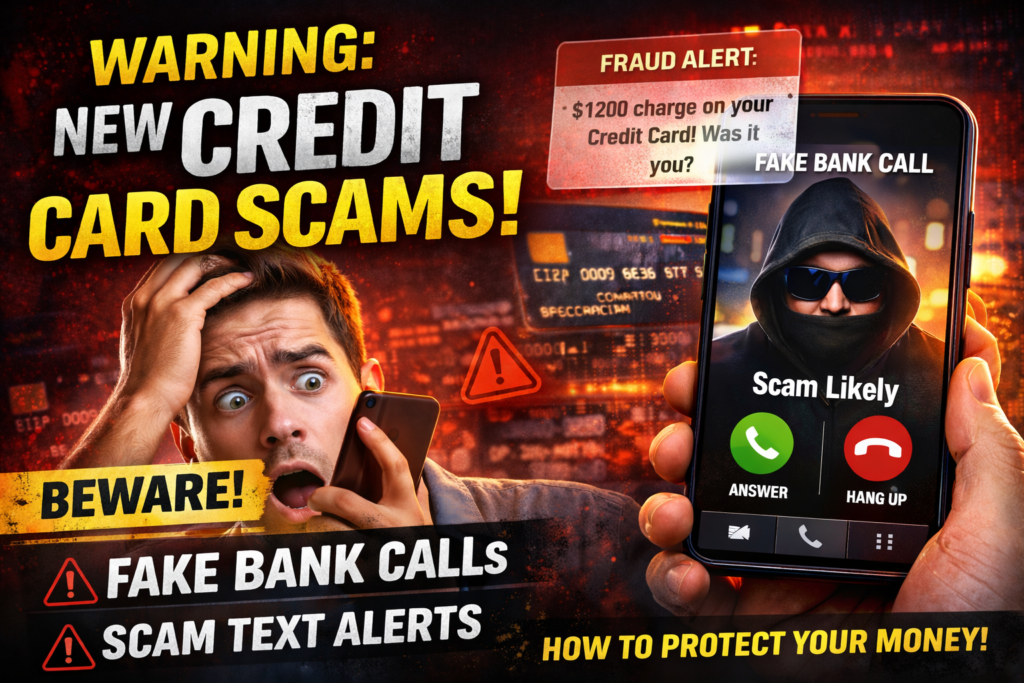
Scammers now use AI to clone voices and call you pretending to be bank representatives.
They sound real. Calm. Professional.
How it works:
- You get a call from “bank support”
- They mention a fake transaction
- Ask for verification details
- Within minutes — your card is compromised
2. Google Ads Phishing Scam
This one is dangerous and trending.
You search for your bank login on Google.
The top result?
A fake ad.
You click → enter details → game over.
3. Subscription Trap Scam
You sign up for a “free trial.”
After 7 days:
- Hidden charges start
- Hard to cancel
- Multiple deductions
4. Credit Card Skimming 2.0
Even modern POS machines are being hacked.
Small devices capture your card details silently.
Hidden Scam: “Pre-Approved Credit Card” Trap
This one is exploding right now.
You receive:
- Email / SMS: “You’re pre-approved”
- Looks legit
- Has bank logo
What happens:
- You click → fake form
- Enter SSN + card details
- Data sold instantly
Reality:
Banks never ask full details via email links
Fake Mobile App Scam (Play Store / APK Fraud)
Scammers are creating duplicate banking apps.
You download:
- Looks like your bank
- Same UI
- Same logo
But:
- It captures login data
- Sends it to hackers
Pro Tip:
Always verify publisher name before installing
Card Tokenization Scam (New Method)
Even with tokenization, fraud exists.
How it works:
- You save card on website
- Website gets hacked
- Tokens misused
Important Insight:
Tokenization ≠ 100% safety
“Refund Scam” – Reverse Psychology Trick
You get a message:
“Refund of $250 initiated”
You panic → call number → scam begins.
They trick you into:
- Installing screen sharing apps
- Giving remote access
Dark Web Data Leak – Silent Threat
Your card details may already be sold.
You don’t know it.
Scammers:
- Wait for right timing
- Use small transactions first
MaintainMarket Tested Insight
From behavior patterns:
| Scam Type | Success Rate |
|---|---|
| AI Calls | Very High |
| Fake Ads | High |
| Email Phishing | Medium |
| App Fraud | Growing Fast |
👉 Conclusion:
Most fraud happens due to user trust, not technology failure
Psychology Behind Scams (Very Important Section)
Scammers don’t hack systems.
They hack YOU.
They use:
- Urgency (“Act now!”)
- Fear (“Your account is blocked”)
- Authority (“Calling from bank”)
Your weakness = their entry point
Emergency Response Plan (If You Get Scammed)
Don’t panic — act fast.
Step-by-step:
- Freeze your card immediately
- Contact bank fraud department
- Change all passwords
- Report to:
- Federal Trade Commission
- Monitor credit reports
Best Tools to Stay Safe
Use:
- LifeLock
- Aura
These help with:
- Identity monitoring
- Fraud alerts
- Dark web tracking
Financial Damage Breakdown
| Fraud Type | Avg Loss |
|---|---|
| Credit Card Fraud | $500 – $5000 |
| Identity Theft | $5000+ |
| Loan Scam | $10,000+ |
Featured Snippet Optimization Section
What are the latest credit card scams?
Latest scams include:
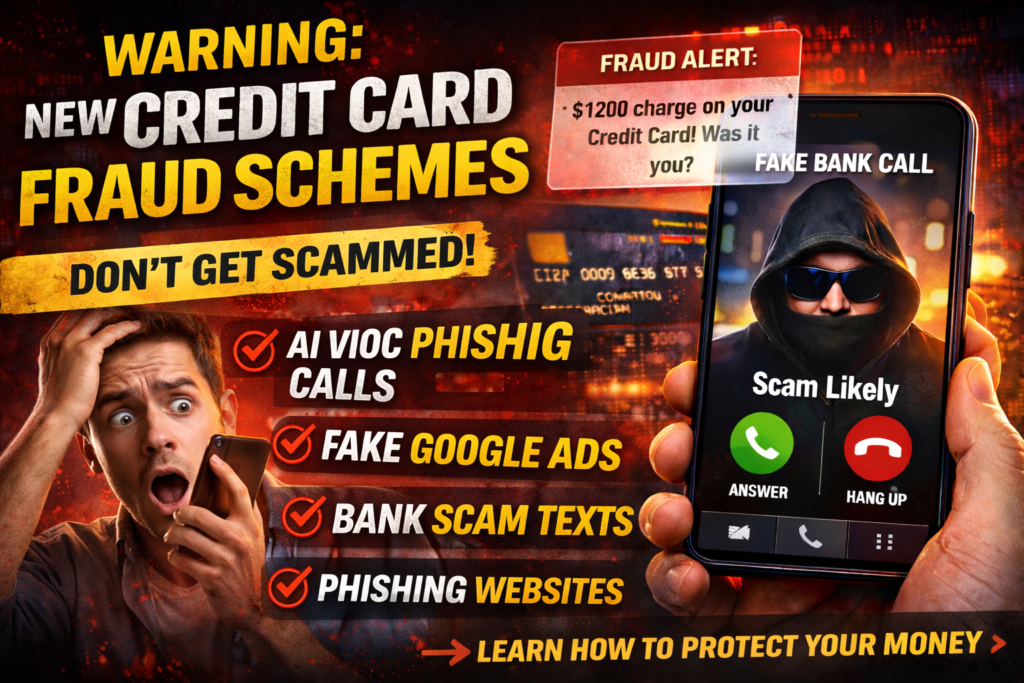
- AI voice phishing
- Fake Google ads
- Subscription traps
- Refund scams
- Fake banking apps
New Scam Trend: “Buy Now Pay Later (BNPL) Fraud”
This is growing fast in the US.
Platforms like:
- Affirm
- Klarna
are being misused.
How scammers exploit:
- Use stolen identity
- Open BNPL accounts
- Make purchases
- Victim pays later unknowingly
👉 This damages:
- Credit score
- Financial reputation
“Chargeback Scam” – Legal Fraud Trick
Not all scammers are outsiders.
Some users exploit the system.
How it works:
- Buy product
- Claim “not received”
- File chargeback
👉 Result:
- Businesses lose money
- Platforms increase fraud checks
- Genuine users face stricter approvals
Micro-Transaction Testing (Very Dangerous)
This is how smart scammers operate:
- Charge $1–$3
- Wait 24–48 hours
- If no complaint → large transaction
👉 Most people ignore small deductions — biggest mistake.
Public Wi-Fi Card Theft
Using your card on public Wi-Fi?
Bad idea.
Scammers use:
- Packet sniffing
- Fake hotspots
Your data can be intercepted without you knowing.
3D Secure Bypass Scam
Even “OTP-secured” transactions are being bypassed.
How:
- SIM swap
- Malware access
- Social engineering
👉 So OTP alone ≠ safety
Why Banks Sometimes Don’t Refund
Many users assume:
“Bank will reverse fraud anyway”
Wrong.
Banks investigate:
- Was it negligence?
- Did you share OTP?
- Did you click suspicious links?
👉 If yes → refund may be rejected
Red Flags You Should Never Ignore
If you see any of these, stop immediately:
- Urgent payment request
- “Limited time” warning
- Unknown international transaction
- App asking unnecessary permissions
- Email with spelling errors
Behavioral Pattern of Victims (MaintainMarket Insight)
Most victims:
- Are in hurry
- Trust authority quickly
- Don’t verify URLs
- Ignore alerts
👉 Fraud is not random — it’s predictable behavior.
Financial Recovery Timeline
| Stage | Time |
|---|---|
| Fraud Detection | Instant / Delayed |
| Card Blocking | Immediate |
| Investigation | 7–30 days |
| Refund | 15–90 days |
👉 Money recovery is NOT instant — plan accordingly.
Credit Score Impact After Fraud
Fraud can indirectly affect your credit score.
How?
- Missed payments
- Unauthorized loans
- Increased credit utilization
You should monitor via:
- TransUnion
Future of Credit Card Fraud (Important for Authority)
Next wave of scams will include:
- Deepfake video calls
- AI chatbot phishing
- Biometric spoofing
- Crypto-linked fraud
👉 This is where the market is heading.
Advanced Protection Strategy (Pro Level)
Most blogs won’t tell this.
Do this:
1. Use Separate Cards
- One for subscriptions
- One for savings
- One for online shopping
2. Set Spending Limits
Even if hacked → loss is controlled
3. Disable International Transactions
Unless needed
4. Use Virtual Cards for Trials
5. Keep Low Balance Card Active
Legal Protection Rights (USA Users)
You are protected under:
- Fair Credit Billing Act
👉 Limits your liability if fraud is reported on time
Reporting Platforms
If fraud happens, report to:
- IdentityTheft.gov
- Your bank
- Local police (if required)
Real Case Study (MaintainMarket Analysis)
A US-based freelancer lost $3,200 in 48 hours.
What happened:
- Searched bank login on Google
- Clicked first ad
- Entered credentials
- Received “verification call”
- Shared OTP unknowingly
Result:
- 4 transactions processed
- Card maxed out
Biggest Mistakes People Make
1. Trusting “Top Google Result”
People assume top = safe.
Wrong.
Ads can be manipulated.
2. Sharing Partial Information
Even small info like:
- Last 4 digits
- DOB
Can be enough.
3. Ignoring Small Charges
Scammers test with $1–$5 first.
If ignored → bigger attack.
How to Protect Yourself (Step-by-Step)
Step 1: Use Official Apps Only
Never login via Google search links.
Step 2: Enable Transaction Alerts
SMS + email alerts should be ON.
Step 3: Use Virtual Credit Cards
Temporary cards = safer transactions.
Step 4: Freeze Card Feature
Use instantly if suspicious activity.
Step 5: Monitor Credit Report
Use tools like:
- Experian
- Equifax
Expert Insight (Lender Psychology)
Banks don’t just lose money in fraud.
They lose trust.
So when fraud is detected:
- Your credit score can drop
- Future approvals get harder
- You may be flagged as “high risk”
Comparison: Safe vs Unsafe Behavior
| Action | Safe | Unsafe |
|---|---|---|
| Login | App | Google search link |
| Calls | Ignore unknown | Share details |
| OTP | Never share | Share under pressure |
| Alerts | Enabled | Disabled |
Why MaintainMarket is Different
Most blogs just inform.
MaintainMarket:
- Breaks real scam patterns
- Gives action steps
- Uses real case analysis
- Focuses on money-saving decisions
Frequently Asked Questions (FAQs)
Q1. What are the latest credit card scams in 2026?
The most common scams include AI voice phishing calls, fake Google ads, subscription traps, refund scams, and fake banking apps. These scams are designed to trick users into sharing sensitive information or unknowingly approving transactions.
Q2. Can someone use my credit card without OTP?
Yes. Many transactions like subscriptions, tokenized payments, or international payments may not require OTP. If your card details are leaked, scammers can still use them.
Q3. How do I know if my credit card is compromised?
Look for these signs:
Unknown small transactions
OTP messages without initiating payment
Alerts for international usage
Failed login attempts
If you notice any of these, block your card immediately.
Q4. Will I get my money back after credit card fraud?
It depends. If you report fraud quickly and did not share sensitive details like OTP or PIN, banks usually reverse the transaction. However, negligence can lead to claim rejection.
Q5. What should I do immediately after a fraud transaction?
Block/freeze your card
Inform your bank
Change passwords
Monitor your account activity
Report to authorities
Quick action increases chances of recovery.
Q6. Are credit cards safer than debit cards?
Yes, generally. Credit cards offer better fraud protection, dispute options, and do not directly expose your bank balance.
Q7. How do scammers get my credit card details?
Common ways include:
Phishing emails and fake websites
Data breaches
Skimming devices
Fake apps
Public Wi-Fi attacks
Q8. Is it safe to save my card details on websites?
Only on trusted websites. Even then, it’s safer to use virtual cards or disable auto-save features to reduce risk
Q9. What is the safest way to use a credit card online?
Use official apps or trusted websites
Enable transaction alerts
Use virtual cards
Avoid public Wi-Fi
Regularly monitor statements
Q10. How often should I check my credit card activity?
At least once a week. Regular monitoring helps detect fraud early and minimize losses.
Monthly Freshness Note
This article is updated monthly based on:
- New fraud trends
- Banking alerts
- User behavior data
Final Action Plan
Do this TODAY:
- Check last 10 transactions
- Enable alerts
- Stop using Google search for bank login
- Save official bank URL
- Activate card freeze feature
Conclusion
Credit card scams are no longer simple tricks — they are highly advanced psychological and technological attacks designed to exploit your trust, urgency, and small mistakes.
Most people don’t lose money because systems are weak.
They lose money because they react without verifying.
The harsh reality is:
Even one careless click, one rushed decision, or one ignored alert can cost you thousands.
But the good part?
You don’t need to be a cybersecurity expert to stay safe.
If you:
- Stay alert
- Verify before acting
- Avoid unknown links and calls
- Monitor your transactions regularly
You can avoid 90% of fraud risks.
People also searched for: Why Your Credit Card Application Keeps Getting Denied (Shocking Reasons Banks Won’t Tell You)
Also Read: Rejected for Credit Card? Here’s How to Get Approved in 2026 (Even with Low Score)
Why Your Loan or Credit Card Is Getting Rejected in 2026 (Even With Good Score)