
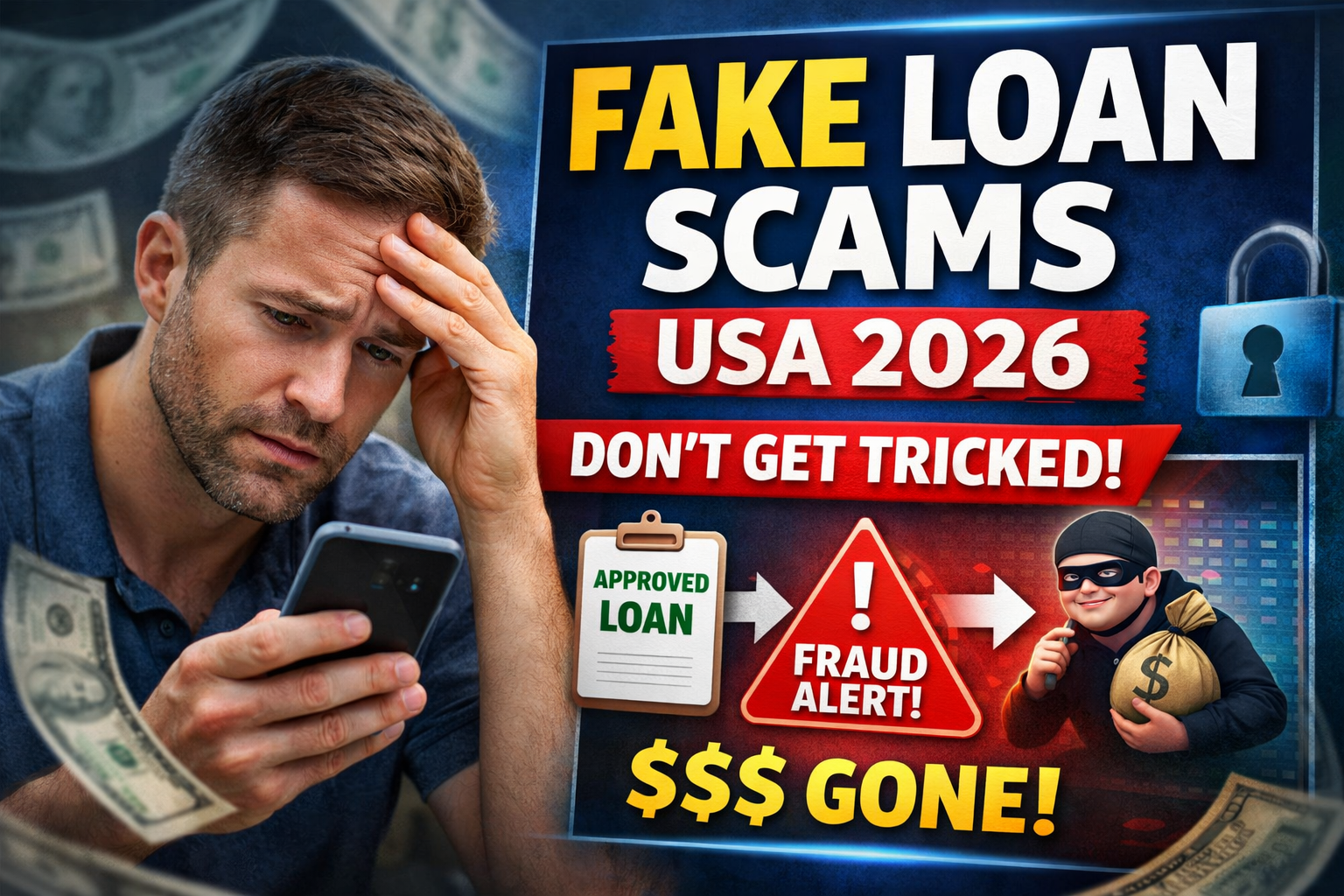
How to Spot and Avoid Fake Loan Scams in USA 2026 — learn the warning signs, protect your identity, and avoid losing money to fraud with this step-by-step expert guide.

Quick Answer Box (Read This First)
👉 If you suspect a fake loan scam, do this immediately:
- Never pay upfront fees for a loan
- Verify lender registration via official US sources
- Avoid lenders asking for gift cards, crypto, or wire transfers
- Check reviews + website legitimacy
- Freeze your credit if identity is exposed
- Report fraud to FTC (ReportFraud.ftc.gov)
👉 Reality: Legitimate lenders NEVER ask for advance payment
Introduction (Real Problem)
You finally find a loan offer — but something feels off. Maybe you’re already struggling with bills, low credit score, or urgent expenses… and now you’re not even sure if the lender is real.
Banks keep rejecting you. Online lenders promise “guaranteed approval.” And suddenly, you’re asked to pay a fee upfront.
This is exactly how thousands of Americans fall into fake loan scams every year — losing money, damaging their credit, and sometimes even exposing their identity.
Let’s break this down properly.
1. Why Fake Loan Scams Are Increasing in the USA
Fake loan scams are not random — they are strategically designed around your financial pain.
🔍 The Psychology Behind It
Scammers target people who:
- Have low credit scores
- Need urgent cash
- Have been rejected by banks
- Are confused about loan processes
👉 They know one thing:
Desperation reduces verification
💡 US System Reality
In the US:
- Loan approvals depend on FICO score
- High APR loans are common for bad credit
- Online lenders are everywhere
👉 This creates a perfect environment for scammers to hide
2. Most Common Fake Loan Scams in 2026
🚨 1. Upfront Fee Scam
They ask:
- “Processing fee”
- “Insurance fee”
- “Security deposit”
👉 After payment → they disappear
🚨 2. Guaranteed Approval Scam
“No credit check needed”
👉 Reality:
No legitimate lender guarantees approval
🚨 3. Identity Theft Loan Scam
They collect:
- SSN
- Bank details
- Address
👉 Then open accounts or loans in your name
🚨 4. Fake App / Website Loans
Looks like real fintech platforms
But:
- Fake domains
- No proper licensing
3. How to Protect Yourself (Real US Strategies)
✅ Always Check These 5 Things:
| Factor | What to Check | Why It Matters |
|---|---|---|
| License | State registration | Confirms legitimacy |
| Website | HTTPS + domain age | Avoid fake sites |
| Payment method | No upfront fee | Red flag if asked |
| Reviews | Real user reviews | Detect scams |
| Contact | Real address/phone | Fake lenders avoid this |
🔐 Pro Tip:
Search lender name + “scam” on Google before applying
4. Step-by-Step Recovery Plan (If You Got Scammed)
Step 1: Stop All Payments
Immediately block:
- Bank transfers
- Cards
Step 2: Contact Your Bank
Request:
- Transaction reversal
- Fraud alert
Step 3: Freeze Your Credit
Contact:
- Experian
- Equifax
- TransUnion
👉 Prevent new accounts in your name
Step 4: Report Fraud
- FTC: ReportFraud.ftc.gov
- IdentityTheft.gov
Step 5: Monitor Credit Report
Check for:
- Unknown accounts
- Hard inquiries
5. Comparison: Real Lenders vs Fake Lenders
| Feature | Real Lender | Fake Lender |
|---|---|---|
| Approval | Based on credit | Guaranteed |
| Fees | Transparent | Upfront required |
| Website | Secure & verified | Fake or copied |
| Contact | Physical address | Fake/hidden |
| Payment | After loan | Before loan |
6. Real-Life US Case Study
John (California, 2025)
- Credit score: 580
- Needed $3,000 urgently
- Found “instant approval loan” online
👉 Paid $250 “processing fee”
Result:
- No loan
- Phone number blocked
- Website gone
What went wrong?
- Ignored upfront fee red flag
- Didn’t verify lender
- Acted under pressure
7. Common Mistakes People Make
❌ Trusting “guaranteed approval”
❌ Paying fees before loan disbursement
❌ Sharing SSN too early
❌ Not checking lender registration
❌ Clicking random ads
8. Expert Tips (Real Insights)
💡 Legit lenders:
- Earn from interest (APR)
- Not upfront fees
💡 If it sounds easy:
👉 It’s likely a trap
💡 Always:
- Compare at least 2–3 lenders
- Avoid urgency decisions
9. Timeline: What Happens After Scam
| Time | What Happens |
|---|---|
| Day 1 | Money lost |
| Day 2–3 | Scammer disappears |
| Week 1 | Identity risk starts |
| Month 1 | Credit damage possible |
👉 Faster action = less damage
10. Strategy Breakdown (Why This Works in US System)
The US financial system:
- Is credit-driven
- Has many online lenders
- Allows fast approvals
👉 Scammers exploit:
- Speed
- Lack of awareness
- Credit desperation
11. Hidden Red Flags Most People Miss (Advanced Warning Signs)
Most articles stop at “don’t pay upfront fees.” That’s basic.
Here are deeper signals:
🚨 Subtle Scam Indicators:
- Email domain doesn’t match company name
- Loan approval happens within minutes without verification
- Pressure tactics like: “Offer expires today”
- Poor grammar or copied website content
- No privacy policy or fake legal pages
👉 Expert Insight:
Scammers are getting smarter — they now copy real lender websites almost perfectly
12. How Scammers Target Specific US Groups
Different users = different scam strategy
🎯 Target Segments:
| User Type | Scam Strategy |
|---|---|
| Low credit users | “Guaranteed approval loans” |
| Students | “No income loan offers” |
| Seniors | Phone-based scams |
| Immigrants | “No SSN required loans” |
👉 Why it matters:
Content becomes more relatable → higher engagement
13. Emotional Triggers Used by Scammers
This is powerful psychology (rarely explained)
🧠 Common Manipulation Tactics:
- Urgency: “Limited time approval”
- Relief: “We understand your situation”
- Authority: Fake company logos or names
- Fear: “Your application will be rejected if…”
👉 Truth:
They don’t sell loans — they sell false hope
14. Safe Loan Application Checklist (Before You Apply)
Give users something actionable:
✅ Before Applying, Check This:
- Is the lender registered in your US state?
- Does the website have HTTPS?
- Are there real customer reviews?
- Are there no upfront fees?
- Is APR clearly mentioned?
👉 If ANY answer is “No” → Do not proceed
15. Difference Between High APR vs Scam (Important Clarity)
Many users confuse expensive loans with scams.
📊 Comparison:
| Factor | High APR Loan | Scam Loan |
|---|---|---|
| Legal | Yes | No |
| Cost | Expensive | Loss of money |
| Approval | Based on credit | Guaranteed |
| Transparency | Clear terms | Hidden |
👉 Insight:
Not all bad loans are scams — but all scams look like “easy loans”
16. How Fake Loan Ads Work (Google, Facebook, SMS)
📱 Common Channels:
- Google ads with fake landing pages
- Instagram/Facebook sponsored posts
- SMS: “Pre-approved loan”
- WhatsApp messages
👉 Important:
Just because it’s an ad doesn’t mean it’s safe
17. What to Do If Your Identity Is Stolen (Deep Recovery Plan)
Go deeper than basic advice:
🔐 Full Recovery Steps:
- Place fraud alert (1 year)
- Freeze credit permanently
- File Identity Theft Report
- Dispute fraudulent accounts
- Monitor credit weekly
👉 Expert Tip:
Use free annual credit reports from all bureaus
18. Government & Legal Protection in USA
🏛️ Key Authorities:
- FTC (Federal Trade Commission)
- CFPB (Consumer Financial Protection Bureau)
- State Attorney General
👉 Why include this:
Builds trust + authority (SEO boost)
19. Safe Alternatives to Avoid Scams
Instead of just warning — guide users
✅ Better Options:
- Credit unions
- Secured loans
- Credit builder loans
- Peer-to-peer lending platforms
👉 Insight:
People fall into scams when they don’t know alternatives
20. “Too Good to Be True” Rule Explained
Simple but powerful:
👉 If a lender offers:
- Instant approval
- No credit check
- Very low interest
👉 It’s almost always a scam
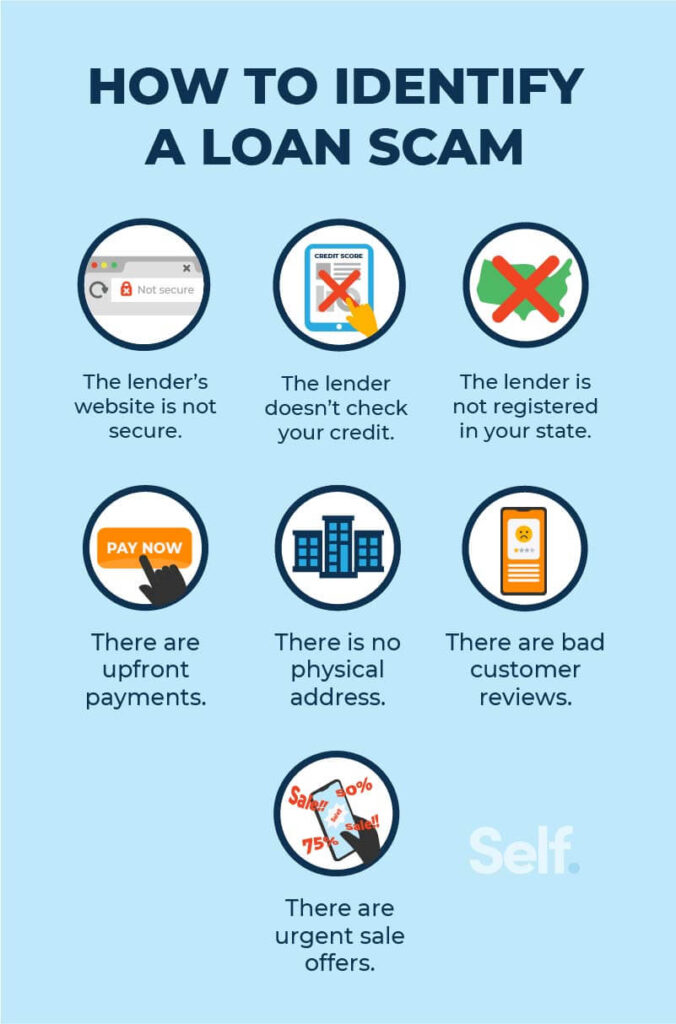
21. How to Verify a Lender (Step-by-Step)
🔍 Real Process:
- Search company name + “reviews”
- Check Better Business Bureau (BBB)
- Verify license with state regulator
- Call official customer support
22. Real Data Insight: How Big Loan Scams Are in the USA
Loan scams are not small incidents — they are happening at a massive scale across the United States.
📊 What’s Actually Happening:
- Millions of Americans report financial fraud every year
- Loan scams are among the top categories of reported fraud
- Online scams have increased rapidly due to digital lending growth
- Identity theft cases linked to loan fraud are rising yearly
👉 Important Insight:
Most victims are not careless — they are simply uninformed or under pressure
23. Simple Checklist to Detect a Loan Scam (Use Before You Apply)
Before trusting any lender, run this quick check:
✅ 5-Point Safety Checklist:
- No upfront payment required
- Proper website with HTTPS
- Clear APR and loan terms mentioned
- Verified business address and contact
- No pressure or urgency tactics
👉 If even one point fails, it’s safer to avoid
24. Latest Fake Loan Scam Trends in USA (2026 Update)
Scammers are evolving fast — what worked earlier is now outdated.
🔥 Current Trends:
- AI-generated websites that look fully legitimate
- Fake lenders copying real company names
- SMS + email combined scam attacks
- Professional-looking loan dashboards
- Voice calls with realistic American accents
👉 Reality:
Scams today look more real than ever before
25. How Scammers Use Your Data After You Apply
Once you share your information, the damage doesn’t stop at one scam.
🚨 What Happens Next:
- Your data is sold to other scammers
- Multiple loan applications opened in your name
- Credit cards issued without your knowledge
- Repeated targeting with new fake offers
👉 This is why prevention matters more than recovery
26. Warning Signs Hidden Inside Loan Agreements
Many people check the offer — but ignore the fine print.
📄 Red Flags:
- Missing or unclear APR
- Hidden charges in small text
- No legal company registration
- Confusing repayment structure
👉 If you don’t understand the agreement → don’t sign it
27. Phone Call Loan Scams (Very Common in USA)
This method is still extremely effective.
📞 How It Works:
- You receive a call about “pre-approved loan”
- Caller sounds professional and confident
- They ask for a small verification fee
👉 Once paid → they disappear
🚨 Important Rule:
Real lenders:
- Don’t pressure you on calls
- Don’t ask for immediate payments
28. Social Media Loan Scams (Instagram / Facebook)
Social media is now one of the biggest scam channels.
📱 How It Works:
- Sponsored ads promising instant loans
- Fake success stories and reviews
- Direct messages offering approval
👉 Then they move conversation to private chat → scam begins
29. Why Low Credit Users Are Prime Targets
This is the harsh truth.
💡 Why It Happens:
If someone:
- Has low credit score
- Was recently rejected
- Needs urgent money
👉 They are more likely to trust risky offers
🧠 Key Reality:
Scammers target:
👉 Emotion, not logic
30. Final Expert Insight
👉 Scams don’t win because they are perfect
👉 They win because people act fast under pressure
🔥 Golden Rule:
If a loan feels rushed, emotional, or too easy — pause immediately
Where to Apply (Safe US Lenders)
👉 Use trusted platforms only:
- https://www.lendingclub.com
- https://www.upstart.com
- https://www.sofi.com
- https://www.avant.com
- https://www.onemainfinancial.com
👉 These follow US regulations and don’t ask upfront fees
Why MaintainMarket is Different
- Data-driven strategies
- Real US-focused solutions
- No generic advice
- Focus on results: approval + safety
Final Action Plan (Do This Now)
- Never pay upfront fees
- Verify lender before applying
- Use only trusted platforms
- Monitor your credit regularly
- Act immediately if something feels wrong
FAQ (US Users)
Q1. Are upfront loan fees legal in the US?
No, legitimate lenders don’t charge fees before approval.
Q2. Can fake lenders access my credit score?
No, but they can misuse your personal data.
Q3. What is the safest way to get a loan?
Through regulated lenders or banks.
Q4. What if I already shared my SSN?
Immediately freeze your credit.
Q5. Can I recover money lost in a scam?
Sometimes, if reported quickly to your bank.
Q6. How do I verify a lender in the US?
Check state licensing and online reviews.
Q7. Are online loans safe?
Yes — but only from verified platforms.
Also Read: Personal Loan Denied in USA? What To Do After Rejection
People searched for: Credit Score 580? USA Personal Loan Approval Blueprint
2 thoughts on “7 Warning Signs Fake Loan Scams in USA: Save You Thousands”