

Want a higher credit limit? Learn how to get a high credit limit card in 2026, improve your FICO score, and boost approval chances fast. In this article, let’s talk about how to get a High Credit Limit Card
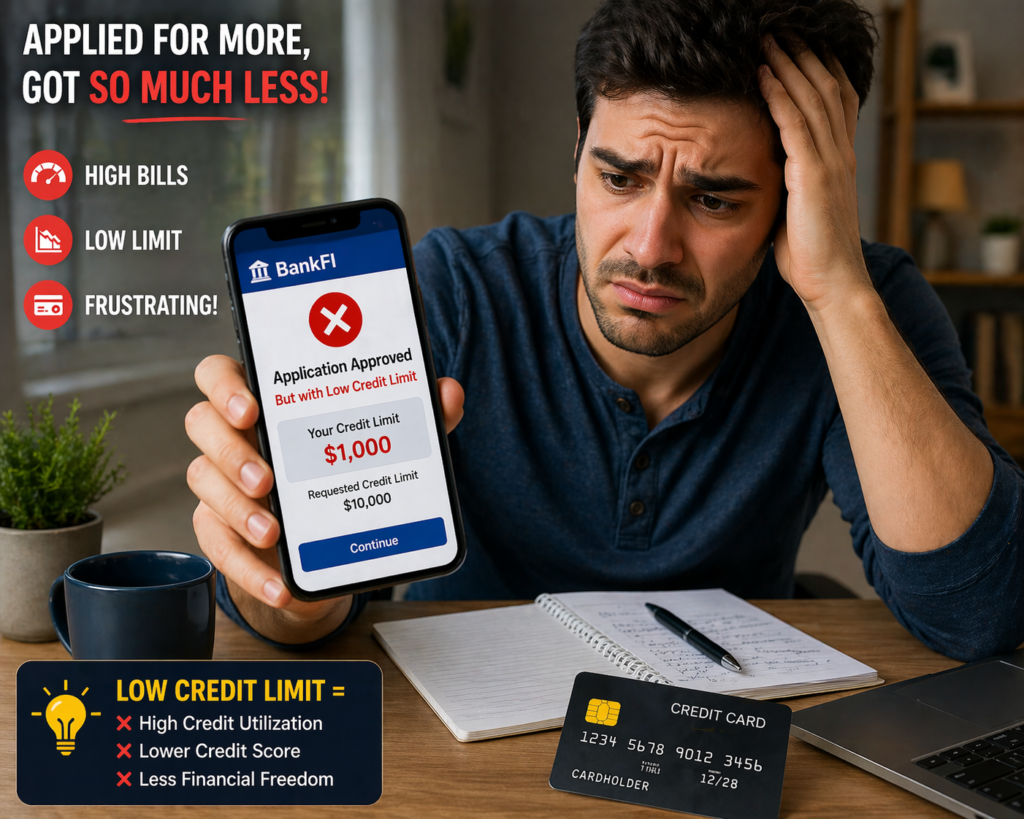
You applied for a credit card… and got a low limit or rejection.
Now you’re stuck:
- High APR
- Poor credit utilization
- Limited spending power
In the US, banks heavily rely on your FICO score, debt-to-income ratio, and spending behavior — and even small mistakes can keep your credit limit low.
QUICK UPDATE
What changed:
Banks are tightening high-limit approvals due to rising defaults
Who is affected:
People with average credit (580–700 FICO)
What to do immediately:
Improve utilisation, reduce debt, and apply strategically
FEATURED SNIPPET
To get a high credit limit card in 2026, improve your FICO score above 700, maintain low credit utilization (below 30%), increase income proof, and apply with banks that offer pre-approved limits. Strategic applications and consistent financial behavior significantly improve approval chances.
What’s Happening Right Now
Banks in the US are becoming more cautious.
Why?
- Rising credit defaults
- Inflation pressure
- Higher interest rate risks
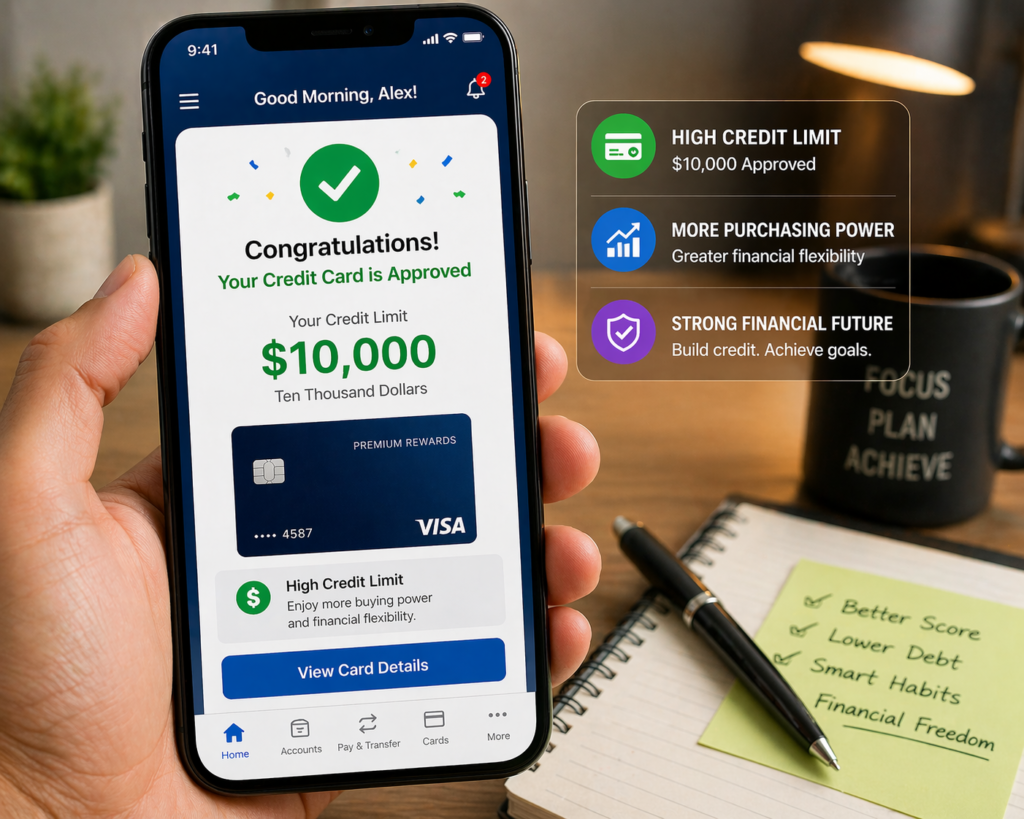
So instead of giving $10,000 limits easily…
They’re starting people at:
- $500
- $1,000
- $2,000
Even with decent credit.
Why This Is Happening (System + Psychology)
Banks don’t reward “good people.”
They reward low-risk profiles.
They analyze:
- FICO Score
- Credit utilization
- Payment history
- Income stability
- Existing credit exposure
Psychology behind it:
If you:
- Use too much credit → risky
- Apply too often → desperate
- Have low income → limited repayment ability
→ Result: Low limit or rejection
Who Is Affected Most
- First-time credit users
- People with 600–700 FICO
- High debt-to-income ratio users
- Frequent credit card applicants
- Users with high utilization (>50%)
Real Impact on Users
Low credit limit = BIG problems:
- High credit utilization (hurts score)
- Lower purchasing power
- Harder loan approvals
- Higher interest costs
Example:
$1,000 limit → $500 usage = 50% utilization → BAD for score
What You Should Do Now (Practical Steps)
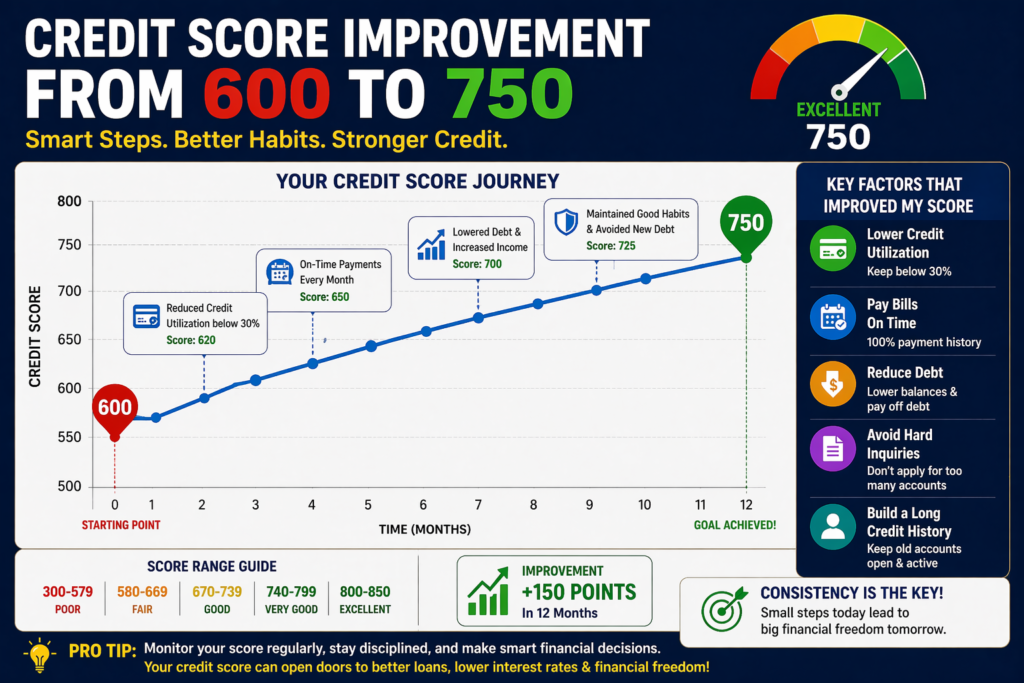
1. Increase Your FICO Score First
Target:
700+ for high limits
2. Lower Credit Utilization
Keep usage:
Below 30% (ideally 10%)
3. Show Higher Income
Update:
- Salary
- Side income
- Freelance earnings
4. Apply Smart (Not Randomly)
Apply here (high approval probability):
- Discover → https://www.discover.com/credit-cards
- Capital One → https://www.capitalone.com/credit-cards
- Chase → https://creditcards.chase.com
- Bank of America → https://www.bankofamerica.com/credit-cards
Use:
“Check eligibility” before applying
5. Request Limit Increase (Pro Move)
After 3–6 months:
- Request CLI (Credit Limit Increase)
- Prefer soft inquiry options
6. Use Your Card Regularly (But Smartly)
Banks reward:
- Active users
- Consistent payments
Comparison Table (Before vs After)
| Factor | Before | After |
|---|---|---|
| FICO Score | 620 | 720 |
| Utilization | 60% | 20% |
| Income Declared | Low | Updated |
| Applications | Random | Strategic |
| Credit Limit | $1,000 | $10,000+ |
How Banks Actually Decide Your Credit Limit (Hidden Formula)
Banks don’t randomly assign limits.
They use a risk-based internal formula:
Core Factors:
- FICO Score (30–40% weight)
- Income vs Debt (DTI Ratio)
- Credit Utilization
- Payment Consistency
- Credit Age
- Existing Limits with Other Banks
Real Logic (Simplified)
If:
- High income + low debt + low utilization
→ High limit (₹ / $10K–$25K+)
If:
- Average score + high usage
→ Low limit ($500–$2K)
Exact Credit Profile Needed for $10,000+ Limit
If your goal is $10K+ limit, aim for this:
| Factor | Ideal Range |
|---|---|
| FICO Score | 720+ |
| Utilization | Below 20% |
| Income | $50K+ annually |
| Credit History | 2–5 years |
| Missed Payments | 0 |
Pre-Approval Strategy (MOST POWERFUL)
This is where most people mess up.
Instead of applying directly:
Use:
- Pre-approval tools
- Soft checks
Why?
- No impact on credit score
- Higher approval probability
- Better limit offers
Smart Flow:
- Check pre-approval
- Accept only strong offers
- Avoid weak approvals
Best Timing to Apply (Critical)
Timing = everything.
Best Time:
- After salary increase
- After paying off debt
- After 3–6 months of stable usage
Worst Time:
- After rejection
- After high spending
- After multiple applications
Credit Limit Increase Hacks (Advanced)
Hack 1: Increase Usage (Strategically)
Spend more — but:
- Pay before billing cycle
- Keep utilization low
This signals:
“I can handle higher limits”
Hack 2: Split Payments
Instead of:
$900 usage on $1000 limit
Do:
- Spend $300
- Pay
- Spend again
→ Looks low risk
Hack 3: Ask After Big Income Update
Banks respond strongly to:
- Salary hikes
- New job
- Side income
Hack 4: Use High-Limit Friendly Banks
Some banks naturally give higher limits:
- Capital One
- Chase
- American Express
Soft vs Hard Limit Increase (Very Important)
| Type | Impact |
|---|---|
| Soft Inquiry | No credit score impact |
| Hard Inquiry | Temporary score drop |
Pro Tip:
Always ask:
“Will this be a soft pull?”
Secured Credit Card Strategy (Underrated)
If your score is low:
Start with:
Secured card ($500–$2000 deposit)
Then:
- Use responsibly
- Upgrade after 6 months
→ Can jump to $5K+ limits
How to Trick the System (Ethically)
Not illegal — just smart behavior.
Trick 1: Multiple Small Payments
Shows control.
Trick 2: Keep Old Cards Active
Builds trust.
Trick 3: Avoid Maxing Out Even Once
One mistake = risk profile change.
Trick 4: Stable Lifestyle Pattern
Banks hate unpredictable users.
Red Flags That Kill High Limit Approval
These silently destroy your chances:
- Late payments (even 1)
- Credit utilization > 50%
- Too many inquiries
- Short credit history
- High debt-to-income ratio
High Limit Card Options (USA)
For Good Credit (700+)
- Chase Sapphire Preferred
- Capital One Venture
- Amex Gold
For Average Credit (600–700)
- Discover It
- Capital One Platinum
Action Links (High Conversion)
- Discover → https://www.discover.com/credit-cards
- Capital One → https://www.capitalone.com/credit-cards
- Chase → https://creditcards.chase.com
- Bank of America → https://www.bankofamerica.com/credit-cards
Use:
“Check eligibility” before applying
Psychological Hack (Very Powerful)
Banks track behavior patterns like:
- Are you desperate for credit?
- Are you stable financially?
If you:
- Apply often
- Max out cards
→ You look risky
If you:
- Stay consistent
- Spend controlled
→ You look trustworthy
India Context
If applying in India:
- Focus on CIBIL score (750+)
- Use credit cards regularly
- Maintain low utilization
- Link income proof
Apps:
- Paytm
- PhonePe
- Bank apps
Real-Life Case Study (USA)
Sarah (Texas):
- FICO: 640
- Credit limit: $1,200
What she did:
- Reduced utilization to 15%
- Updated income
- Waited 3 months
- Applied via pre-approval
Result:
- Approved for $8,500 limit (Capital One)
Mistakes to Avoid
- Applying for multiple cards in 1 week
- Maxing out cards
- Ignoring credit report errors
- Not updating income
- Closing old credit cards
Expert Insights (Hidden Truth)
Banks love this profile:
- Low utilization
- Stable income
- Predictable spending
They hate:
- Sudden changes
- Risky behavior
- High dependency on credit
Truth:
It’s not about how much you earn.
It’s about how safe you look.
Why MaintainMarket is Different
Most blogs give theory.
MaintainMarket gives:
- Real approval strategies
- Behavioral insights
- Data-backed methods
Focus:
- Higher limits
- Better approvals
- Faster financial growth
FINAL ACTION PLAN
Do Today:
- Check FICO score
- Reduce credit usage
Do This Week:
- Update income
- Apply via pre-approval
Avoid:
- Multiple applications
- High utilization
Check Before Applying:
- Eligibility
- Credit score
- Income stability
FAQ Section
Q1. What credit score is needed for a high limit card?
A 700+ FICO score is generally considered a strong starting point for qualifying for higher credit limits. However, credit score is only one factor. Lenders may also consider your income, existing debts, payment history, credit utilization and overall credit profile when deciding your credit limit.
Q2. Can I get a $10,000 credit limit with 650 score?
It is possible, but it may be more difficult with a 650 credit score. Some issuers may approve a $10,000 limit if you have strong income, low existing debt, stable credit history and a good relationship with the lender. However, there is no guaranteed credit score that automatically qualifies you for a specific limit.
Q3. How often can I request a limit increase?
Many cardholders choose to request a credit limit increase after 3–6 months, particularly after establishing a consistent payment history. However, each issuer has its own rules. Requesting an increase too frequently may not improve your chances, so it’s generally better to wait until your financial profile has strengthened.
Q4. Does income affect credit limit?
Yes, income can significantly affect your potential credit limit. A higher and stable income may indicate that you have greater ability to repay your credit card balance. Issuers may also consider your existing debts and monthly obligations, so income alone does not guarantee a higher limit.
Q5. Will requesting increase hurt my score?
It can, depending on whether the issuer performs a hard or soft credit inquiry. Some card issuers can review your account without a hard inquiry, while others may conduct a hard inquiry that could temporarily affect your credit score. Before requesting an increase, ask the issuer whether the request involves a hard credit check.
Q6. Which bank gives highest credit limits?
There is no single bank that guarantees the highest credit limit for everyone. Credit limits are generally personalized based on factors such as credit score, income, debt, payment history and the issuer’s internal risk assessment. People with stronger overall financial profiles may qualify for substantially higher limits.
Q7. Can I increase my limit without income increase?
Yes, it may be possible. Your income doesn’t necessarily have to increase for an issuer to approve a higher limit. Maintaining a strong payment history, keeping credit utilization low, reducing existing debt and using your card responsibly can strengthen your overall profile. However, approval is ultimately up to the card issuer.
Q8. Does closing a card increase limit chances?
No. Closing a credit card generally does not increase your chances of receiving a higher limit on another card. In fact, closing an account can reduce your total available credit and potentially increase your overall credit utilization. If possible, consider how closing the account could affect your broader credit profile before doing so.
Q9. How long before limit increases?
A waiting period of around 3–6 months can be a reasonable time to consider requesting an increase, particularly if you’ve consistently paid your bills on time and maintained responsible credit utilization. Your issuer may have its own eligibility requirements, so check those before submitting a request.
Q10. Can I negotiate credit limit?
You can ask for a higher credit limit, although approval isn’t guaranteed. When requesting an increase, you may be asked about your current income, employment and monthly housing costs. Having a strong payment history, low debt and documented income can improve your overall application profile.
Q11. Why do rich people get higher limits easily?
People with higher incomes and stronger financial profiles may qualify for higher limits because lenders may view them as having greater repayment capacity and lower credit risk. However, wealth alone doesn’t guarantee a high credit limit. Credit history, debt levels, payment behavior and the lender’s internal criteria can also play an important role.
“If you’re serious about getting a higher credit limit, don’t apply blindly. Check eligibility first and choose the right bank — that alone can double your approval chances.”
People also searched for: Bank Flagged Your Payment? Here’s What It Really Means (And What to Do Immediately)
Also read: You Earn Well But Still Got Rejected? 5 Hidden Reasons Banks Won’t Approve Your Loan USA
Read: 15 Best Side Hustles From Home USA (Earn $1000+/Month) – Real Guide 2026
2 thoughts on “How to Get a High Credit Limit Card in 2026 (Banks Are Quietly Changing Approval Rules)”