
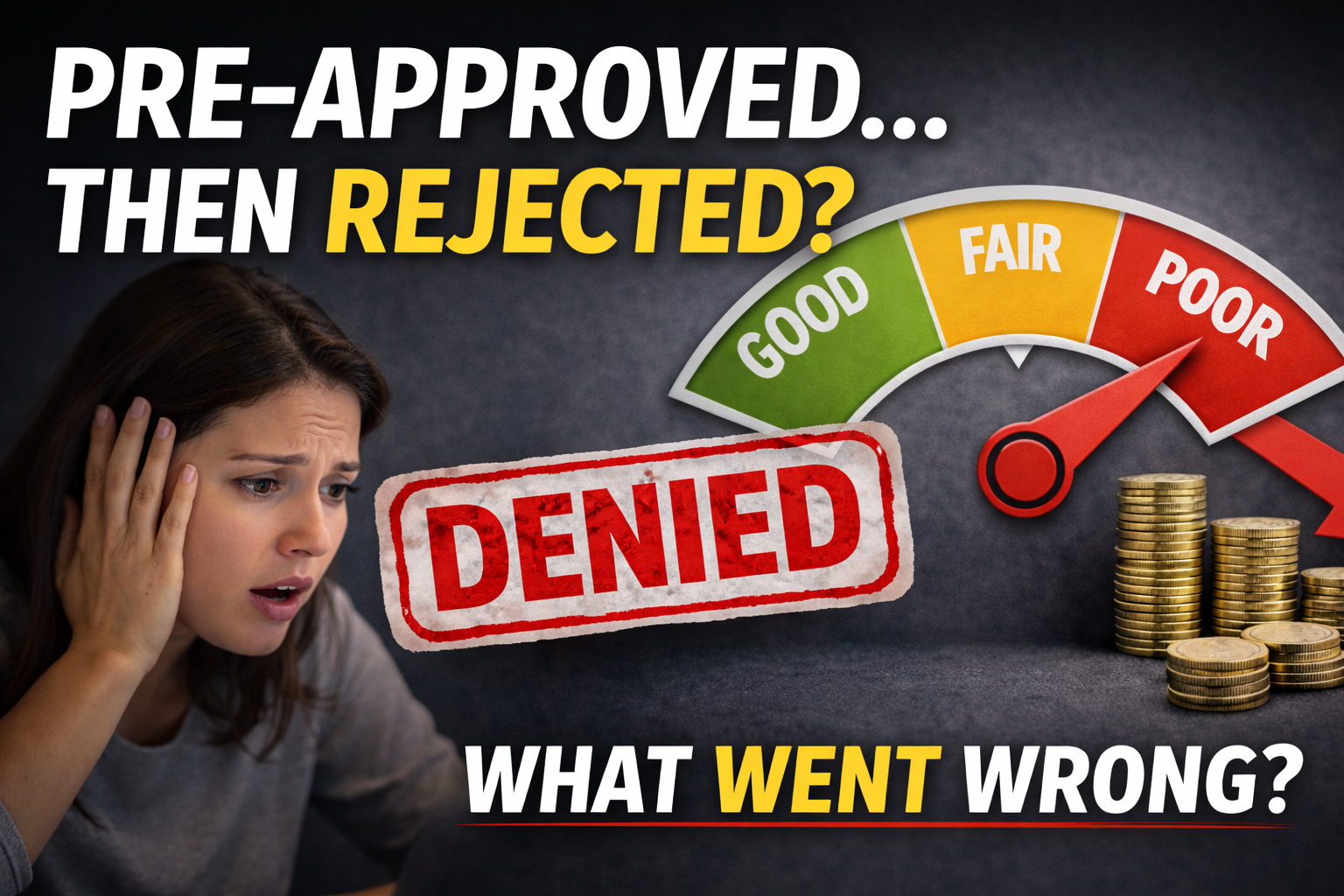
Got denied after loan pre-approval? Discover the real reasons lenders change decisions and how to fix your approval chances fast. Let’s talk about the article Loan Denied After Pre-Approval.

Introduction
Getting pre-approved feels like winning.
You finally think, “Okay, the hard part is done.”
You start planning—maybe even dreaming a little. New house, personal loan, financial breathing space.
And then suddenly… rejected.
No warning. No clear explanation. Just confusion.
This is one of the most frustrating situations in personal finance—because pre-approval feels like a guarantee.
But here’s the truth most people don’t realize:
Pre-approval is not final approval. It’s just the beginning of deeper scrutiny.
In this guide, I’ll break down exactly why loans get denied after pre-approval in the USA, what lenders actually find during final checks, and how you can fix it before applying again.
2. Quick Answer Box
Why loans get denied after pre-approval:
- Your credit score dropped before final approval
- You took new debt (credit card, EMI, car loan)
- Your income or employment changed
- Bank couldn’t verify your information
- Your debt-to-income ratio increased
- Errors or red flags appeared in underwriting
Quick Fix:
- Avoid any new credit activity after pre-approval
- Keep your financial profile stable
- Recheck documents and credit report
- Wait and reapply strategically
3. Why This Happens (Real Reason Nobody Explains)
Most people misunderstand what “pre-approval” means.
Pre-approval is based on:
- Initial credit check
- Basic income details
- Self-reported information
But final approval involves:
- Deep verification
- Risk analysis
- Underwriting review
Think of it like this:
Pre-approval = “You look fine on the surface”
Final approval = “Let’s check everything in detail”
And this is where things fall apart.
4. What Actually Goes Wrong (Detailed Breakdown)
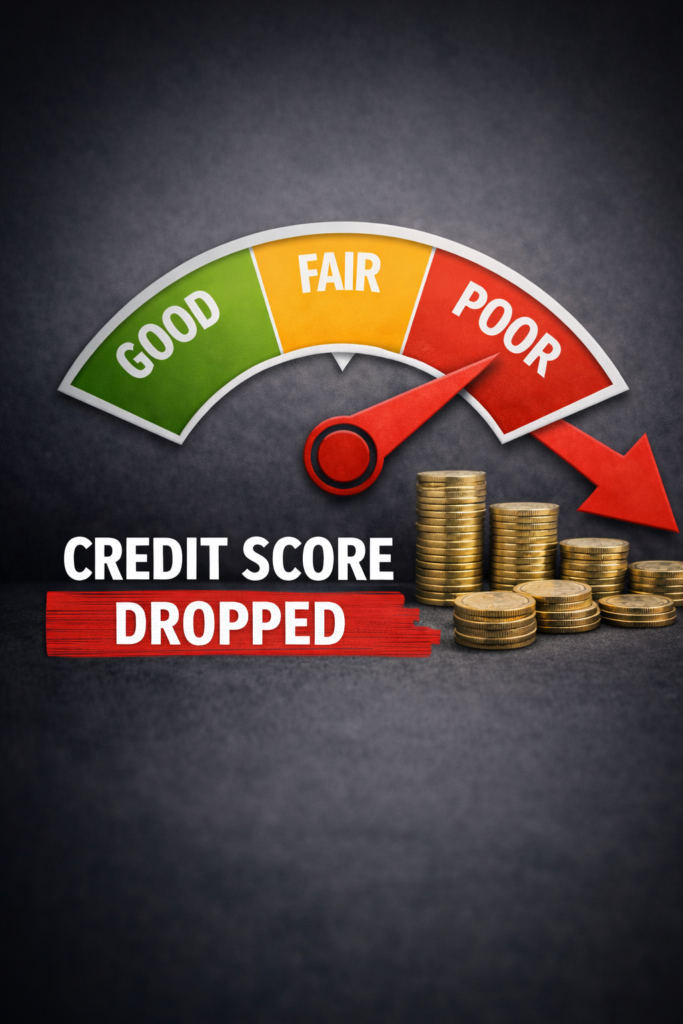
1. Your Credit Score Dropped (Even Slightly)
Even a small drop matters.
If your score was borderline (say 680–700), a 20–30 point drop can push you into a risk category.
Common causes:
- Late payment
- High credit usage
- New inquiry
2. You Took New Debt
This is the biggest mistake people make.
You got pre-approved… so you:
- Bought a car
- Used credit cards
- Took a small loan
Banks see this as:
“Increased risk after approval”
Instant red flag.
3. Your Income Changed
Even small changes matter.
- Job switch
- Reduced income
- Freelance instability
Lenders want consistency, not just income level.
4. Verification Failed
Sometimes it’s not even your fault.
Banks verify:
- Employer
- Salary
- Address
- Documents
If anything doesn’t match → rejection.
5. Debt-to-Income Ratio Increased
This is one of the most important metrics.
If your obligations increased slightly, your DTI crosses acceptable limits.
And lenders don’t negotiate here.
6. Underwriting Red Flags
This is where lenders dig deeper.
They check:
- Spending patterns
- Financial behavior
- Risk signals
Even things like irregular deposits can trigger concern.
5. Step-by-Step Fix (What You Should Do Now)
Step 1: Don’t Panic — Analyze First
Request the exact reason for denial.
You’re legally entitled to it in the USA.
Step 2: Check Your Credit Report Immediately
Look for:
- Errors
- Sudden drops
- Unknown inquiries
Fix errors first—it’s the fastest win.
Step 3: Reverse Any Recent Changes
If possible:
- Pay down new credit usage
- Close unnecessary balances
- Stabilize finances
Step 4: Wait Before Reapplying
Don’t rush.
Wait at least:
- 30–60 days (personal loans)
- 60–90 days (mortgage)
Step 5: Apply Strategically
This time:
- Choose the right lender
- Match your profile with their criteria
- Avoid multiple applications
6. Insider Insight (This Changes Everything)
Banks don’t approve loans based on hope.
They approve based on predictability.
If your financial behavior changed even slightly after pre-approval, you become unpredictable.
And unpredictable = risk.
That’s why even high-income individuals get rejected.
7. Real-Life Case Study (USA)
Case: Sarah (Texas)
- Pre-approved for mortgage: $300,000
- Credit score: 710
- Salary: $5,800/month
What went wrong:
- Bought furniture using credit card ($6,000)
- Credit utilization jumped
- Score dropped to 675
Result:
Loan denied during underwriting.
Fix she used:
- Paid off 70% of card balance
- Waited 45 days
- Reapplied
Result:
Loan approved successfully.
8. Comparison Table (What Affects Final Approval)
| Factor | Before Pre-Approval | After Pre-Approval | Impact |
|---|---|---|---|
| Credit Score | Checked once | Rechecked | High |
| Debt | Estimated | Verified | Critical |
| Income | Declared | Verified | High |
| Spending | Ignored | Analyzed | Medium |
| Behavior | Surface level | Deep analysis | Critical |
9. Mistakes People Make
- Thinking pre-approval = guarantee
- Using credit immediately after approval
- Applying to multiple lenders
- Ignoring small credit score changes
- Not checking reports

10. The “Last-Minute Check” Most People Don’t Know About
Here’s something most people never realize:
Even 24–48 hours before final approval, lenders run a final check.
This includes:
- Credit re-pull
- Employment verification call
- Bank statement scan
That means even if everything looked perfect earlier, one small change at the last moment can kill your loan.
Real example:
- You swipe your credit card for $2,000
- Your utilization spikes
- System flags you
Result: Denied before closing.
Key Insight:
Approval isn’t locked until money is disbursed.
11. Soft vs Hard Pull — Hidden Impact on Your Approval
Most people ignore this, but it matters.
- Pre-approval → Soft pull (no impact)
- Final approval → Hard pull (impacts score)
If you applied to multiple lenders in between:
- Multiple hard inquiries reduce your score
- Makes you look desperate
What lenders think:
“If 5 lenders rejected you, why should we approve?”
12. The “Behavior Shift” Red Flag
Lenders track behavior patterns.
If your financial behavior suddenly changes after pre-approval, it raises suspicion.
Examples:
- Sudden high spending
- Large unexplained deposits
- Frequent withdrawals
- New credit usage
Why this matters:
Banks don’t just evaluate numbers—they evaluate consistency.
A sudden shift = potential financial stress.
13. Bank Statement Analysis — The Silent Killer
This is where many people lose approval without knowing why.
Lenders analyze:
- Gambling transactions
- Irregular income
- Frequent overdrafts
- Cash dependency
Even if your credit score is good, these patterns can lead to rejection.
Reality:
Your bank statement tells your real financial story, not your application.
14. Why High Earners Still Get Rejected
This is a huge misconception.
Income alone doesn’t matter.
| Profile | Income | Behavior | Result |
|---|---|---|---|
| Person A | $9,000/month | High spending, high debt | Rejected |
| Person B | $4,000/month | Stable, low debt | Approved |
What lenders prefer:
- Stability over high income
- Predictability over growth
15. Pre-Approval Traps (What Banks Don’t Tell You)
Pre-approval is partly a marketing tool.
Banks use it to:
- Attract applicants
- Increase application volume
- Filter serious borrowers
But it’s not a commitment.
Important truth:
You’re still under evaluation after pre-approval.
16. How Timing Affects Your Loan Approval
Timing plays a bigger role than people think.
Bad timing examples:
- Applying after a recent job switch
- Applying right after using credit heavily
- Applying during financial instability
Good timing:
- Stable income for 3–6 months
- Low credit usage
- No recent inquiries
Timing alone can decide approval.
17. Alternative Approval Strategies (If You Keep Getting Rejected)
If traditional lenders reject you, don’t panic—change strategy.
Option 1: Credit Unions
- More flexible
- Human-based decisions
Option 2: Secured Loans
- Lower risk for lender
- Higher approval chance
Option 3: Co-Signer
- Adds trust
- Improves approval probability
Option 4: Smaller Loan First
- Build trust
- Then scale up
18. Psychological Triggers Lenders Use
This is next-level understanding.
Lenders are not just looking at data—they’re looking for signals:
- “Is this person stable?”
- “Will they default under stress?”
- “Is this behavior consistent?”
They avoid:
- Uncertainty
- Sudden changes
- Over-leveraged profiles
19. What To Do Immediately After Rejection (Real Strategy)
Don’t do what most people do (panic + reapply).
Instead:
Day 1–2:
- Request denial reason
- Pull credit report
Day 3–10:
- Fix errors
- Reduce credit usage
Day 10–30:
- Stabilize finances
- Avoid new inquiries
After 30+ days:
- Apply strategically
20. Advanced Fix: Boost Approval Chances Fast
If you want faster results:
- Pay down credit cards below 20%
- Set auto-pay for bills
- Increase available credit (without spending)
- Remove unnecessary subscriptions
These small changes can significantly improve approval chances.
21. The “Reapplication Strategy” Most People Get Wrong
Big mistake:
Applying again immediately after rejection.
Better approach:
- Wait
- Fix issues
- Target correct lender
Smart reapplication = higher success rate
22. Future-Proof Strategy (Never Get Rejected Again)
If you want to avoid this situation completely:
- Maintain credit score above 720
- Keep utilization below 30%
- Avoid frequent applications
- Maintain stable income proof
Think long-term, not just for one loan.
23. Hidden Costs of Loan Rejection
People ignore this, but it matters:
- Credit score drops
- More inquiries reduce trust
- Future approvals become harder
One rejection can affect multiple future opportunities.
24. Final Reality Check (Important)
Loan rejection after pre-approval is not bad luck.
It’s a signal.
A signal that:
- Something changed
- Something didn’t match
- Something triggered risk
Once you understand this, you stop guessing—and start fixing.
25. The “Employment Verification Trap” That Breaks Approvals
This one catches people completely off guard.
Even after pre-approval, lenders often do a final employment verification—sometimes just days before disbursement.
They may:
- Call your employer
- Check your designation
- Verify salary and job status
Now here’s where things go wrong:
- You switched jobs recently
- You’re in a probation period
- HR doesn’t confirm properly
- Your role/salary doesn’t match documents
Result: Instant red flag → Loan denied
Why lenders care so much:
They’re not just checking income—they’re checking stability and reliability.
Even a high-paying job won’t help if it looks unstable.
What you should do:
- Avoid switching jobs during loan process
- Inform HR in advance about verification calls
- Ensure your documents match exactly
- Wait until your job stabilizes (30–90 days) before applying
Key takeaway:
A simple verification call can decide your entire loan outcome—don’t ignore it.
26. MaintainMarket Expert Advice
If you remember only one thing, remember this:
After pre-approval, freeze your financial behavior.
No new loans.
No big purchases.
No unnecessary risk.
Treat this phase like a “financial lockdown.”
27. Why MaintainMarket is Different
Most websites give textbook advice.
We focus on:
- Real-world lender behavior
- Psychological triggers banks use
- Actionable fixes (not theory)
This is why our content doesn’t just inform—it helps you get approved.
28. Action Plan (Clear Steps)
- Check credit report today
- Identify any changes after pre-approval
- Reduce credit usage immediately
- Stabilize income and expenses
- Wait minimum 30–60 days
- Reapply with a better strategy
29. Conclusion
Getting denied after pre-approval feels unfair—but it’s not random.
It’s the result of deeper checks you didn’t see coming.
Once you understand how lenders think, everything changes.
And the best part?
This problem is fixable.
30. FAQs – Loan Denied After Pre-Approval
Q1. Can a loan really be denied after pre-approval?
Yes, pre-approval is not final approval.
Q2. Does credit score change after pre-approval matter?
Yes, even a small drop can lead to rejection.
Q3. Should I use my credit card after pre-approval?
No, avoid increasing usage.
Q4. How long should I wait before reapplying?
30–60 days minimum.
Q5. Can I apply with another lender immediately?
Not recommended—it increases risk signals.
Q6. What is underwriting in loans?
Final verification process by lenders.
Q7. Can income changes affect approval?
Yes, stability matters more than amount.
Q8. Is pre-qualification same as pre-approval?
No, pre-qualification is even less reliable.
People Also Searched For: Not Enough Retirement Savings at 40? Real Plan to Catch Up Fast in the USA
Also Read: Your Bank Account Got Frozen Overnight? Here’s Exactly How to Fix It (USA 2026 Guide)
Not Enough Salary? 15 Proven Ways Americans Are Earning Extra Money in 2026
3 thoughts on “5 Main Reasons Why Loan Denied After Pre-Approval? Solutions To Know (USA 2026)”