Credit Utilization Ratio: How to Calculate It

Credit utilization ratio infographic showing individual and overall credit card utilization calculations, $800 of $4,000 and $2,000 of $10,000, both resulting in 20%, with practical balance-monitoring tips | MaintainMarket

Your credit utilization ratio is an important factor that can influence your credit score in the United States. It measures how much of your available revolving credit you are using compared with your total credit limits. If your credit card balances are close to their limits, your credit score may be affected even when you make payments on time.

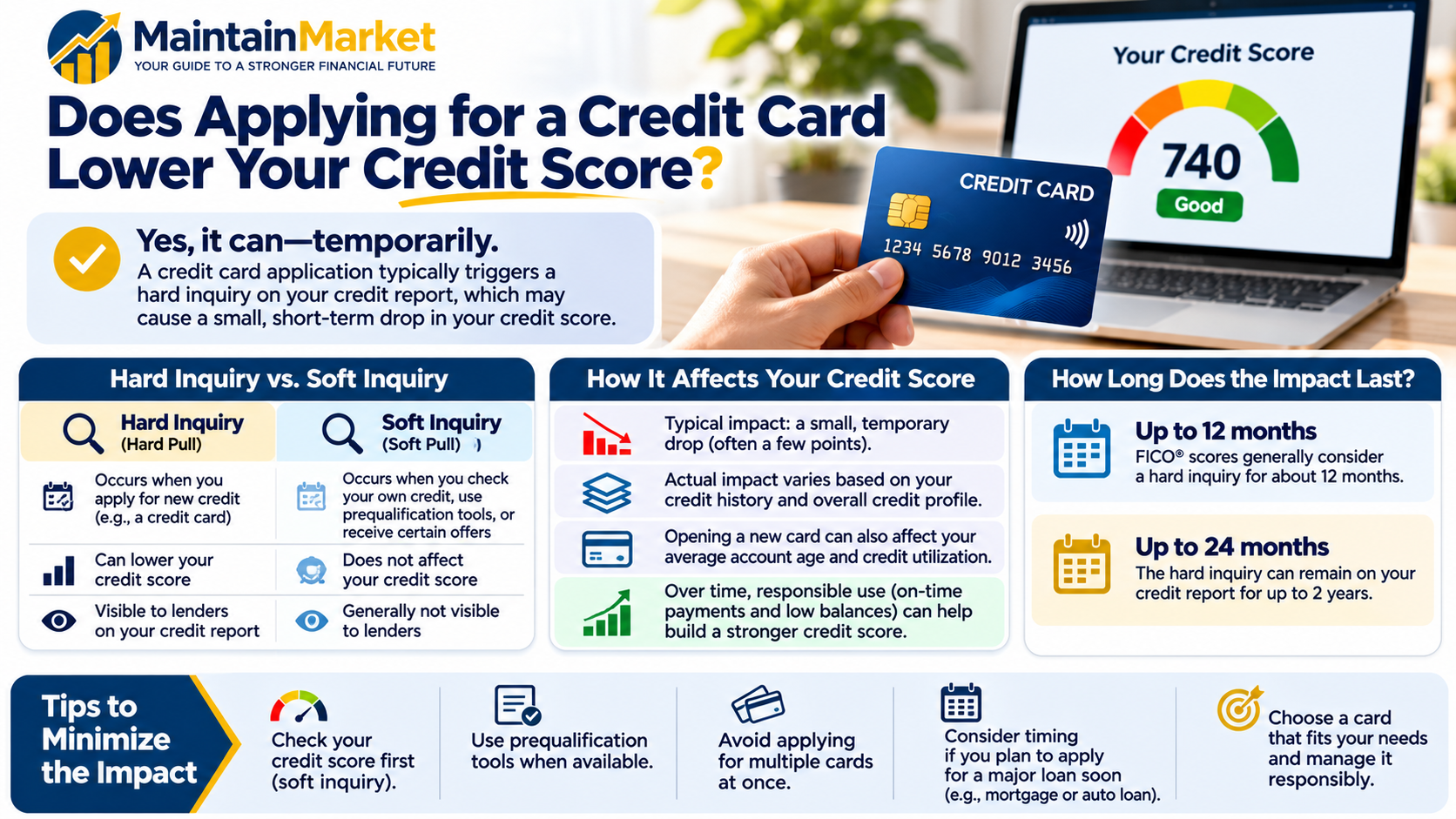
Does Applying for a Credit Card Lower Your Credit Score?

Does applying for a credit card lower your credit score infographic explaining hard inquiries, credit reports, and credit score impact

If you are planning to apply for a new credit card, you may be wondering: Does applying for a credit card lower your credit score? The short answer is yes, it can. When you submit a credit card application, the issuer will typically perform a hard inquiry on your credit report, which may cause your credit score to drop slightly.

What Credit Score Do I Need to Buy a House? Complete Guide

What credit score do I need to buy a house, illustrating mortgage credit score ranges, a home, and loan documents.

What credit score do I need to buy a house? In the United States, you may qualify for certain mortgage programs with a credit score as low as 500, while other loans and lenders may require scores of 620 or higher. The credit score you need depends on the type of mortgage, your down payment, your income, your existing debts, and the lender’s approval requirements.

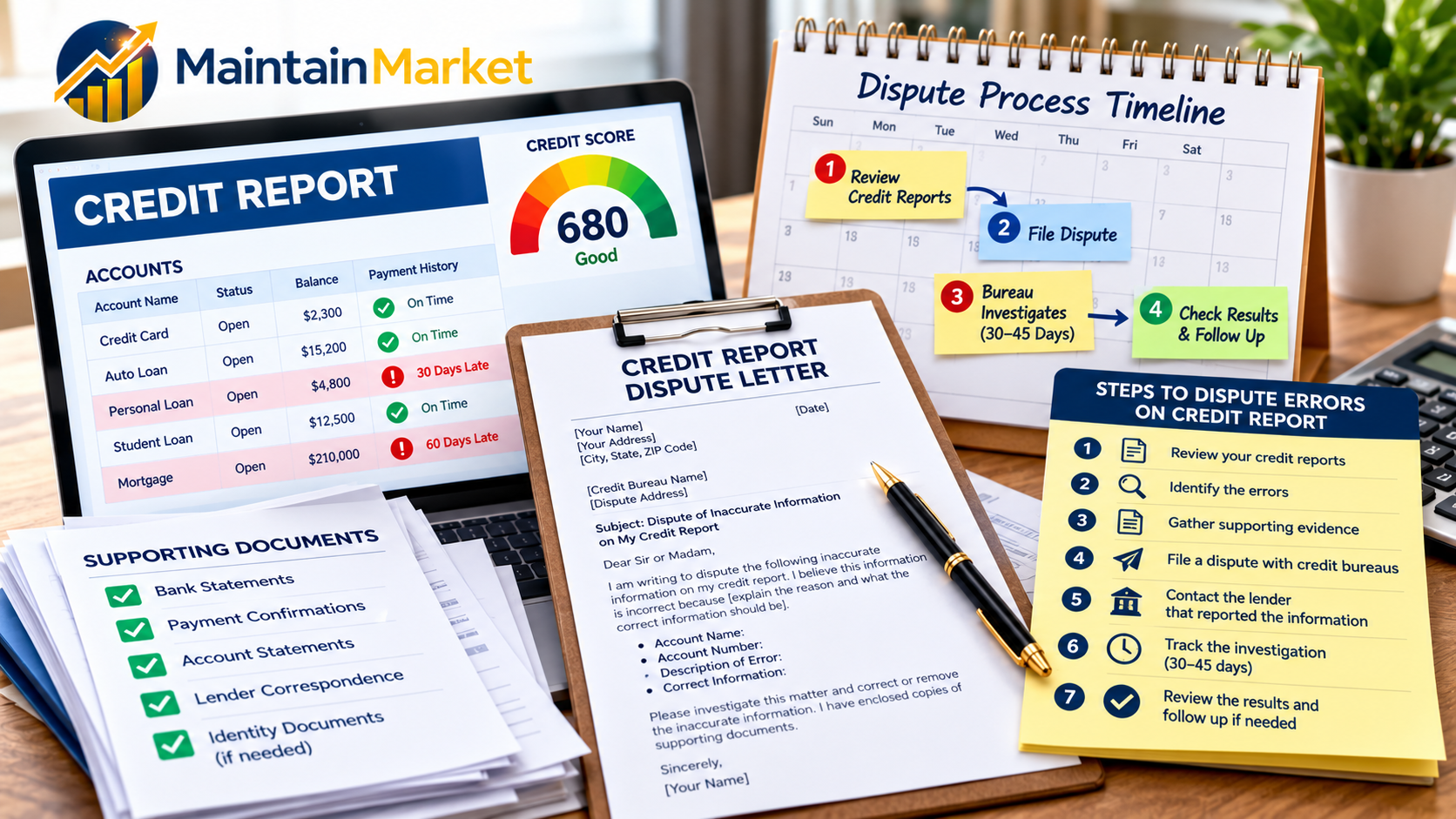
How to Dispute Errors on Credit Report: 7 Steps

How to dispute errors on credit report, showing a credit report, dispute letter, supporting documents, and a calendar.

If you want to learn how to dispute errors on credit report, start by reviewing your credit reports, identifying the inaccurate information, and gathering documents that support your claim. You can dispute errors directly with the credit bureau reporting them and the company that supplied the information. Under U.S. federal law, these disputes are generally free, and the companies must investigate qualifying disputes and correct information that is inaccurate or cannot be verified.

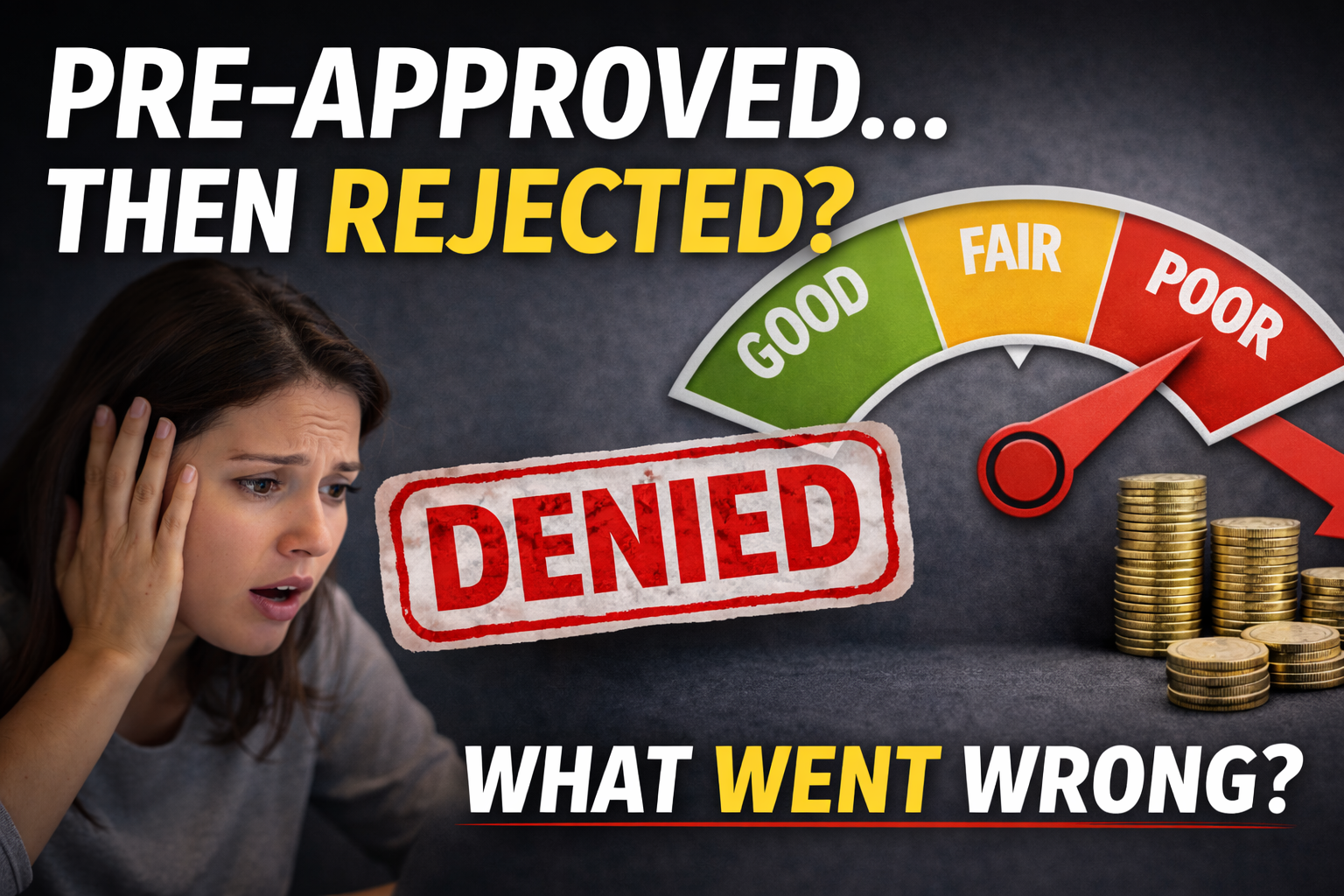
Soft Pull vs Hard Pull Loan Approval: The Hidden Reason Your Loan Gets Rejected (Fix It Before It’s Too Late)

Soft pull vs hard pull loan approval

Learn the real difference between soft pull vs hard pull credit checks and how they impact your loan approval. Avoid rejections and fix your credit fast. In this article, let’s talk about Soft Pull vs Hard Pull loan approval: The Hidden Reason Your Loan Gets Rejected.

What Affects Your Credit Score the Most? 5 Key Factors

What affects your credit score the most

If you want to build a strong credit score, it helps to understand what affects your credit score the most. In the United States, credit scoring models evaluate information in your credit reports to estimate how responsibly you manage borrowed money. Payment history and the amount of credit you use are particularly important in the widely used FICO scoring model.