
Personal finance basics for beginners start with understanding how much money you earn, where it goes, how to save for emergencies, and how to prepare for future expenses. You do not need a high income to begin managing money better. You need a realistic plan, consistent habits, and a clear understanding of your financial priorities.
Whether you have just started working, are opening your first bank account, or want to get control of your spending, this guide explains the essential personal finance concepts in simple terms.
What Is Personal Finance?
Personal finance is how you manage your money to meet your everyday needs and long-term goals. It includes earning, spending, saving, borrowing, investing, and protecting yourself against financial risks.
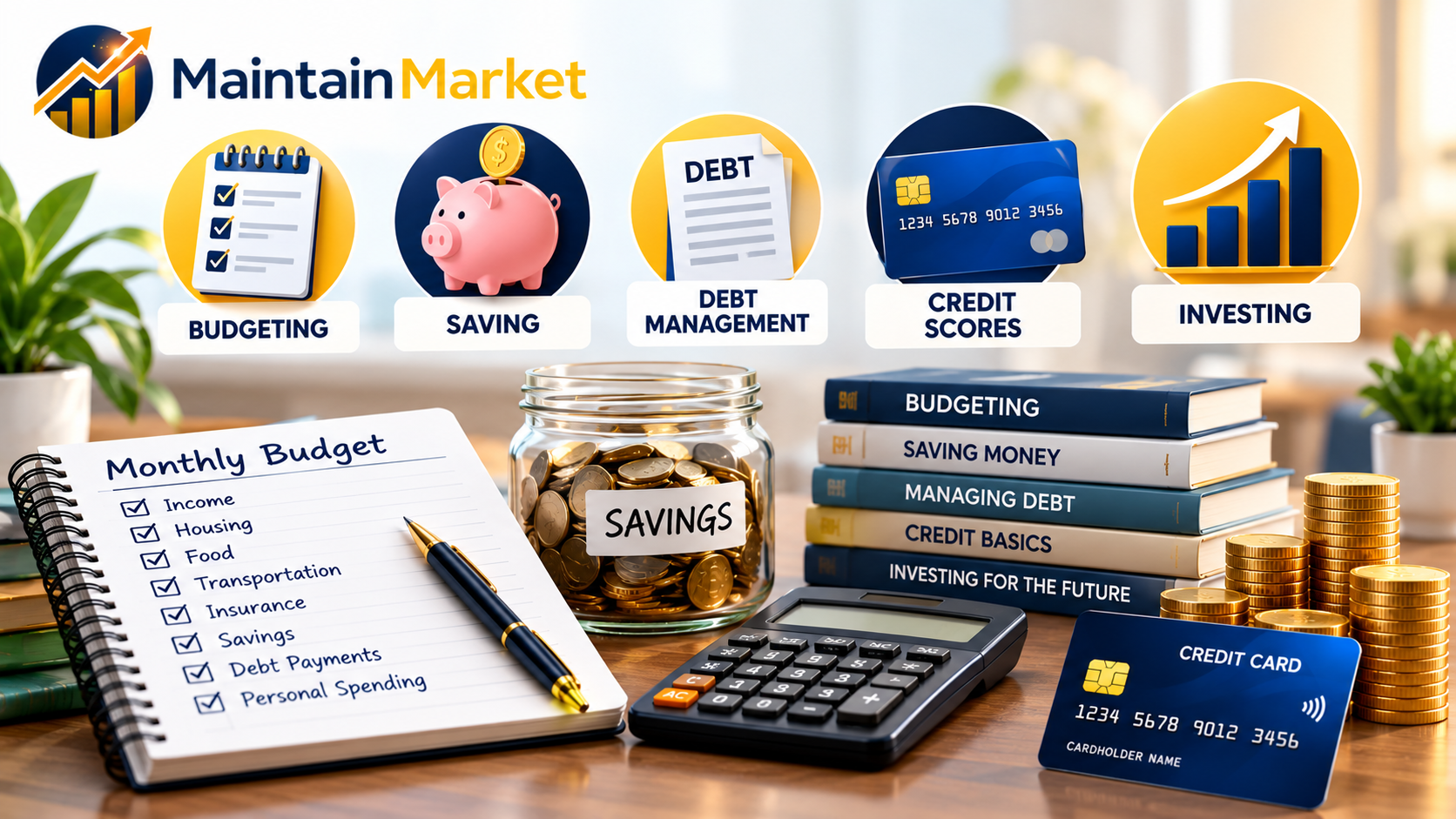
For beginners in the United States, personal finance generally involves five key areas:
- Budgeting: Planning how to use your income.
- Saving: Setting money aside for emergencies and future purchases.
- Debt management: Borrowing responsibly and repaying what you owe.
- Credit management: Understanding credit reports, credit scores, and credit cards.
- Investing and protection: Preparing for long-term goals and managing financial risks through appropriate insurance.
The objective is not to stop spending money on things you enjoy. It is to make sure your spending supports your needs and goals without putting your financial stability at risk.
1. Start With a Simple Monthly Budget
A budget is a plan for your income and expenses. It helps you understand whether your money is covering your needs, supporting your goals, or disappearing into expenses you have not been tracking.
According to Consumer.gov’s budgeting guide, a practical budget starts with listing your income, recording your expenses, and comparing the two.
How to create your first budget
- Calculate your monthly take-home income after taxes and payroll deductions.
- List essential expenses, such as housing, groceries, utilities, transportation, and insurance.
- Add debt payments and other recurring bills.
- Set an amount for savings, even if it is small.
- Track discretionary spending, including subscriptions, dining out, and entertainment.
- Review your spending at the end of each month and adjust your plan.
Example: A beginner’s monthly budget
Suppose your take-home income is $3,000 per month. Your budget might look like this:
| Category | Monthly amount |
|---|---|
| Housing and utilities | $1,100 |
| Groceries | $350 |
| Transportation | $250 |
| Insurance and healthcare | $200 |
| Debt payments | $250 |
| Savings | $300 |
| Personal spending | $350 |
| Other expenses | $200 |
| Total | $3,000 |
This is an illustrative budget, not a recommended allocation for every household. Your actual costs will depend on where you live, your family responsibilities, debt, and other financial obligations.
Beginner tip: If your expenses exceed your income, start by identifying the largest expenses you can realistically adjust. If you have little money left after essentials, focus on a workable budget rather than forcing yourself to follow an unrealistic savings target.
2. Build an Emergency Fund
An emergency fund is money reserved for unexpected expenses, such as a medical bill, car repair, urgent home repair, or temporary loss of income.
Without accessible savings, an unexpected expense may force you to use a credit card, take out a loan, or withdraw money intended for another important goal.
How much should you save?
A common long-term target is three to six months of essential living expenses, but you do not need to reach that amount immediately.
For example, if your essential monthly expenses are $2,000:
- One month of expenses: $2,000
- Three months of expenses: $6,000
- Six months of expenses: $12,000
These are savings targets, not mandatory minimums. Your appropriate amount depends on your income stability, household responsibilities, insurance coverage, and other available resources.
Start with a smaller milestone, such as $500 or $1,000, if that is more achievable. Then increase it over time.
Keep emergency savings somewhere relatively safe and accessible, such as an eligible bank savings account. Check whether the institution and account are covered by FDIC insurance and understand applicable limits and conditions.
The Consumer Financial Protection Bureau’s emergency fund guide explains practical ways to start saving, including automatic transfers and setting achievable goals.
3. Understand the Difference Between Needs and Wants
One of the most useful personal finance habits is learning to distinguish essential expenses from optional spending.
Needs generally include:
- Housing and basic utilities
- Groceries and essential household supplies
- Necessary transportation
- Healthcare and required insurance
- Minimum debt payments
Wants may include:
- Frequent restaurant meals
- Entertainment subscriptions
- Nonessential upgrades
- Impulse purchases
- Expensive items you can comfortably postpone
The distinction depends on your circumstances. For example, internet access may be essential for someone working remotely but optional in a different situation.
You do not need to eliminate every want. Instead, decide how much discretionary spending your budget can support after accounting for essential bills, debt obligations, and savings goals.
4. Learn How Credit Scores and Credit Cards Work
Credit is an important part of the U.S. financial system. Lenders may review your credit history and credit score when you apply for a credit card, auto loan, personal loan, or mortgage. Other businesses may use credit information where permitted by applicable law.
A credit score is a numerical assessment based on information in your credit history. Different scoring models can produce different scores.
Common factors in many credit scoring models include:
- Payment history: Whether you make payments on time.
- Credit utilization: How much revolving credit you use relative to your limits.
- Length of credit history: How long your credit accounts have existed.
- New credit applications: Certain recent applications and hard inquiries.
- Credit mix: The types of credit accounts you manage.
The importance of each factor varies by scoring model.
How should beginners use credit cards?
A credit card lets you borrow money from the card issuer and repay it under the account’s terms. It is not extra income.
To manage one responsibly:
- Choose a card whose fees and terms suit your situation.
- Understand its annual fee, interest rate, and other charges.
- Make payments by the due date.
- Whenever possible, pay the full statement balance to avoid interest on purchases when the account’s grace-period terms allow it.
- Avoid buying things simply to earn rewards.
- Monitor your transactions and account statements.
You generally do not need to carry a balance or pay interest to build credit.
For a more detailed explanation, read Maintain Market’s guides to what affects your credit score the most and questions to ask before getting a credit card.
5. Make a Plan to Manage and Repay Debt
Debt is money you owe to another person or organization. Common examples include credit card balances, student loans, auto loans, and mortgages.
Some borrowing may help you pay for important goals, but debt can become difficult to manage when payments and interest consume too much of your income.
Understand the cost of borrowing
Before taking out a loan, compare:
- Annual percentage rate (APR)
- Origination and other fees
- Monthly payment
- Repayment period
- Total amount you will repay
- Consequences of missing payments
Do not choose a loan based only on its advertised monthly payment. A longer repayment period may reduce each payment while increasing the total interest you pay.
Two common debt repayment strategies
Debt avalanche: Make the required payments on all debts and direct extra money toward the debt with the highest interest rate first. This can reduce interest costs.
Debt snowball: Make the required payments on all debts and direct extra money toward the smallest balance first. Paying off a balance may provide motivation and simplify your finances.
Either strategy can work. Choose one you can follow consistently while keeping essential bills current and maintaining a realistic budget.
If you are already struggling to make payments, contact your lenders to ask about available hardship options before the situation becomes more difficult.
6. Start Saving for Future Goals
An emergency fund protects you from unexpected costs. Other savings help you prepare for expenses you can anticipate.
Examples include:
- A car purchase
- Moving to a new home
- Education or professional training
- A home down payment
- Travel
- Retirement
Give each major goal a target amount and a timeframe.
For example, if you want to save $1,200 over 12 months, you would need to set aside $100 per month, assuming no interest or investment returns.
Keeping money for near-term goals separate from everyday spending can make it easier to track progress.
Make saving automatic
If your income and account balances allow it, schedule a recurring transfer to savings after payday. Start with an amount you can sustain, then adjust it when your circumstances change.
Be sure to leave enough money in your checking account for bills and other scheduled payments so that automatic transfers do not trigger overdrafts or missed payments.
7. Learn the Basics of Investing
Saving and investing are related, but they serve different purposes.
- Saving generally prioritizes access to your money and stability.
- Investing involves putting money into assets that may grow in value or generate income, while accepting the possibility of losses.
Investments can include stocks, bonds, mutual funds, exchange-traded funds (ETFs), and other assets. Each has different risks, costs, and characteristics.
What should beginners understand before investing?
Know your timeframe. Money needed soon generally should not be exposed to the same level of market risk as money intended for a goal decades away.
Understand diversification. Spreading investments across different assets can help reduce the impact of a poor result in one investment, although it cannot eliminate market risk.
Pay attention to fees. Investment expenses reduce the amount of money that remains invested and can affect long-term results.
Avoid promises of guaranteed high returns. Be cautious of anyone promising large profits with little or no risk.
Build a financial foundation first. Consider your emergency savings, high-interest debt, near-term expenses, and retirement needs before deciding how much you can invest.
In the United States, eligible workers may have access to employer-sponsored retirement plans such as a 401(k), while individual retirement accounts (IRAs) offer another way to save for retirement. Eligibility, contribution limits, tax treatment, and withdrawal rules depend on the account and current law.
For an introduction to investing, see Investor.gov’s investing guide.
8. Protect Yourself With Appropriate Insurance
Financial planning is not only about growing money. It is also about reducing the financial impact of unexpected events.
Insurance may help protect you against specific losses, depending on the policy’s coverage, exclusions, deductibles, and limits.
Depending on your circumstances, relevant coverage may include:
- Health insurance: Helps cover eligible medical expenses.
- Auto insurance: Provides certain protections related to vehicle accidents and other covered losses.
- Renters or homeowners insurance: May cover specified damage, personal property losses, or liability.
- Disability insurance: May replace part of your income when a covered disability prevents you from working.
- Life insurance: May provide financial support to eligible beneficiaries after the insured person’s death.
You do not necessarily need every type of policy. Consider the risks you face, your existing coverage, your dependents, and what you could afford to pay out of pocket.
When comparing policies, look beyond the premium. Review deductibles, coverage limits, exclusions, and claim requirements.
Maintain Market’s auto insurance guides can help you explore relevant insurance topics as you build your financial plan.
9. Review Your Financial Situation Regularly
Managing money is an ongoing process. Your plan may need to change when you get a new job, move, take on debt, support family members, or face unexpected expenses.
Set aside time at least once a month to review:
- Your take-home income
- Essential and discretionary spending
- Bank account balances
- Credit card balances and loan payments
- Emergency savings
- Progress toward your financial goals
- Upcoming annual or irregular expenses
You can use a spreadsheet, budgeting app, or simple notebook. The best system is one you understand and will continue using.
A Simple 30-Day Personal Finance Plan for Beginners
If you are unsure where to start, use this four-week plan.
Week 1: Understand your money
- Calculate your monthly take-home income.
- List recurring bills and essential expenses.
- Review recent bank and credit card transactions.
- Identify any upcoming large expenses.
Week 2: Create a budget
- Set spending limits based on your actual income.
- Identify expenses you can reasonably reduce.
- Decide how much you can save.
- Choose a system to track spending.
Week 3: Improve your financial safety
- Start or strengthen your emergency savings.
- List debts, interest rates, and due dates.
- Set reminders for important bills.
- Review your credit reports and check for errors.
Week 4: Plan for the future
- Set one short-term savings goal.
- Review your insurance needs.
- Learn the basics of retirement accounts and investing.
- Schedule a monthly money review.
You do not have to fix every financial problem in 30 days. The goal is to understand your current position and establish a few habits that you can maintain.
Common Personal Finance Mistakes to Avoid
Spending without tracking: Small recurring expenses can add up. Review your transactions to understand where your money goes.
Saving only when money is left over: Treating savings as a planned expense can make contributions more consistent.
Ignoring high-interest debt: Interest can make repayment more expensive. Understand your rates and create a realistic repayment strategy.
Using credit cards as extra income: Credit limits are borrowing limits, not money you can afford to spend.
Investing money you need soon: Market losses can occur when you cannot afford to wait for a recovery.
Following financial advice without checking the details: Verify claims, fees, risks, and eligibility requirements before acting.
Trying to change everything at once: Begin with a manageable budget and one or two practical goals. Consistency matters more than a complicated system you cannot maintain.
Frequently Asked Questions About Personal Finance Basics for Beginners
1. What are the basics of personal finance?
The basics include budgeting, saving, managing debt, understanding credit, investing for future goals, and protecting yourself against financial risks.
2. How should a beginner start managing money?
Start by calculating your take-home income, listing expenses, creating a monthly budget, and setting aside an achievable amount for emergencies. Then work on debt management and longer-term goals.
3. How much money should I save each month?
There is no single amount that works for everyone. Start with what your budget can support after essential expenses and required debt payments. Increase your savings when your income or financial circumstances allow.
4. How much should I have in an emergency fund?
Three to six months of essential expenses is a common long-term target, but a smaller initial goal can still help. Your ideal amount depends on your income stability, household responsibilities, and financial risks.
5. Should I pay off debt or start investing first?
The answer depends on the interest rate, repayment obligations, emergency savings, employer retirement benefits, and your goals. High-interest debt often deserves priority, while maintaining essential payments and some accessible savings can help protect against unexpected expenses.
6. Do I need a high income to manage money well?
No. Budgeting, tracking expenses, avoiding unnecessary high-cost debt, and planning ahead can help at different income levels. However, when essential costs exceed available income, spending changes alone may not be enough; increasing income or seeking appropriate assistance may also be necessary.
7. Is saving the same as investing?
No. Saving generally focuses on keeping money accessible for short-term needs, while investing involves taking risk in pursuit of potential growth or income.
8. What is the first financial goal for a beginner?
A useful starting point is understanding your monthly cash flow and creating a small emergency reserve. If you have overdue bills or urgent high-interest debt, address those obligations as part of your initial plan.
9. Should I use a budgeting app?
A budgeting app can help categorize spending and track goals, but it is not essential. A spreadsheet or notebook can work just as well if you update it regularly and protect your financial information.
10. When should I speak with a financial professional?
Consider seeking qualified help if you have complicated debt, tax questions, retirement decisions, major insurance needs, or investment choices you do not understand. Check the professional’s qualifications, fees, and potential conflicts of interest before engaging their services.
Why Maintain Market Is Different
At Maintain Market, we focus on practical financial education that helps readers understand their options and make informed decisions.
This guide brings together everyday money management, emergency savings, credit, debt, investing, and insurance instead of treating them as unrelated topics. We also emphasize realistic examples, the costs and risks of financial products, and the importance of checking reliable sources before making decisions.
Our goal is to help readers build a financial foundation they can adapt as their circumstances change—not promise instant wealth or a one-size-fits-all solution.
References
- Consumer.gov — Making a Budget
- Consumer Financial Protection Bureau — An Essential Guide to Building an Emergency Fund
- MyMoney.gov — MyMoney Five and Tools
- Investor.gov — Introduction to Investing
- Consumer Financial Protection Bureau — Consumer Resources
Editorial Review
Content type: U.S. personal finance education
Review focus: Budgeting, emergency savings, credit management, debt repayment, investing, and insurance basics
Audience: Adults and beginners learning to manage personal finances in the United States
Important notice: This article is for general educational purposes only. It is not individualized financial, tax, legal, investment, or insurance advice. Account terms, insurance coverage, tax rules, and financial products vary. Verify current terms and consider qualified professional guidance when appropriate.