
Choosing your first credit card—or applying for another one—can be confusing when every issuer advertises different rewards, interest rates, and benefits. Asking the right questions to ask before getting a credit card can help you understand the costs, avoid unnecessary debt, and select a card that fits your financial situation.
A credit card can help you manage purchases, build credit history, and earn rewards. However, it is also a form of borrowing. If you carry a balance, interest and fees can make everyday purchases significantly more expensive.
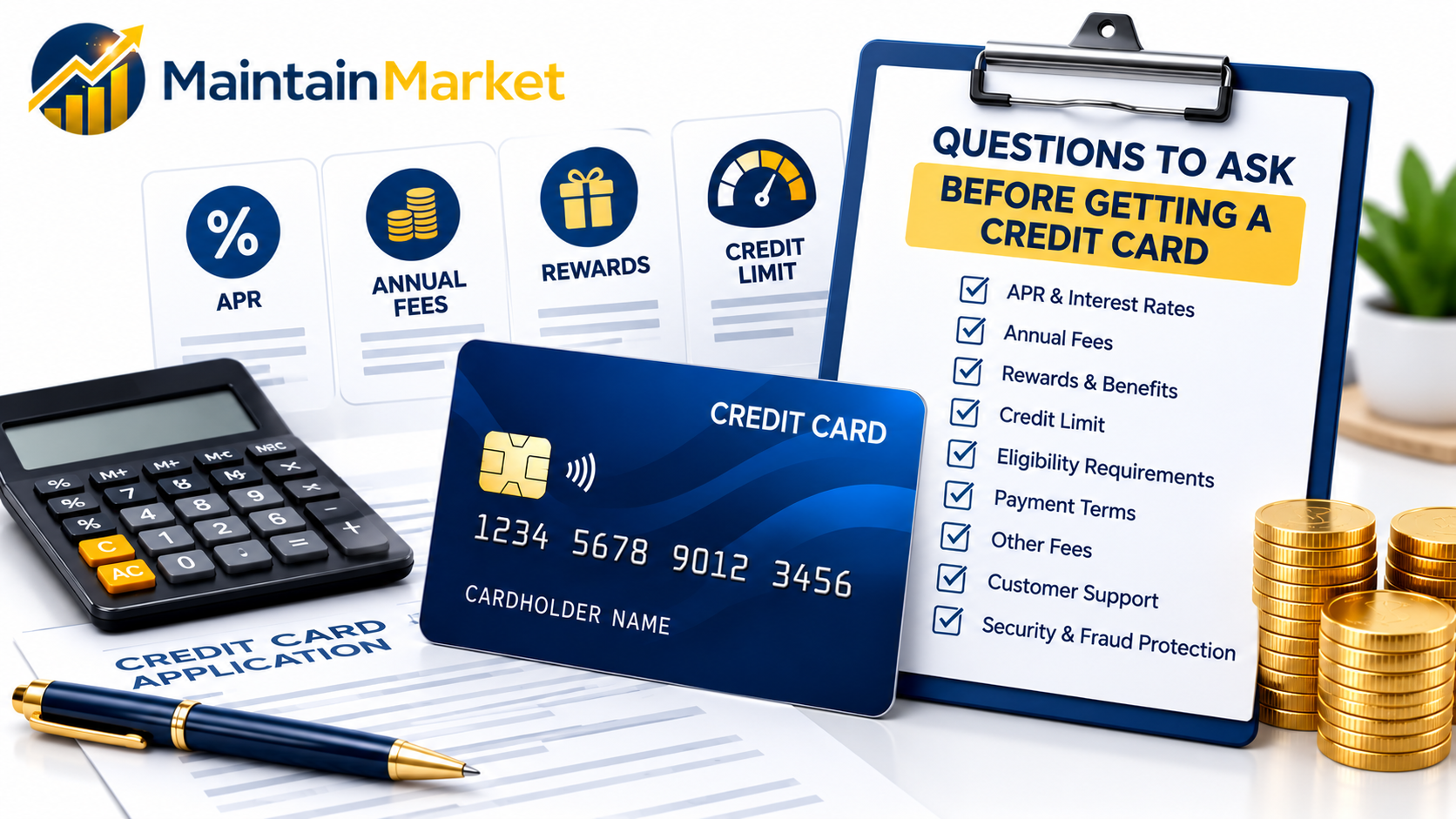
Before submitting an application, use these 11 questions to compare your options and understand what you are agreeing to.
1. What Is the Credit Card’s APR?
The annual percentage rate (APR) represents the annualized cost of borrowing under the applicable terms. It is one of the most important details to review before getting a credit card.
If you pay your statement balance in full by the due date and your account has a purchase grace period, you can generally avoid interest on purchases. If you carry a balance, interest may apply.
Ask the issuer:
- What is the regular purchase APR?
- Is the APR fixed or variable?
- Is there an introductory APR?
- When does the introductory rate end?
- What rate applies after the promotional period?
Do not choose a card based only on a low introductory rate. Check the regular APR, too.
Official resource: Consumer Financial Protection Bureau — Credit Cards
2. Does the Card Charge an Annual Fee?
An annual fee is the amount you pay to keep certain credit cards open, regardless of how often you use them.
Some cards have no annual fee, while others charge one in exchange for benefits such as travel credits, airport lounge access, or enhanced rewards.
Ask:
- Is there an annual fee?
- Is it waived during the first year?
- Will the fee increase or change later?
- Are the benefits worth more to me than the fee?
Example: If a card charges a $95 annual fee, you should receive more than $95 in value from benefits you genuinely use to justify that cost.
For beginners, a no-annual-fee card may be a practical starting point. A fee-based card can still make sense if its benefits justify the expense.
3. What Other Fees Could I Pay?
The annual fee is not the only potential cost of a credit card.
Depending on the card agreement and how you use the account, you may encounter:
- Late-payment fees
- Balance-transfer fees
- Cash-advance fees
- Foreign transaction fees
- Returned-payment fees
- Other disclosed charges
Ask the issuer for the full fee schedule before applying.
For example, a card with no annual fee may still be expensive if you frequently make cash advances or carry a balance.
Official resource: FDIC — Credit Cards
4. What Credit Score Do I Need to Qualify?
Not every credit card is designed for the same applicant.
Some cards target people with established credit and strong credit histories. Others are intended for beginners or people building or rebuilding credit.
Ask:
- What credit profile does the issuer generally look for?
- Can I check whether I prequalify?
- Does prequalification use a soft inquiry?
- Will submitting a full application trigger a hard inquiry?
Prequalification, when offered, is not a guarantee of approval. A full application may involve a hard credit inquiry and a review of additional information.
You can review your U.S. credit reports through AnnualCreditReport.com.
5. What Credit Limit Can I Expect?
Your credit limit is the maximum amount the issuer generally allows you to borrow on the card.
A higher limit can provide flexibility, but it does not mean you should spend more. The issuer determines your approved limit based on its underwriting criteria.
Ask:
- How is my credit limit determined?
- Can the issuer increase or decrease it?
- Can I request a credit-limit increase later?
- What happens if a purchase exceeds my available credit?
Remember that your credit limit is not extra income. Choose a spending level you can repay without disrupting your budget.
6. Does the Card Offer Cash Back, Points, or Miles?
Rewards can be valuable, but the best program depends on how you normally spend.
Common reward types include:
- Cash back: A percentage of eligible spending returned as cash or a statement credit.
- Points: Rewards that may be redeemed for travel, merchandise, statement credits, or other options.
- Miles: Rewards commonly used for travel, subject to the program’s rules.
Ask:
- Which purchases earn rewards?
- Are there spending caps or excluded categories?
- How can I redeem the rewards?
- Do points or miles expire?
- Is a minimum redemption amount required?
- Do I need to pay an annual fee to access the rewards?
Do not spend extra just to earn rewards. A reward is only useful when it provides value on purchases you would have made anyway.
7. Can I Pay My Full Statement Balance Every Month?
This is one of the most important questions to ask yourself before getting a credit card.
If you regularly pay only the minimum amount due, the remaining balance can accumulate interest. Over time, that can make purchases much more expensive.
Ask yourself:
- Can I afford every purchase I plan to make?
- Can I pay the full statement balance by the due date?
- Do I have enough emergency savings to handle unexpected expenses?
- Would I still use the card if it offered no rewards?
If you are unsure whether you can repay your spending, consider delaying the application or choosing a lower-risk financial option.
8. Does the Card Have a Grace Period?
A grace period is the time between the end of a billing cycle and the payment due date during which you can generally avoid interest on purchases by paying the full statement balance.
Not all credit cards are required to offer a grace period, and rules may differ for purchases, balance transfers, and cash advances.
Ask:
- Does the card offer a grace period on purchases?
- How many days do I have to pay?
- What happens if I carry a balance?
- Can new purchases start accruing interest immediately if I lose the grace period?
Read the card agreement to understand exactly how interest is calculated.
Official resource: CFPB — Credit Card Key Terms
9. Will This Card Help Me Build Credit?
A credit card can help establish a credit history when the account activity is reported to the major credit bureaus and you manage the account responsibly.
Ask:
- Which credit bureaus receive account information?
- How frequently does the issuer report?
- Does the card report payments and balances?
- Are there tools to help me monitor my credit?
Paying on time and managing your balance can support a healthy credit history. Missing payments or carrying high balances relative to your limit can hurt your credit profile.
You do not need to carry a balance or pay interest to build credit. Responsible use is more important than paying unnecessary borrowing costs.
10. What Happens If I Miss a Payment?
Missing a payment can lead to fees, interest charges, and potential damage to your credit history.
Ask:
- What is the late-payment fee?
- When is the payment due?
- Can I set up automatic payments?
- Does the issuer offer payment reminders?
- What happens if a payment is returned or processed late?
Consider setting up automatic payment of at least the minimum due as a backup, while monitoring your account to ensure sufficient funds are available.
Whenever possible, aim to pay the full statement balance rather than only the minimum.
11. What Happens If My Card Is Lost or Stolen?
Security and customer support matter just as much as rewards.
Ask:
- Can I freeze or lock my card in the mobile app?
- How do I report an unauthorized transaction?
- Is 24-hour customer support available?
- How quickly can a replacement card be issued?
- What protections apply to unauthorized use?
Review the issuer’s dispute process and account agreement. If you notice a suspicious transaction, contact the issuer promptly.
Official resource: CFPB — Credit Card Resources
Questions to Ask Before Getting a Credit Card: Quick Checklist
Before applying, make sure you can answer these questions:
- What is the regular APR?
- Is there an annual fee?
- What other fees could apply?
- Am I likely to qualify?
- What credit limit might I receive?
- Are the rewards genuinely useful to me?
- Can I pay the full statement balance every month?
- Does the card offer a purchase grace period?
- Does the issuer report to the credit bureaus?
- What happens if I miss a payment?
- How are lost cards and unauthorized transactions handled?
If important terms are unclear, ask the issuer before applying.
How to Choose the Right Credit Card for Your Needs
Once you have answers to these questions, compare at least three cards side by side.
| Your priority | What to look for |
|---|---|
| Building credit for the first time | A beginner-friendly card with clear terms and no unnecessary fees |
| Avoiding annual costs | A card with no annual fee |
| Earning rewards | A program that matches your normal spending |
| Paying down existing debt | A suitable balance-transfer offer, including its fees and promotional period |
| Avoiding interest | A card you can repay in full each month, with a clearly understood grace period |
| Traveling internationally | Foreign transaction fees, travel benefits, and applicable protections |
The right card is not necessarily the one with the biggest welcome bonus or the most advertised benefits. It is the one whose costs, terms, and features fit your needs.
Why Maintain Market Is Different
At Maintain Market, we focus on helping readers understand the real costs and trade-offs behind financial products.
Instead of recommending a credit card solely because it offers attractive rewards, we encourage readers to examine APRs, fees, eligibility, repayment ability, and the value of benefits they will actually use.
Our goal is to help you make a more informed decision before you apply—not encourage unnecessary borrowing.
Frequently Asked Questions
What is the most important question to ask before getting a credit card?
Ask what the regular APR is and whether you can repay your statement balance in full every month. Fees, eligibility, and rewards also matter, but understanding the cost of borrowing is essential.
Should I get a credit card with no annual fee?
A no-annual-fee card can be a sensible starting point, especially if you are new to credit. A card with an annual fee may still be worthwhile if its benefits genuinely outweigh the cost.
How many credit cards should I compare before applying?
Compare at least three cards so you can evaluate APRs, fees, rewards, and eligibility. Apply selectively rather than submitting many applications in a short period.
Can I build credit without carrying a balance?
Yes. You do not need to carry a balance or pay interest to build credit. Paying on time and using credit responsibly are important habits.
Does checking whether I prequalify hurt my credit score?
Many issuers offer prequalification using a soft inquiry that does not affect your score. However, the process varies by issuer, and a full application may involve a hard inquiry.
Should I choose a credit card based on rewards alone?
No. Compare the value of the rewards with annual fees, interest charges, redemption restrictions, and other costs. Rewards generally do not justify spending more than you otherwise would.
What should I read before signing up for a credit card?
Read the card’s pricing and terms, including its APRs, fee schedule, rewards rules, promotional offers, and cardholder agreement. Ask the issuer to clarify anything you do not understand.
References
- Consumer.gov — Getting a Credit Card
- Consumer Financial Protection Bureau — Credit Cards
- CFPB — Credit Card Key Terms
- FDIC — Credit Cards
- AnnualCreditReport.com
Editorial Review
This article is for general educational purposes and is not individualized financial or legal advice. Credit card terms, eligibility criteria, fees, and promotional offers vary by issuer and may change. Confirm current terms directly with the issuer before applying.
Recommended Reads
- Credit Card Application Denied: 10 Reasons and What to Do Next
- Do Student Loans Affect Credit Score?
- 7 Best Credit Builder Apps in the USA That Can Boost Your Score Even If It’s Below 600
- 11 Hidden Reasons Why Credit Card Approved but Not Delivered USA
- 5 Reasons You Shocked by Your Car Insurance Bill?