
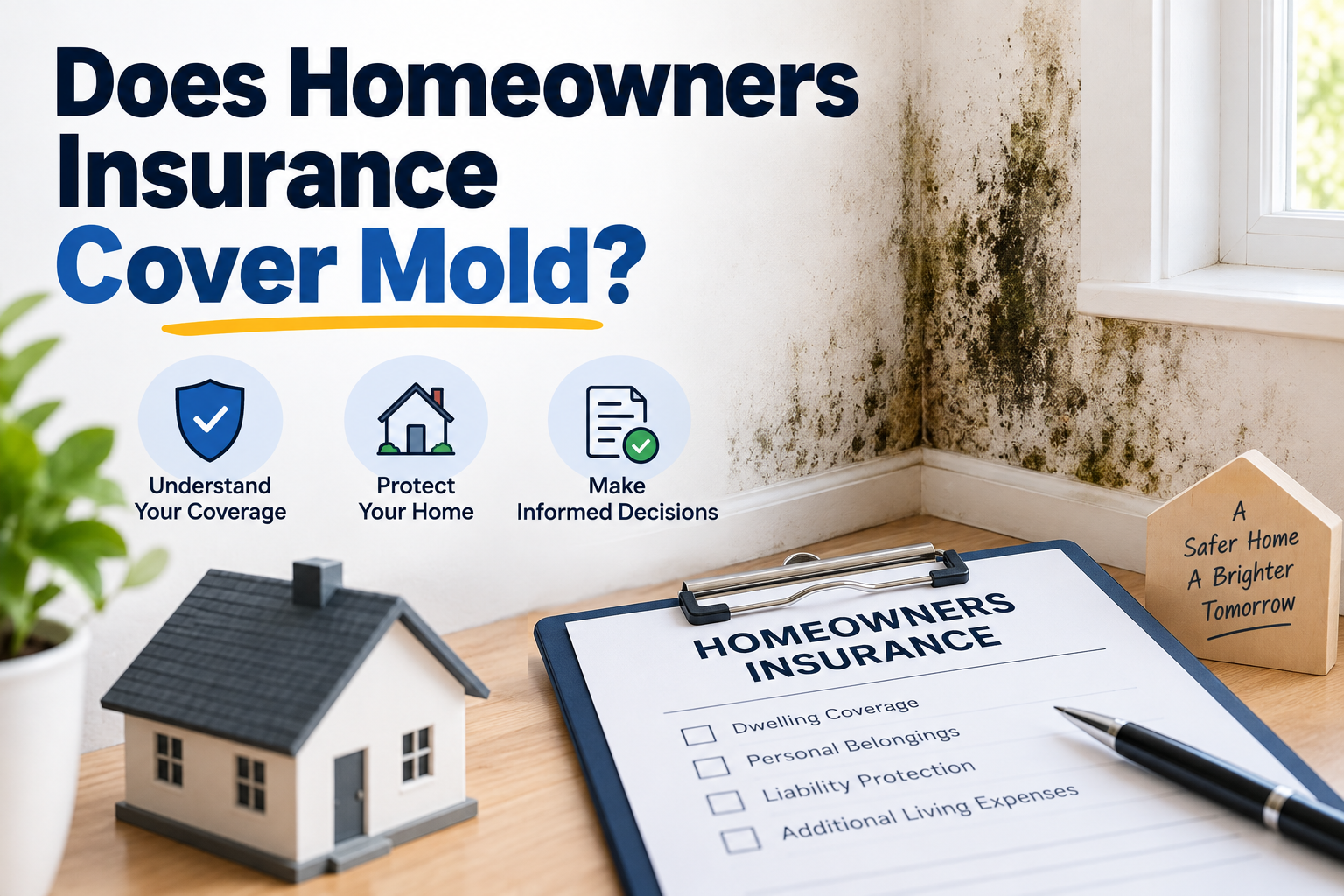
Mold in your home can become an expensive problem, especially when it spreads through walls, ceilings, or flooring. If you are wondering does homeowners insurance cover mold, the answer depends on what caused the mold, the coverage included in your policy, and any exclusions or limits. Understanding these details can help you avoid unexpected repair costs.
Does Homeowners Insurance Cover Mold?
Homeowners insurance may cover mold when it results from a sudden and accidental event that your policy covers. For example, if a pipe suddenly bursts and causes water damage followed by mold growth, your insurer may cover some related repairs or mold removal.
However, standard homeowners insurance generally does not cover mold caused by poor maintenance, long-term leaks, flooding, or ongoing moisture problems. Coverage varies by policy and insurer, so you should check your policy before assuming a claim will be paid.
Quick Answer: When Does Homeowners Insurance Cover Mold?
| Situation | Is Mold Usually Covered? |
|---|---|
| Mold caused by a sudden burst pipe | May be covered |
| Mold after a covered fire | May be covered |
| Mold caused by a long-term leak | Usually not covered |
| Mold caused by flooding | Usually not covered by standard homeowners insurance |
| Mold caused by poor ventilation | Usually not covered |
| Mold caused by a sump pump failure | Usually requires additional coverage |
| Mold caused by sewer backup | May require water backup coverage |
| Mold caused by poor maintenance | Usually not covered |
These are general examples. Your actual coverage depends on your policy wording, exclusions, endorsements, and the cause of the damage.
1. When Does Homeowners Insurance Cover Mold?
Homeowners insurance may cover mold when it develops because of a covered event.
A covered event is a type of damage or loss that your insurance policy agrees to protect against. Depending on your policy, examples may include:
- A sudden burst pipe
- A broken water heater
- A sudden appliance leak
- Water damage caused by putting out a covered fire
- Certain storm-related water damage
- Other covered plumbing or water incidents
For example, imagine a pipe suddenly breaks inside your home. Water spreads across the floor and damages the wall. Mold appears because of the water damage.
Your insurance company may cover eligible repairs and mold-related costs if the original water damage is covered. However, the policy may have specific mold exclusions, limits, or conditions.
Important: Insurance usually does not cover every problem connected to a covered event. The exact cause, policy language, and circumstances matter.
2. When Does Homeowners Insurance Not Cover Mold?
Many standard homeowners insurance policies exclude mold when it results from gradual damage, neglect, or maintenance problems.
Common examples include:
Long-Term Plumbing Leaks
A pipe under your sink has been leaking for several months, but you do not repair it. Over time, moisture causes mold to grow inside the cabinet and wall.
The insurer may deny the mold claim because the damage developed gradually and could have been prevented through maintenance.
Poor Ventilation
Mold develops in your bathroom because moisture remains trapped after showers. If the problem results from poor ventilation or ongoing humidity, standard coverage may not apply.
Unrepaired Roof Problems
A damaged roof allows water to enter your home repeatedly. If you delay repairs and mold develops, your insurer may exclude the resulting damage.
Foundation Seepage
Water gradually enters through cracks in your foundation or basement walls. This type of ongoing seepage is commonly excluded from standard homeowners insurance.
Your policy may treat each of these situations differently, so review the relevant exclusions rather than relying only on general rules.
3. Does Homeowners Insurance Cover Mold From a Burst Pipe?
Mold caused by a sudden burst pipe may be covered, provided the pipe damage is covered under your policy and no exclusion applies.
Consider this example:
A pipe bursts unexpectedly while you are away for a short period. When you return, you find water damage in your basement. A few days later, mold begins to develop.
Your policy may cover eligible water damage and mold remediation associated with the covered incident. However, the insurer may investigate:
- What caused the pipe to burst?
- Was the damage sudden or gradual?
- Did you respond quickly after discovering the leak?
- Does your policy exclude or limit mold coverage?
- How much will the insurer pay after the deductible?
The insurer may cover the resulting damage but not necessarily the cost of replacing the failed pipe or appliance itself.
4. Does Homeowners Insurance Cover Mold From Flooding?
Standard homeowners insurance generally does not cover flood damage.
Flooding may involve water entering your home from sources such as:
- Overflowing rivers
- Heavy surface water
- Storm surge
- Rising water from surrounding land
- Certain types of widespread water accumulation
If flooding causes mold, a standard homeowners policy will generally not cover the loss.
Separate flood insurance may provide protection for certain flood-related damage, but coverage for mold is subject to the specific flood policy and its conditions. Do not assume that buying flood insurance automatically means every mold-related expense will be paid.
If your home is in a flood-prone area, review flood insurance options before a disaster occurs.
5. Does Homeowners Insurance Cover Mold From a Sewer Backup?
Mold caused by sewer backup or sump pump failure may not be covered by a standard homeowners policy.
Some insurance companies offer water backup coverage as an optional endorsement. This may provide protection for certain damage caused by:
- Backed-up drains
- Sewer backups
- Sump pump failures
- Water entering through specific drainage systems
The coverage amount, exclusions, and eligible causes vary between insurers.
Example
A sump pump stops working during heavy rain, and water enters your basement. Mold later develops on the walls.
Without appropriate additional coverage, your standard policy may not pay for the damage. If you have water backup coverage, your claim may qualify depending on the policy terms.
Ask your insurer whether water backup coverage includes mold cleanup, structural repairs, and personal belongings.
6. How Much Does Homeowners Insurance Pay for Mold?
There is no single mold coverage limit that applies to every homeowners insurance policy.
Some policies:
- Exclude mold completely.
- Cover mold only when it results from a covered event.
- Place a separate limit on mold-related expenses.
- Offer optional mold coverage for an additional premium.
- Cover certain cleanup costs but exclude other services.
Some insurers may provide limited mold coverage, but the available amount depends on the policy and state.
Before filing a claim, check:
- Your mold coverage limit.
- Your homeowners insurance deductible.
- Whether testing is covered.
- Whether removal and remediation are covered.
- Whether damaged building materials are covered.
- Whether temporary living expenses may apply.
- Whether the source of the moisture is covered.
Example of a Coverage Limit
Suppose your policy has a $5,000 mold-related coverage limit and your eligible mold claim costs $8,000.
Depending on your policy terms and deductible, the insurer may not pay the full $8,000. You may need to cover some of the expenses yourself.
Never assume that the total cost of mold remediation will automatically be paid by your insurer.
7. Does Homeowners Insurance Cover Mold Testing and Removal?
Mold testing, inspection, removal, and repairs are not necessarily treated the same way by an insurance policy.
Your policy may cover some expenses but exclude others. For example, it may cover damage caused by a covered water event but limit payment for mold testing or remediation.
Before hiring a contractor, ask your insurance company:
- Is mold inspection covered?
- Is professional mold removal covered?
- Does the company require an approved contractor?
- Is preauthorization required?
- Is there a separate mold coverage limit?
- Will the deductible apply?
Avoid assuming that every service recommended by a mold-removal company will be reimbursed.
Keep copies of inspection reports, photographs, invoices, repair estimates, and communications with your insurer.
8. What Should You Do If You Find Mold in Your Home?
Finding mold can be stressful, but taking prompt action may help reduce further damage.
Step 1: Find the Moisture Source
Mold needs moisture to grow. Look for possible causes such as:
- Plumbing leaks
- Roof damage
- Condensation
- Poor ventilation
- Water intrusion
- Appliance leaks
Do not ignore the source because cleaning visible mold alone may not solve the problem.
Step 2: Prevent Further Water Damage
If it is safe to do so, stop the water supply or arrange for the leak to be repaired. Contact a qualified professional when the problem involves plumbing, electrical systems, or significant structural damage.
Step 3: Document the Damage
Take photographs and videos of:
- Visible mold
- Water damage
- Damaged walls and floors
- The suspected source of moisture
- Affected furniture and belongings
Keep records of when you discovered the problem.
Step 4: Contact Your Insurance Company
Explain what happened and ask whether your policy may cover the damage. Follow the insurer’s instructions for inspection, emergency repairs, and claim filing.
Step 5: Avoid Delaying Necessary Repairs
Delaying repairs can allow moisture and mold damage to spread. Your policy may require you to take reasonable steps to prevent further damage.
9. Can You Add Mold Coverage to Homeowners Insurance?
Some insurance companies offer additional mold coverage or endorsements.
This optional coverage may expand protection beyond what your standard homeowners policy provides. However, availability depends on your insurer, location, property, and policy terms.
When comparing options, ask:
- What types of mold damage are covered?
- What is the coverage limit?
- Is there a separate deductible?
- Does coverage include testing and remediation?
- Are previous mold problems excluded?
- Does the endorsement cover water backup or flooding?
- Are there restrictions based on the home’s condition?
Additional coverage may increase your premium, so compare the cost with the level of protection provided.
Do not purchase an endorsement assuming it will cover mold that already exists. Policies commonly include conditions or exclusions relating to existing damage.
10. How Can You Prevent Mold Damage in Your Home?
Preventing moisture problems may reduce the risk of mold and expensive repairs.
Fix Leaks Quickly
Repair leaking faucets, pipes, appliances, and roofs as soon as possible.
Control Indoor Humidity
Use ventilation, exhaust fans, or dehumidifiers when needed, especially in bathrooms, basements, and laundry areas.
Inspect Your Basement
Check for damp areas, water intrusion, condensation, and musty odors.
Maintain Gutters and Downspouts
Make sure water drains away from your home’s foundation.
Monitor Appliances
Inspect washing machine hoses, water heaters, dishwashers, and other water-connected appliances.
Respond After Water Damage
Dry affected areas promptly and seek professional help when water damage is extensive or mold growth is significant.
Preventive maintenance does not guarantee that mold will never develop, but it can help reduce avoidable moisture problems.
Homeowners Insurance Mold Claim: Example Scenarios
The following examples are illustrative scenarios, not actual insurance case studies.
| Scenario | Possible Coverage Result |
|---|---|
| A pipe suddenly bursts and causes mold | May be covered if the water event and mold are covered |
| A faucet leaks for six months | Usually excluded as gradual damage |
| Floodwater enters the basement | Generally excluded under standard homeowners insurance |
| A covered fire causes water damage and mold | May be covered, subject to policy terms |
| A sump pump fails | May require water backup or sump pump coverage |
| Mold develops from poor bathroom ventilation | Usually excluded as a maintenance or moisture issue |
The final decision belongs to the insurer based on the policy, investigation, and applicable state requirements.
How to File a Mold Insurance Claim
If you believe mold resulted from a covered incident, follow these steps:
- Review your policy: Look for mold exclusions, water damage coverage, and endorsements.
- Contact your insurer: Report the incident as soon as reasonably possible.
- Document the damage: Take photos and save repair estimates.
- Prevent further damage: Take reasonable steps to stop additional water intrusion.
- Cooperate with the inspection: Provide relevant information and records.
- Review the claim decision: Ask the insurer to explain any denial or limitation.
- Seek assistance if needed: Contact your state insurance department if you need help understanding your rights or the claims process.
Do not make major permanent repairs before speaking with your insurer if doing so could interfere with the inspection, unless immediate action is necessary to protect safety or prevent further damage.
Frequently Asked Questions
Does homeowners insurance cover mold in walls?
Homeowners insurance may cover mold inside walls if it resulted from a covered, sudden water event. Mold caused by long-term leaks, seepage, or poor maintenance is generally excluded. Your policy may also impose specific mold limits.
Does homeowners insurance cover mold caused by a leaking roof?
It depends on why the roof leaked and whether the cause is covered. A sudden covered storm event may qualify for coverage, while long-term deterioration or an unrepaired roof problem may be excluded. Review your policy and contact your insurer.
Does homeowners insurance cover mold in the basement?
Mold in a basement may be covered if it resulted from a covered incident, such as a sudden burst pipe. Mold caused by flooding, seepage, or sump pump failure may be excluded unless you have additional coverage.
Does homeowners insurance cover mold caused by humidity?
Mold caused by high humidity, condensation, or poor ventilation is generally not covered by standard homeowners insurance. These issues are commonly considered maintenance or moisture-control problems.
Can I claim mold damage if I do not know where it came from?
You can contact your insurer and report the problem, but the company may investigate the source of the mold before deciding whether coverage applies. An inspection may help identify the cause and extent of the damage.
Does homeowners insurance cover mold after a water leak?
It may, depending on whether the leak was sudden, accidental, and covered by your policy. Gradual leaks and damage caused by neglected maintenance are generally excluded.
Does homeowners insurance cover mold removal?
Mold removal may be covered when mold results from a covered event, but coverage may be limited or excluded. Check whether your policy covers remediation, testing, damaged materials, and related expenses.
Should I file an insurance claim for mold?
The decision depends on the cause of the mold, the likely repair cost, your deductible, and your policy coverage. Contact your insurer to understand your options before assuming the claim will be approved.
Final Thoughts: Does Homeowners Insurance Cover Mold?
So, does homeowners insurance cover mold? Sometimes. Coverage usually depends on whether the mold resulted from a covered event, such as a sudden burst pipe, or from an excluded issue such as flooding, gradual leaks, or poor maintenance.
Before filing a claim, review your policy, document the damage, and contact your insurance company. If your policy does not provide enough protection, ask whether additional mold or water backup coverage is available.
The Moral of the story is: Understanding your homeowners insurance before mold appears can help you avoid costly surprises and make better decisions when water damage occurs.
Why Maintain Market Is Different
Maintain Market explains homeowners insurance in simple, practical language for readers in the United States.
We focus on helping homeowners understand coverage conditions, exclusions, deductibles, and possible additional protection. Insurance policies differ by company and state, so readers should review their own policy and verify important details with their insurer.
Our goal is to provide useful information without promising claim approval or presenting general examples as guaranteed outcomes.
References
- Texas Department of Insurance — Home Insurance FAQ
- Washington State Office of the Insurance Commissioner — Leaks, Water Damage and Mold
- Illinois Department of Insurance — Flood and Mold Coverage
- California Department of Insurance — Residential Insurance Guide
Editorial Review
This article is for general educational purposes and is not personalized insurance advice. Homeowners insurance coverage varies by state, insurer, policy wording, exclusions, endorsements, and claim circumstances. Verify current coverage with your insurance company or licensed insurance professional.