
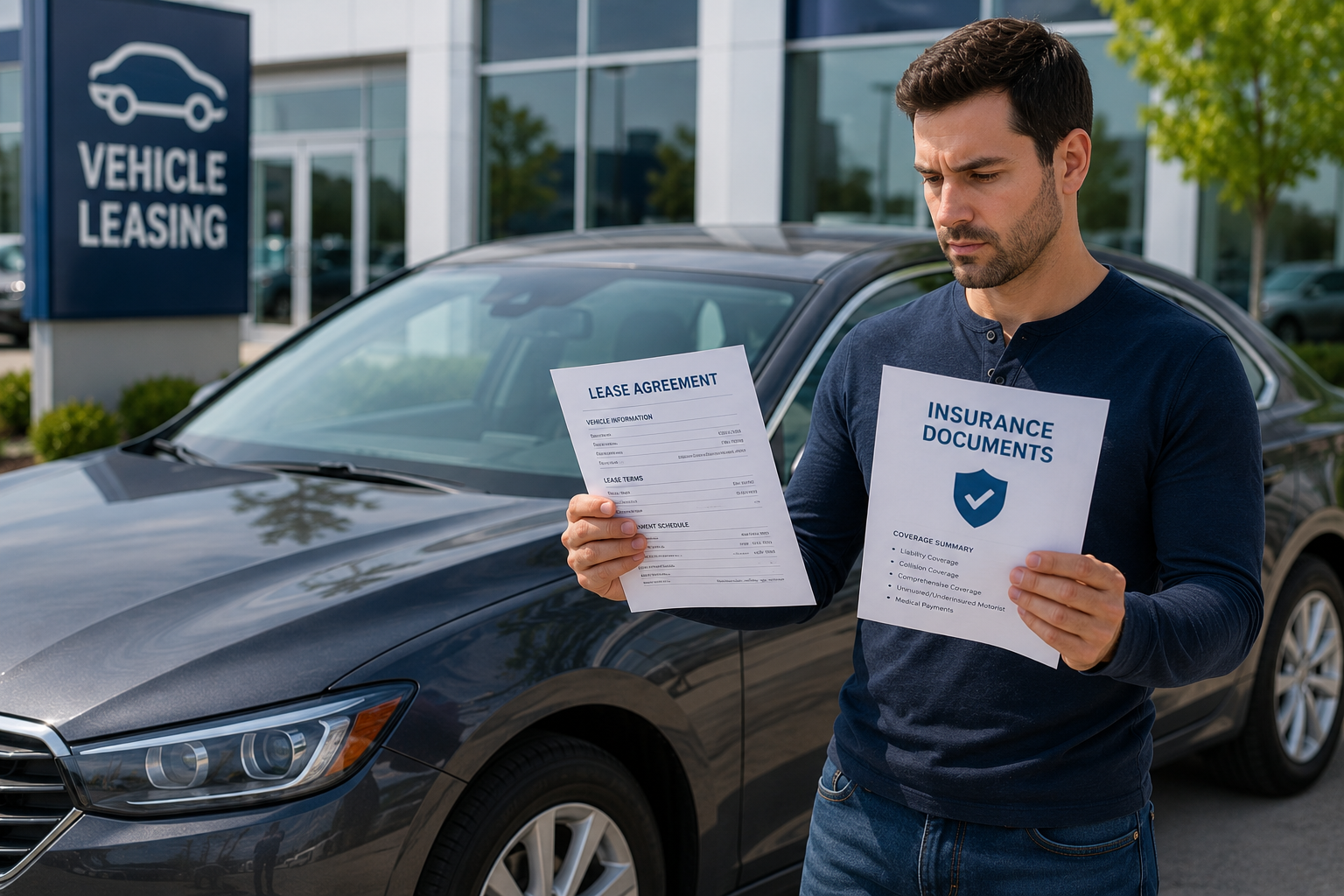
If you’re researching gap insurance for leased cars, you’re probably wondering what happens if your leased vehicle is stolen or totaled before the lease ends. In that situation, your regular comprehensive or collision insurance generally pays the car’s actual cash value, which can be less than the amount remaining under the lease. Gap coverage may help cover that difference, depending on the lease agreement and policy terms.
Quick Answer: Do You Need Gap Insurance on a Leased Car?
You may need gap insurance on a leased car, and some leasing companies require it.
Gap insurance is designed to address the difference between the vehicle’s actual cash value and the amount you still owe under the lease if the vehicle is stolen or declared a total loss.
However, don’t automatically buy separate gap insurance before checking your lease agreement. Some leases already include a gap waiver or similar protection.
What Is Gap Insurance for a Leased Car?
Gap insurance stands for Guaranteed Asset Protection.
When you lease a new vehicle, the car can depreciate faster than the amount you owe under the lease decreases.
That creates a potential “gap.”
For example:
- Lease balance: $30,000
- Vehicle’s actual cash value: $25,000
- Insurance payout: $25,000
- Potential gap: $5,000
Without appropriate gap protection, you could potentially be responsible for the difference.
With qualifying gap coverage, the policy may cover some or all of that gap, subject to its terms, limits and exclusions.
How Does Gap Insurance Work on a Lease?
Here’s the basic process.
Step 1: Your leased car is totaled or stolen
For example, you are involved in a serious accident and the insurer determines the vehicle is a total loss.
Step 2: Comprehensive or collision coverage pays first
Your regular auto insurance generally pays the vehicle’s actual cash value (ACV), subject to your deductible and policy terms.
Step 3: A balance may remain
If the lease obligation is higher than the insurance settlement, there may be a remaining balance.
Step 4: Gap coverage may address the difference
If your lease or gap policy provides the appropriate protection, it may cover the qualifying difference.
Important: Gap insurance isn’t designed to repair your vehicle after a normal accident. It becomes relevant when the vehicle is stolen or declared a total loss.
Does a Lease Automatically Include Gap Insurance?
Not necessarily, but many leases include some form of gap protection.
Some leasing agreements contain a gap waiver or similar provision that can reduce or waive the remaining obligation after a qualifying total loss.
That’s why the first thing you should do is:
Read your lease agreement before purchasing separate gap coverage.
Progressive specifically notes that some lease agreements include gap insurance, sometimes described as a waiver of responsibility in the event of a loss.
If you’re unsure, ask the leasing company:
“Does my lease already include GAP protection or a gap waiver?”
Is Gap Insurance Required for a Leased Car?
It can be required by the leasing company, but gap insurance isn’t required by any U.S. state.
The distinction is important.
State requirement
No state requires drivers to carry gap insurance.
Lease requirement
Your leasing company may require gap protection as part of the lease agreement.
So if your lease says gap protection is required, you generally need to satisfy that requirement even though state law doesn’t mandate it.
Do You Need Comprehensive and Collision Insurance With Gap Coverage?
Generally, yes.
Gap coverage works alongside your physical-damage insurance.
Comprehensive coverage generally handles covered non-collision losses, while collision coverage handles covered collision damage.
The primary insurance pays the vehicle’s covered value first, and gap protection addresses a qualifying remaining balance.
Progressive states that its loan/lease payoff coverage requires comprehensive and collision coverage.
The NAIC also notes that lenders may require comprehensive and collision coverage for financed or leased vehicles.
What Does Gap Insurance Cover on a Leased Car?
Depending on the specific policy or lease protection, gap coverage may help with the difference between:
Your vehicle’s actual cash value
and
the qualifying amount owed under the lease.
It may apply when the vehicle is:
- Declared a total loss after an accident
- Stolen and not recovered
- Otherwise subject to a qualifying total-loss event
The exact calculation depends on the contract.
What Does Gap Insurance NOT Cover?
This is where many drivers misunderstand gap coverage.
Gap insurance generally isn’t designed to pay for:
- Normal repairs
- Routine maintenance
- Mechanical breakdowns
- Injuries
- Damage to another person’s vehicle
- A replacement vehicle
- Excess mileage charges
- Certain lease fees
- Negative equity carried over from another vehicle
- Optional products or services
Progressive specifically notes that loan/lease payoff coverage may not cover additional lease charges such as excess mileage fees, and its gap-claims guidance excludes items such as repairs, injuries and negative equity from a previous loan.
Always check your specific contract because coverage varies.
Example: How Gap Insurance Can Help
Imagine you lease a vehicle for four years.
After two years:
Amount owed under the lease: $28,000
Vehicle’s actual cash value: $23,000
The vehicle is totaled.
Your comprehensive/collision insurance pays the covered actual cash value, subject to your deductible:
$23,000
That potentially leaves:
$5,000
Gap protection may cover the qualifying difference.
Without appropriate gap protection, you could potentially have to deal with that remaining obligation yourself.
Is Gap Insurance Worth It on a Lease?
For many leased vehicles, it can be valuable, particularly when the lease has significant depreciation exposure.
It may be especially worth considering when:
- Your lease requires it
- Your vehicle depreciates quickly
- You made a small initial payment
- You have a long lease term
- You leased a relatively expensive vehicle
- Your lease does not already provide a gap waiver
Progressive specifically identifies leasing, low down payments, long lease terms and luxury vehicles as situations where gap protection may be particularly useful.
When You May Not Need Separate Gap Insurance
You may not need to purchase separate gap insurance if your lease already provides equivalent protection.
For example, your lease might include:
A gap waiver
or
A manufacturer/dealer lease protection provision
In that situation, buying another gap policy could mean paying for protection you already have.
Before buying:
Check your:
- Lease agreement
- Insurance declarations
- GAP waiver
- Dealer paperwork
- Manufacturer lease terms
If you still aren’t sure, ask the leasing company or insurance provider to explain exactly what happens if the vehicle is totaled.
Where Can You Buy Gap Insurance for a Leased Car?
Depending on your situation, gap coverage may be available through:
Your Auto Insurance Company
Some insurers offer gap or loan/lease payoff coverage as an addition to your auto policy.
Dealer
A dealership may offer gap coverage when you sign the lease.
Lessor or Finance Company
Your leasing company may include gap protection or a gap waiver directly in the lease.
Compare the Options
Don’t assume the dealership option is automatically the best.
Progressive notes that dealership gap coverage can sometimes cost more than coverage obtained through an insurer, particularly when the cost is rolled into financing.
Is Dealer Gap Insurance Better Than Insurance-Company Gap Coverage?
Not necessarily.
Compare:
| Factor | Dealer Coverage | Insurance-Company Coverage |
|---|---|---|
| Purchase point | Dealership | Insurance provider |
| Payment | Often upfront or financed | Usually added to premium |
| Cost | Can be higher | May be lower |
| Coverage limit | Depends on contract | Depends on insurer |
| Lease requirement | May satisfy it | May satisfy it |
| Cancellation | Depends on contract | Often easier to modify |
The important thing is to compare what the coverage actually pays, not simply its price.
How Much Does Gap Insurance Cost for a Leased Car?
There isn’t one standard price.
The cost can vary based on:
- Vehicle
- Lease terms
- Insurer
- State
- Coverage structure
- Vehicle value
- Where you purchase the protection
Instead of relying on a generic national price, get an actual quote and compare it with any GAP protection already included in your lease.
Can You Add Gap Insurance After Leasing a Car?
Possibly.
Some insurers allow customers to add gap or loan/lease payoff coverage after the lease begins, while others impose eligibility or timing requirements.
Progressive notes that gap coverage can typically be purchased while a loan or lease remains outstanding, although individual insurers may have restrictions.
So if you already signed your lease, it’s still worth asking your insurer:
“Can I add gap coverage to my existing policy?”
Can You Cancel Gap Insurance?
Generally, you may be able to remove gap coverage when you no longer need it, subject to the contract.
For example, if your vehicle’s value has caught up with or exceeded the qualifying lease balance, there may no longer be a meaningful gap.
However, leased vehicles are different from paid-off vehicles, so check your lease agreement before removing protection.
Progressive notes that gap coverage can generally be dropped when the vehicle is worth more than the remaining balance, although specific policy terms apply.
What Happens If a Leased Car Is Totaled Without Gap Insurance?
This is the situation gap coverage is designed to address.
Your regular insurance generally pays the vehicle’s covered actual cash value.
If that amount is lower than your qualifying lease obligation, you may still have a balance.
Example
Lease obligation: $32,000
Insurance valuation: $26,000
Potential difference: $6,000
Without qualifying gap protection, you could potentially be responsible for the remaining amount.
With qualifying gap protection, the policy or lease waiver may cover some or all of the eligible difference.
Does Gap Insurance Pay Your Lease Payments?
Not exactly.
Gap coverage isn’t simply a policy that pays your monthly lease payments while you keep driving the car.
It generally becomes relevant when the vehicle is stolen or declared a total loss.
The purpose is to address the qualifying difference between the insurance settlement and the amount owed under the lease.
Does Gap Insurance Cover the Down Payment?
Don’t assume it does.
Gap coverage is generally intended to address the difference between the vehicle’s value and qualifying amount owed after a covered total loss.
The exact calculation depends on the policy or lease agreement.
Review the contract carefully if you’re relying on gap coverage to protect money you paid upfront.
Does Gap Insurance Cover Negative Equity?
This depends on the specific contract.
Negative equity from a previous vehicle or loan may not be covered by gap protection.
For example, suppose you owe $10,000 on your old car but trade it in for $7,000.
You have:
$3,000 negative equity
If that amount is rolled into your new lease or financing arrangement, don’t assume standard gap coverage will pay it.
Progressive specifically notes that negative equity rolled over from a previous loan may not be covered.
Does Gap Insurance Cover Excess Mileage Charges?
Generally, you should not assume it does.
Excess mileage charges are a lease-contract obligation rather than the vehicle’s basic value gap.
Progressive specifically states that its loan/lease payoff coverage doesn’t cover additional lease charges such as excess mileage fees.
Check your own gap contract because coverage varies.
What Happens to Gap Insurance When the Lease Ends?
Once you return the vehicle and your lease obligation ends, you generally no longer need gap coverage for that leased vehicle.
If you purchase another vehicle, the new vehicle may require a separate evaluation.
Don’t automatically carry old gap coverage forward to a new car.
Review the new lease or financing agreement and your new insurance policy.
Gap Insurance vs. Lease Gap Waiver
These terms can sound similar, but they’re not necessarily identical.
Gap Insurance
An insurance product designed to cover a qualifying difference between the vehicle’s value and the amount owed.
Gap Waiver
A contractual provision in a lease that may waive certain remaining obligations after a qualifying total loss.
The important question isn’t what the protection is called.
It’s:
“How much does it actually cover, and under what conditions?”
What Should You Check Before Buying Gap Coverage?
Before paying for gap protection, check these six things.
1. Is GAP Already Included?
Look at your lease agreement.
2. What Is the Coverage Limit?
Some products have limits on how much they pay.
3. What Is Excluded?
Look specifically for:
- Excess mileage
- Fees
- Deductibles
- Negative equity
- Late payments
- Other lease charges
4. How Is the Gap Calculated?
Understand whether the calculation uses the lease balance, payoff amount or another contractual formula.
5. How Much Does It Cost?
Compare dealer and insurance-company options.
6. Do You Need It for the Entire Lease?
Your risk can change as the lease progresses.
Also read: How to Lower Car Insurance: 15 Ways to Save Money
Should You Buy Gap Insurance From the Dealer?
Don’t say yes automatically. Compare it first.
A dealer may offer GAP protection when you’re signing the lease because it’s convenient.
But convenience isn’t the same thing as value.
Ask:
“How much does this coverage cost?”
“What exactly does it cover?”
“Is GAP already included in my lease?”
“What exclusions apply?”
“Can I get equivalent coverage from my auto insurer?”
Progressive recommends comparing dealership gap coverage with insurance-company alternatives before purchasing.
What Insurance Do You Need on a Leased Car?
Gap insurance is only one part of protecting a leased vehicle.
Your lease agreement may require specific auto insurance coverage.
Typically, leased vehicles require liability coverage plus comprehensive and collision coverage, although exact requirements depend on the lease and state.
The NAIC notes that lenders may require comprehensive and collision coverage on financed or leased vehicles.
Your lease may also specify:
- Minimum liability limits
- Deductible limits
- Comprehensive coverage
- Collision coverage
- Additional insured/loss-payee information
Read the lease agreement and insurance requirements carefully.
Common Mistakes With Gap Insurance on Leased Cars
Mistake 1: Buying GAP Without Checking the Lease
You may already have a gap waiver.
Mistake 2: Assuming GAP Covers Everything
It generally doesn’t cover ordinary repairs or every lease charge.
Mistake 3: Choosing the Cheapest GAP Product
Compare limits and exclusions.
Mistake 4: Assuming GAP Replaces Comprehensive and Collision
It doesn’t.
Mistake 5: Ignoring the Deductible
Your primary insurance coverage may still have a deductible before the gap calculation applies.
Mistake 6: Assuming Negative Equity Is Covered
It may not be.
Mistake 7: Forgetting to Review GAP When the Lease Changes
If you transfer, terminate or replace a lease, check what happens to the coverage.
Frequently Asked Questions About Gap Insurance for Leased Cars
Q1. Is gap insurance required for leased cars?
It can be required by a leasing company, but no U.S. state requires drivers to purchase gap insurance. Check your lease agreement.
Q2. Do all leased cars come with gap insurance?
No. Some lease agreements include gap protection or a gap waiver, but you should verify the terms of your specific lease.
Q3. Is gap insurance worth it on a leased car?
It can be valuable because leased vehicles can depreciate quickly and the lease obligation may exceed the vehicle’s actual cash value after a total loss.
Q4. What happens if my leased car is totaled?
Your comprehensive or collision insurance generally pays the vehicle’s covered actual cash value. If a qualifying balance remains under the lease, gap protection or a lease gap waiver may cover some or all of that difference.
Q5. Does gap insurance cover a stolen leased car?
It can, if the vehicle is stolen and not recovered and the loss qualifies under the gap policy or lease protection.
Q6. Can I get gap insurance from my car insurance company?
Some insurers offer gap or similar loan/lease payoff coverage. Availability and limits vary by insurer and state.
Q7. Can I buy gap insurance from the dealership?
Yes, dealerships may offer gap coverage when you lease or finance a vehicle. Compare the cost and terms with other options.
Q8. Does gap insurance cover my deductible?
Don’t assume it does. Whether a deductible is covered depends on the specific gap product or lease protection agreement.
Q9. Does gap insurance cover excess mileage?
Generally, you should not assume it does. Some gap products specifically exclude additional lease charges such as excess mileage fees.
Q10. Does gap insurance cover negative equity?
Not necessarily. Negative equity rolled over from a previous vehicle may be excluded from some gap policies.
Q11. Do I need gap insurance if my lease already includes a gap waiver?
Usually, you wouldn’t want to pay for duplicate protection without first understanding what the existing waiver covers. Read your lease and confirm with the lessor.
Q12. Does gap insurance replace comprehensive and collision coverage?
No. Gap coverage generally works alongside comprehensive and collision coverage rather than replacing them.
Final Verdict
Gap insurance for leased cars can be valuable, but don’t assume you need to purchase a separate policy.
Start with your lease agreement.
Find out whether it already includes:
- GAP coverage
- A gap waiver
- Lease payoff protection
- Another form of total-loss protection
If it doesn’t, compare the options available through your insurer and leasing company.
Remember the basic distinction:
Comprehensive/collision coverage → pays the covered value of the vehicle.
Gap protection → may address the qualifying difference between that payout and what you owe under the lease.
And don’t assume gap insurance covers every amount associated with your lease. Excess mileage, fees, negative equity and other charges can be treated differently depending on the contract.
The smartest approach is to compare the actual contract terms before paying for additional coverage.
Why Maintain Market Is Different
At Maintain Market, we don’t believe insurance decisions should be reduced to a simple “yes” or “no.”
For something like gap insurance, the useful question isn’t just:
“Do I need GAP?”
It’s:
“What protection do I already have, what could I still owe after a total loss, and is additional coverage worth paying for?”
That’s why our insurance guides focus on:
- Clear explanations of complicated insurance terms
- Real-world examples
- Coverage comparisons
- Important exclusions
- Costs and financial trade-offs
- Questions to ask before purchasing
- Authoritative sources
- Practical information that helps readers make their own decisions
We don’t want readers to buy coverage simply because an article tells them to.
We want readers to understand what they’re paying for.
Maintain Market — Clear information. Smarter financial decisions.
Also read: Car Insurance Claim Denied in USA? 7 Hidden Reasons You’re Losing Money