
Getting a credit card without income proof in the United States may be possible, even if you do not have traditional documents such as salary slips or employer-issued pay stubs. However, not having to upload income documents does not mean you can apply without having the financial ability to repay what you borrow.
Under U.S. federal rules, credit card issuers must consider an applicant’s ability to make the required minimum payments. They may evaluate income, assets, current financial obligations, credit history, and other permitted information. The exact application and verification requirements vary by issuer.
If you are a freelancer, student, self-employed worker, retiree, or someone with irregular income, you may still have options worth exploring.
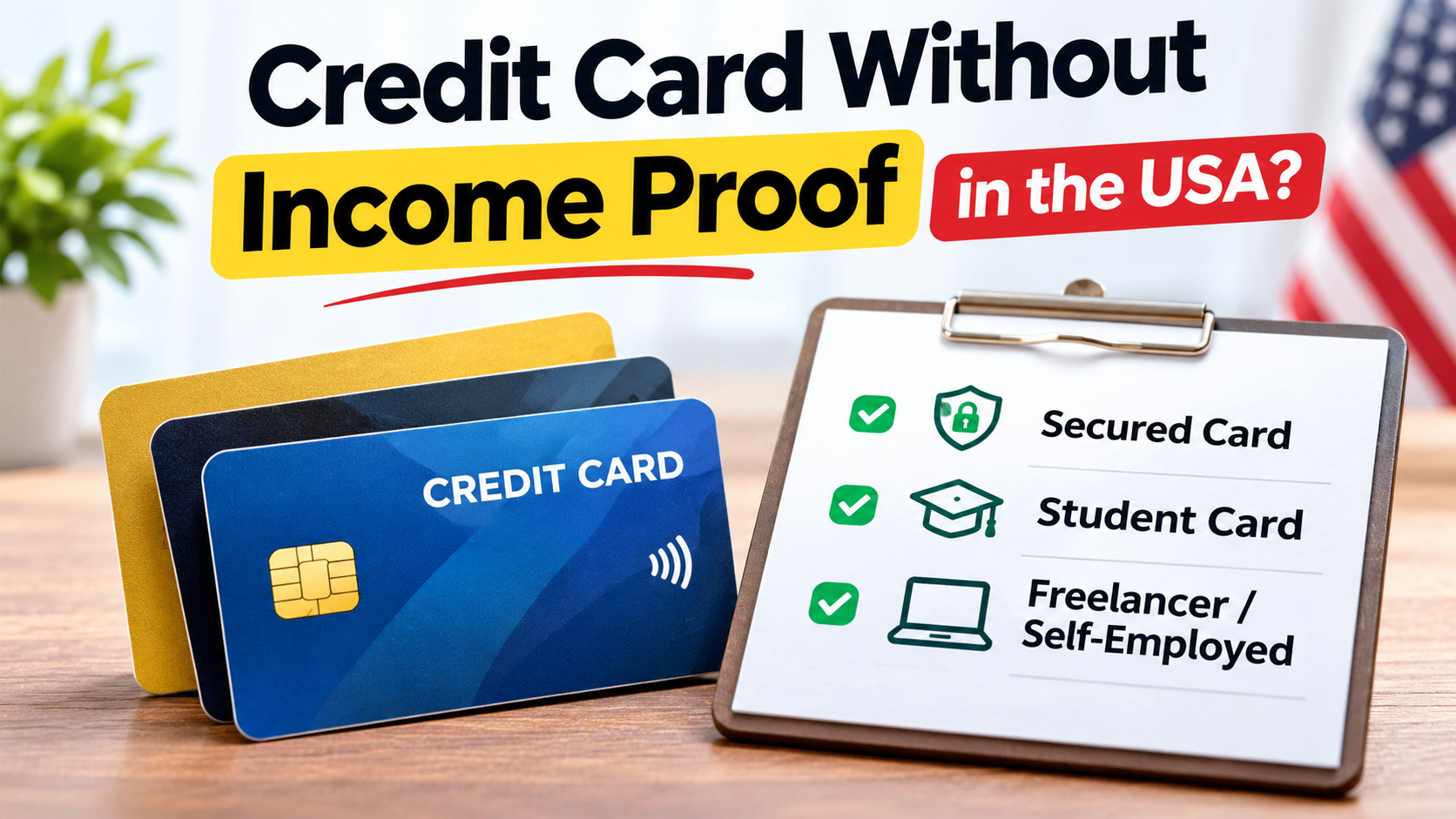
This guide explains how credit card applications work without traditional income documents, what income you may be able to report, how secured credit cards work, and what to do if you do not qualify for a traditional credit card.





Can You Get a Credit Cards Without Income Proof?
Yes, you may be able to get a credit card without submitting traditional income documents, but approval is not guaranteed.
Some credit card issuers may evaluate the information you provide in your application or information already available through an existing financial relationship. They may not require every applicant to upload pay stubs or tax returns during the initial application.
However, issuers must consider your ability to make the required minimum payments. They may review your income or assets and existing financial obligations before approving an account.
For example, you may not receive a traditional salary but could have income from freelance work, self-employment, investments, retirement benefits, or other eligible sources.
The important distinction is between not having traditional income documents and not having the financial ability to repay a credit card balance. These are not the same thing.
What Income Can You Report on a Credit Card Application?
A traditional salary is not the only possible source of income considered by credit card issuers.
Depending on your circumstances and the issuer’s application requirements, eligible income may include:
| Income source | What it means |
|---|---|
| Salary and wages | Money earned through full-time or part-time employment |
| Freelance income | Payments received for independent work or projects |
| Self-employment income | Earnings from your own business or professional activities |
| Investment income | Eligible interest, dividends, or other investment earnings |
| Retirement income | Qualifying retirement benefits or pension income |
| Public assistance | Certain qualifying government assistance payments |
| Alimony or child support | Qualifying payments received by the applicant |
| Other eligible income | Other current or reasonably expected income permitted under applicable rules |
The Consumer Financial Protection Bureau explains that card issuers may consider current or reasonably expected income and assets when evaluating an applicant’s ability to pay.
Can you include household income?
It depends on your age, access to the money, and the issuer’s application requirements.
For applicants aged 21 or older, certain income from another person may be considered when the applicant has a reasonable expectation of access to it. For example, money regularly deposited into a joint account may qualify under applicable rules.
However, you should not automatically include another person’s entire salary simply because you live together or share household expenses.
Always follow the income instructions on the application and report only amounts you are legally permitted to include.
Best Credit Card Options Without Traditional Income Documents
If you do not receive a regular paycheck, several types of credit cards or credit-building arrangements may be worth considering.
1. Secured Credit Cards
A secured credit card is one of the options worth considering if you have limited credit history or difficulty qualifying for a traditional unsecured card.
With a secured credit card, you generally provide a refundable security deposit to the issuer. The deposit helps secure the account, and the issuer typically determines your credit limit based on its policies and the deposit amount.
Example:
Imagine you apply for a secured credit card and provide a $300 security deposit.
If the issuer offers a $300 credit limit, you can use the card for eligible purchases up to that limit. You must still make your monthly payments according to the card agreement.
The security deposit is not a payment toward your monthly bill. It serves as collateral and may be returned when the account is closed or converted to an unsecured card, subject to the issuer’s terms and any outstanding balance.
Potential benefits:
- May be easier to qualify for than some unsecured cards.
- Can help establish or rebuild credit when the issuer reports account activity to credit bureaus.
- May not require traditional employment documents in every case.
- Provides a structured way to demonstrate responsible credit use.
Things to check before applying:
- Minimum security deposit.
- Annual fee and other charges.
- Whether the issuer reports to all three major credit bureaus.
- Whether the card offers a path to an unsecured account.
- Conditions for receiving your deposit back.
2. Student Credit Cards
Some credit card issuers offer student credit cards designed for eligible college students who are beginning to build their credit history.
These cards may have simpler rewards structures or eligibility requirements designed for students. However, being a student does not automatically qualify you for a credit card.
U.S. rules include additional requirements for applicants under 21.
If you are under 21, a card issuer generally needs information showing that you have an independent ability to make the required payments, or a qualifying cosigner, guarantor, or joint applicant who is at least 21 and agrees to the required legal responsibility.
Students should check the issuer’s age, income, enrollment, and credit requirements before applying.
3. Credit Cards for Self-Employed Applicants
Freelancers, consultants, independent contractors, and small-business owners may not receive conventional salary slips.
That does not automatically prevent them from applying for a personal credit card.
Depending on the issuer’s requirements, relevant financial information may include:
- Current or reasonably expected self-employment income.
- Business earnings available to the applicant.
- Eligible income reported on tax returns.
- Relevant bank account information.
- Existing credit history and financial obligations.
Keep accurate records of your earnings and expenses. If the issuer requests supporting documents, provide the information it specifically asks for.
4. Credit Cards Through an Existing Banking Relationship
If you already have a checking or savings account with a bank, you may want to check whether it offers credit cards to existing customers.
An established banking relationship may give the issuer access to certain information about your financial relationship, subject to applicable information-sharing rules.
Some customers may also receive prequalified or preapproved offers.
However, an existing account or prequalified offer does not guarantee final approval. The issuer may still review your application and ability to repay.
5. Becoming an Authorized User
Another option is to become an authorized user on a family member’s or another person’s credit card account.
An authorized user may receive a card connected to the primary cardholder’s account and may be able to use it for purchases.
However, this is different from opening your own credit card account.
The primary cardholder generally remains responsible for the account debt under the card agreement. Whether authorized-user activity helps your credit history depends on the issuer’s reporting practices and the credit bureau’s treatment of the information.
Before becoming an authorized user, discuss spending limits, payment responsibilities, and account management with the primary cardholder.
Secured vs. Unsecured Credit Cards: What’s the Difference?
If you are applying without traditional income documents, understanding secured and unsecured credit cards can help you compare your options.
| Feature | Secured credit card | Unsecured credit card |
|---|---|---|
| Security deposit | Generally required | Not required |
| Collateral | Usually a refundable cash deposit | No cash security deposit |
| Approval | May be accessible to some applicants with limited credit history | Depends on the issuer’s underwriting criteria |
| Credit limit | Often influenced by the deposit | Determined by the issuer |
| Credit reporting | Depends on the issuer | Depends on the issuer |
| Suitable for | Some credit-building applicants | Applicants who meet the issuer’s requirements |
Neither type guarantees approval. Compare the card agreement, fees, interest rate, and reporting practices before applying.
How Do Credit Card Issuers Evaluate Your Application?
Credit card issuers do not necessarily rely on a single document or factor when reviewing an application.
Under the federal ability-to-pay rule, issuers must consider whether an applicant can make the required minimum payments.
Factors may include:
1. Income or assets
The issuer may consider your current or reasonably expected income and eligible assets.
2. Existing financial obligations
Your existing debt payments and other financial commitments may affect your ability to repay additional borrowing.
3. Credit history
Your previous borrowing and repayment behavior may help the issuer evaluate credit risk.
4. Credit reports and scores
Issuers may consider consumer reports and credit scores as part of their underwriting process.
5. Banking relationship
Information available through an existing relationship may be relevant, subject to applicable information-sharing rules.
6. Application information
The issuer may use the financial information you provide and may request additional documents when needed.
There is no universal approval formula. Different issuers have different underwriting criteria.
What Documents May Be Required for a Credit Card Application?
Not every credit card application requires the same documents.
Depending on the issuer and your financial circumstances, you may be asked for:
| Document or information | Why it may be requested |
|---|---|
| Government-issued identification | To verify your identity |
| Social Security number or other accepted identification details | To process your application and verify your identity |
| Bank statements | To support financial information when requested |
| Recent pay stubs | To verify employment income when requested |
| Tax returns | May help document self-employment or other income |
| Business financial records | May support information about self-employment earnings |
| Security deposit details | Relevant to secured credit card applications |
Important: These are possible documents, not a universal checklist. Some issuers may verify information electronically or use information already available to them.
Never send sensitive financial documents through an unofficial email address or an unverified website.
How to Improve Your Chances of Credit Card Approval
If you do not have traditional income documents, take time to prepare before submitting an application.
1. Review Your Credit Reports
Check your credit reports for incorrect personal information, unfamiliar accounts, inaccurate balances, or payment errors.
You can access your reports through the federally authorized website:
Reviewing your own credit reports does not require you to apply for a new credit card.
2. Understand Your Current Financial Obligations
Before applying, review your existing loan payments, credit card balances, rent or mortgage obligations, and other recurring expenses.
This can help you understand whether taking on another credit account is financially manageable.
3. Consider a Secured Credit Card
If you have limited credit history or do not qualify for an unsecured card, a secured credit card may be worth considering.
Compare the deposit requirement, annual fee, interest rate, credit bureau reporting, and deposit refund policy.
4. Apply for a Card That Matches Your Profile
Do not apply randomly for several cards.
Look for products whose eligibility requirements match your credit history, age, financial circumstances, and current income.
5. Provide Accurate Application Information
Enter truthful and complete information.
Never inflate your income, claim money you cannot reasonably access, or provide false employment details to improve your chances of approval.
6. Pay Your Bills on Time
If you receive a credit card, pay at least the required minimum by the due date. Paying your statement balance in full when possible can help you avoid interest on purchases, subject to your card’s terms.
Responsible payment behavior can help you establish a positive credit history over time, although credit-score changes are never guaranteed.
Common Mistakes to Avoid When Applying Without Income Proof
Avoid these mistakes when applying for a credit card:
1. Reporting income that is not yours
Do not report another person’s income unless it meets the issuer’s requirements and applicable rules.
2. Assuming a secured card guarantees approval
A security deposit does not remove all eligibility requirements. Issuers may still review your application.
3. Applying for too many cards at once
Multiple applications may result in hard inquiries and can affect your credit profile. Research eligibility before applying.
4. Ignoring annual fees and interest rates
A card may be easier to obtain but still have expensive fees or borrowing costs.
5. Providing inaccurate information
False income or employment details can result in rejection, account closure, or other consequences.
6. Confusing authorized-user access with your own credit account
Being an authorized user does not make you the primary account holder or automatically give you responsibility for the account in the same way.
Can You Build Credit Without a Traditional Income?
Yes, it may be possible to build a credit history without receiving a traditional salary, provided you qualify for a credit product and manage it responsibly.
A secured credit card may be one starting point.
Consider these habits:
- Make every required payment on time.
- Avoid spending more than you can repay.
- Keep your outstanding balances manageable.
- Review your credit reports for errors.
- Avoid applying for credit you do not need.
- Check whether the issuer reports your account to the major credit bureaus.
There is no guaranteed timeline for reaching a particular credit score. Your results depend on your credit history, reported account activity, outstanding debt, and other factors.
Who Should Consider These Credit Card Options?
Different options may suit different financial circumstances.
| Applicant | Option worth exploring |
|---|---|
| College student | Student credit card or secured card |
| Freelancer | Unsecured card based on eligible income, or secured card |
| Self-employed applicant | Card that accepts self-employment income |
| Person with limited credit history | Secured credit card |
| Person rebuilding credit | Secured card with credit bureau reporting |
| Existing bank customer | Check eligible prequalified offers |
| Person without their own credit card | Authorized-user arrangement, where appropriate |
Your eligibility will depend on the issuer’s rules and your financial circumstances.
Frequently Asked Questions
1. Can I get a credit card without income proof in the USA?
Yes, it may be possible to get a credit card without submitting traditional income documents. However, issuers must consider your ability to repay, and approval depends on their eligibility and verification requirements.
2. Can I get a credit card without a job?
Possibly. Being unemployed does not automatically mean you cannot qualify. An issuer may consider eligible income or assets from other sources, along with your current financial obligations. Approval is not guaranteed.
3. Can I get a credit card without a salary slip?
Yes, some issuers may accept applications without requiring a traditional salary slip. They may evaluate other financial information or request alternative documentation depending on your circumstances.
4. Can freelancers get credit cards without traditional income proof?
Freelancers may qualify for credit cards using eligible self-employment income or other permitted financial information. Issuer requirements vary, and applicants should maintain accurate records of their earnings.
5. Can students get credit cards without a regular income?
Some students may qualify for student or secured credit cards. Applicants under 21 are subject to additional federal requirements regarding independent ability to repay or a qualifying cosigner, guarantor, or joint applicant.
6. What is the easiest type of credit card to get without traditional income documents?
A secured credit card may be worth exploring if you have limited credit history or difficulty qualifying for an unsecured card. However, approval is never guaranteed, and issuers may still review your financial information.
7. Do secured credit cards require a deposit?
Generally, yes. Secured credit cards typically require a refundable security deposit. The amount and credit limit depend on the issuer’s terms.
8. Can I use household income on a credit card application?
It depends on your age, access to the income, and the issuer’s application rules. Applicants aged 21 or older may be able to include certain income they have a reasonable expectation of accessing. Do not automatically report another household member’s entire income.
9. Can I get a credit card without a Social Security number?
Some issuers may accept alternative identification, such as an Individual Taxpayer Identification Number (ITIN), but acceptance varies. Check the issuer’s specific application requirements before applying.
10. Does applying for a credit card affect my credit score?
A credit card application may result in a hard inquiry, which can affect your credit score. Checking whether you are prequalified may involve a soft inquiry instead, but you should confirm the issuer’s terms.
11. Can an authorized user build credit without having their own income?
An authorized user may benefit from account activity if the issuer reports the account to the credit bureaus. However, reporting practices vary, and authorized-user status does not replace the primary cardholder’s responsibility under the account agreement.
12. Can I get a credit card without income and without a security deposit?
This can be difficult because issuers must consider an applicant’s ability to make required payments. Some applicants may qualify through eligible income or assets without traditional salary documents, but having neither the ability to repay nor qualifying financial resources makes approval unlikely.
Final Thoughts
Getting a credit card without income proof in the USA may be possible if you have eligible income or assets but do not receive traditional salary documents.
Freelancers, self-employed workers, students, and people with irregular earnings may have options depending on the issuer’s requirements.
A secured credit card can be a practical starting point for some applicants, especially those building or rebuilding credit. Others may qualify for an unsecured card through their financial profile or existing banking relationship.
Before applying, compare fees, interest rates, security deposits, credit reporting practices, and eligibility requirements. Most importantly, provide accurate financial information and choose a card you can manage responsibly.
Disclaimer: This article is for educational purposes only and does not constitute financial, legal, or credit advice. Credit card eligibility, income verification, fees, and approval decisions vary by issuer. Review the current card agreement and application requirements before applying.
Authoritative Sources
Federal Deposit Insurance Corporation – Consumer Resources
Consumer Financial Protection Bureau – Regulation Z: Ability to Pay
Consumer Financial Protection Bureau – Official Interpretation of Ability to Pay
AnnualCreditReport.com – Official Credit Report Website
2 thoughts on “Can You Get a Credit Card Without Income Proof in the USA?”