
Buying your first car is exciting.
You imagine driving home, taking your first road trip, commuting without depending on anyone, or simply enjoying the freedom you’ve waited years for.
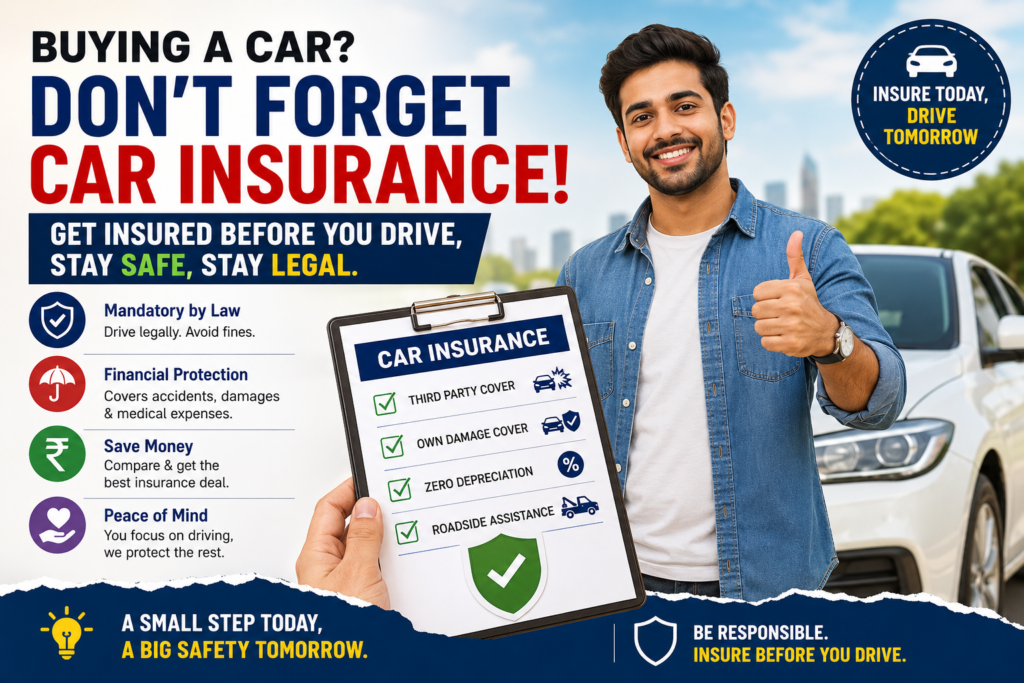
But amid all that excitement, one important question often catches buyers off guard:
“Do I need car insurance before buying a car?”
The short answer is yes—in most situations, you’ll need proof of insurance before you can legally drive your new vehicle off the dealership lot.
Unfortunately, many first-time buyers don’t realize this until the last minute. They spend hours negotiating the price of the car, arranging financing, signing paperwork—and then suddenly discover they can’t drive home because they don’t have insurance.
This guide explains everything you need to know before buying a car in the United States, including how insurance works, when to buy it, how much it costs, common mistakes to avoid, and practical tips that can save you hundreds of dollars every year.
Quick Answer
Yes. In almost every U.S. state, you’ll need car insurance before driving your newly purchased vehicle. While you don’t always need an active policy before choosing a car, you should arrange insurance before taking possession of the vehicle. Many dealerships require proof of insurance before handing over the keys.
AI Overview Answer
If you’re buying a car in the United States, it’s best to secure car insurance before driving it home. Most states legally require at least liability insurance, and dealerships often ask for proof of coverage before releasing the vehicle. Comparing insurance quotes before purchasing a car can also help you choose a vehicle that’s affordable to insure.
Key Takeaways
- Most U.S. states require car insurance before driving your vehicle.
- Dealerships usually ask for proof of insurance before delivery.
- Comparing insurance quotes before buying a car can save hundreds of dollars annually.
- Your car’s make, model, age, and safety features all affect insurance premiums.
- Financing a vehicle typically requires full coverage insurance.
- Buying insurance ahead of time helps avoid delays and unnecessary stress.
Do You Need Car Insurance Before Buying a Car?
The answer depends on what you mean by “before buying.”
There are two different stages of buying a car:
Stage 1: Choosing and Purchasing the Vehicle
You can shop for cars, negotiate prices, apply for financing, and even sign purchase documents without already having insurance.
However…
Stage 2: Driving the Vehicle
Before you drive the car on public roads, you’ll almost always need insurance.
That’s because nearly every state requires drivers to carry at least minimum liability coverage.
Without insurance, you could face:
- Heavy fines
- License suspension
- Vehicle registration issues
- Legal penalties
- Personal financial responsibility after an accident
Simply put, buying a car and driving a car are two different legal events.
Why So Many First-Time Buyers Get Confused
If you’ve never owned a vehicle before, it’s easy to assume insurance comes after buying the car.
After all, how can you insure something you don’t own yet?
Here’s what actually happens.
You choose the vehicle.
The dealership provides the VIN (Vehicle Identification Number).
You contact an insurance company.
They generate a policy using the VIN.
Once your policy becomes active, you show proof of insurance.
Only then do you drive home.
The entire process often takes less than an hour if done online.
Real-Life Example
Jake, a 24-year-old software engineer in Texas, spent three weeks researching SUVs.
He finally found the perfect used Toyota RAV4.
Excited, he completed financing and expected to drive home immediately.
Then the dealership asked:
“Can you show proof of insurance?”
Jake didn’t have any.
He spent nearly two hours comparing insurance companies inside the dealership while his family waited.
The excitement quickly turned into frustration.
If Jake had compared insurance quotes beforehand, he could have driven away in minutes instead of wasting valuable time.
Why Buying Insurance Early Saves Money
Many buyers focus only on the car’s purchase price.
But ownership costs include:
- Insurance
- Fuel
- Maintenance
- Repairs
- Registration
- Taxes
Sometimes two cars with identical purchase prices have dramatically different insurance costs.
Example:
Car A costs $25,000.
Insurance costs $1,200 per year.
Car B also costs $25,000.
Insurance costs $2,100 per year.
That’s an extra $900 every year.
Over five years, you’ve spent an additional $4,500 simply because you didn’t compare insurance costs before choosing your vehicle.
What Happens If You Drive Without Insurance?
Imagine finally buying your dream car.
You’re excited.
You pull out of the dealership.
Five minutes later…
A distracted driver runs a red light.
The accident wasn’t your fault.
But you never activated your insurance policy.
Now you’re responsible for legal complications, possible penalties, registration issues, and in some states, significant fines.
Even worse, if you caused the accident, you could be personally responsible for thousands—or even hundreds of thousands—of dollars in damages.
This is why insurance isn’t just another expense.
It’s financial protection.
Can You Buy a Car Without Insurance?
Yes.
You can legally purchase a vehicle without insurance in many situations.
However, purchasing isn’t the same as driving.
You generally cannot legally drive the vehicle on public roads without insurance.
Think of it this way:
Buying a laptop doesn’t require internet.
Using it online does.
Similarly:
Buying a car doesn’t always require insurance.
Driving it usually does.
Why Dealerships Ask for Insurance
Most dealerships aren’t simply following company policy.
They’re protecting themselves.
They want confirmation that once you leave the lot, you’re legally covered.
If you’re financing the vehicle, lenders almost always require insurance because they technically own part of the vehicle until the loan is paid off.
Without insurance, their investment is at risk.
Understanding Liability Insurance
Liability insurance is the minimum coverage required in most states.
It generally covers:
- Damage you cause to another person’s vehicle.
- Medical expenses for injured parties.
- Legal costs resulting from an accident.
However, liability insurance usually does not pay to repair your own vehicle.
That’s why many drivers choose additional protection.
What Is Full Coverage Insurance?
Despite the name, “full coverage” isn’t an official insurance policy.
Instead, it’s a combination of different coverages, including:
- Liability coverage
- Collision coverage
- Comprehensive coverage
Collision coverage helps repair your car after an accident.
Comprehensive coverage protects against theft, vandalism, hail, floods, falling trees, fire, and certain natural disasters.
If you’re financing or leasing a vehicle, lenders usually require full coverage until the loan is paid off.
Case Study: How Planning Ahead Saved Emily Nearly $1,000
Emily, a first-time buyer in Florida, planned to purchase a compact SUV.
Instead of waiting until dealership paperwork was complete, she requested insurance quotes for three different vehicles.
The results surprised her.
Vehicle 1:
Annual insurance premium: $2,150
Vehicle 2:
Annual insurance premium: $1,520
Vehicle 3:
Annual insurance premium: $1,180
All three vehicles were within $2,000 of each other in purchase price.
Emily chose the third option.
By spending just one evening comparing insurance quotes before buying, she reduced her insurance costs by nearly $1,000 every year.
Over five years, that decision saved her almost $5,000—money she later used for vacations and emergency savings.
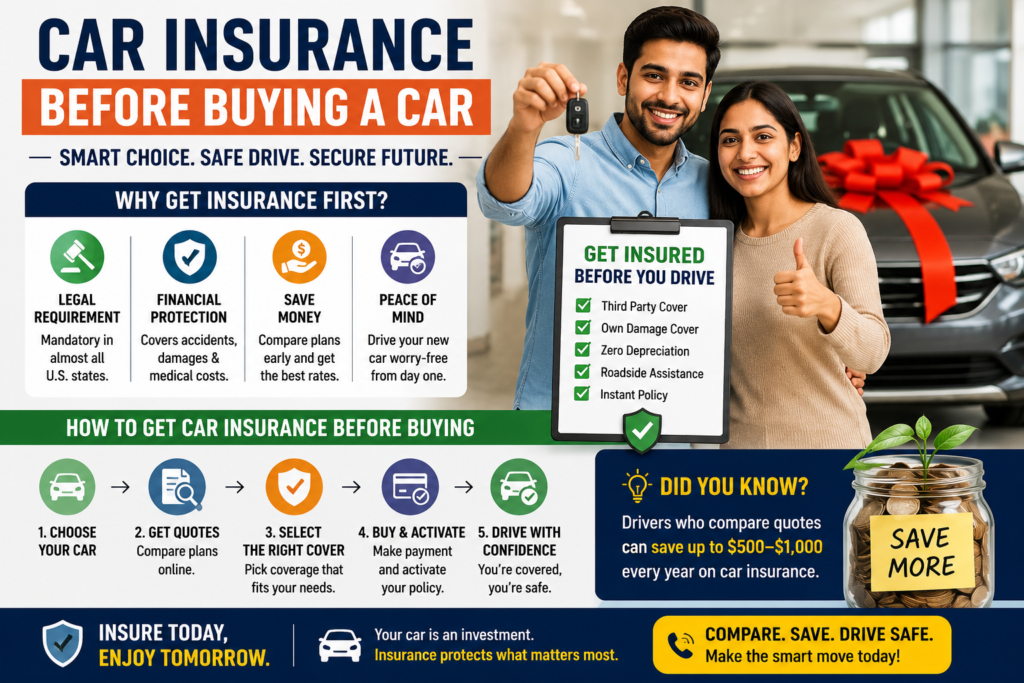
How to Get Car Insurance Before Buying a Car (Step-by-Step)
One of the biggest misconceptions among first-time buyers is that they need to own the car before getting insurance.
In reality, insurance companies make the process incredibly simple.
Here’s how it usually works.
Step 1: Choose the Car You Want
You don’t need to finalize the purchase immediately.
Once you’ve narrowed your options, ask the dealership or seller for the following information:
- Vehicle Identification Number (VIN)
- Year
- Make
- Model
- Trim level
This information helps insurers calculate your premium accurately.
Step 2: Compare Multiple Insurance Quotes
Never buy the first policy you see.
Insurance rates vary widely—even for the same driver and the same vehicle.
A company offering you a $180 monthly premium could be competing with another insurer charging only $125 for nearly identical coverage.
Take 20–30 minutes to compare quotes before making your decision.
Step 3: Select the Right Coverage
Your insurance needs depend on how you’re buying the vehicle.
If you’re paying cash:
You only need to meet your state’s minimum insurance requirements, though higher coverage is often a smarter choice for better financial protection.
If you’re financing or leasing:
Most lenders require:
- Liability Insurance
- Collision Coverage
- Comprehensive Coverage
Some lenders may also require Gap Insurance.
Step 4: Activate Your Policy
Choose the date and time your insurance becomes active.
Many buyers activate coverage on the same day they plan to pick up their vehicle.
Once your payment is processed, you’ll receive:
- Digital Insurance Card
- Policy Documents
- Proof of Insurance
Most insurance companies send these instantly by email or through their mobile app.
Step 5: Show Proof of Insurance
Before driving away, provide your dealership with your proof of insurance.
Once everything is verified, you’re ready to drive home with confidence.
Also Read: How Much Car Insurance Do I Need? Don’t Pay for the Wrong Coverage
When Is the Best Time to Buy Car Insurance?
The best time is before you visit the dealership to complete the purchase.
Many experienced buyers compare insurance rates days in advance.
This offers several advantages:
- You avoid last-minute stress.
- You know the total cost of ownership.
- You can compare vehicles based on insurance costs.
- You’re less likely to make rushed decisions.
Planning ahead often leads to better financial choices.
Why Insurance Costs Differ So Much
Many people assume insurance companies only consider the driver’s age.
In reality, insurers evaluate dozens of factors.
Some of the most important include:
1. Your Age
Younger drivers generally pay higher premiums because they have less driving experience.
2. Driving History
Drivers with clean records often receive significantly lower rates than those with accidents or traffic violations.
3. Credit-Based Insurance Score (Where Allowed)
In many states, insurers use credit-based insurance scores to estimate risk.
A stronger score can help lower premiums.
4. Where You Live
Insurance rates differ between cities and states.
Areas with:
- Higher accident rates
- More vehicle theft
- Heavy traffic
- Severe weather
often have higher insurance costs.
5. Type of Vehicle
Your vehicle plays a huge role.
Luxury cars usually cost more to insure because repairs and replacement parts are expensive.
Sports cars often have higher premiums because they’re statistically involved in more claims.
Family sedans and compact SUVs generally cost less.
6. Annual Mileage
Drivers covering fewer miles each year usually pay less because they’re exposed to less risk.
Real-Life Example: Why Vehicle Choice Matters
Michael planned to buy a Dodge Charger.
Before finalizing the purchase, he compared insurance quotes with another option—a Honda Accord.
The results surprised him.
| Vehicle | Annual Insurance Cost |
|---|---|
| Dodge Charger | $2,950 |
| Honda Accord | $1,480 |
Although Michael loved the Charger, he realized he’d spend nearly $7,500 more on insurance over five years.
He chose the Accord and invested the savings instead.
Sometimes the smarter financial decision isn’t the flashiest one.
Buying a New Car vs. Buying a Used Car
Many buyers believe used cars are always cheaper to insure.
That’s not necessarily true.
Here’s a comparison.
| Factor | New Car | Used Car |
|---|---|---|
| Purchase Price | Higher | Lower |
| Repair Costs | Higher | Lower |
| Replacement Value | Higher | Lower |
| Advanced Safety Features | Usually Better | May Be Limited |
| Insurance Premium | Often Higher | Often Lower |
However, some modern vehicles equipped with advanced safety systems may actually qualify for insurance discounts.
Always compare quotes before deciding.
Cash Purchase vs. Financing
| Paying Cash | Financing |
|---|---|
| Minimum coverage allowed (state requirements apply) | Full coverage usually required |
| Lower monthly expenses | Higher insurance costs |
| Greater flexibility | Lender determines minimum coverage |
Even if you’re paying cash, choosing only minimum liability coverage isn’t always the best decision.
One accident involving your own vehicle could leave you paying thousands of dollars out of pocket.
Common Mistakes First-Time Buyers Make
1. Waiting Until the Last Minute
Many buyers don’t think about insurance until they’re sitting inside the dealership.
This creates unnecessary stress.
Plan ahead instead.
2. Buying the Cheapest Policy
Lower premiums often mean reduced protection.
Saving $20 per month isn’t worth risking thousands in uncovered damages.
Balance affordability with adequate coverage.
3. Ignoring Deductibles
A low monthly premium may come with a very high deductible.
Before choosing a policy, ask yourself:
“If I had an accident tomorrow, could I comfortably afford this deductible?”
4. Forgetting About Gap Insurance
If you’re financing a new vehicle with a small down payment, Gap Insurance can be extremely valuable.
It helps cover the difference between what you owe on your loan and what your car is worth if it’s declared a total loss.
5. Not Comparing Quotes
This is probably the most expensive mistake.
Spending just 30 minutes comparing insurers could save hundreds—or even thousands—of dollars over the life of your policy.
Emotional Story: A Lesson Daniel Never Forgot
Daniel had spent years saving for his first car.
Every overtime shift, every skipped vacation, and every extra dollar went toward that goal.
Finally, he bought the car he’d always wanted.
Excited and eager to celebrate, he left the dealership without taking the time to understand his insurance coverage.
A week later, a severe hailstorm damaged his vehicle.
He assumed his insurance would cover everything.
It didn’t.
His policy only included liability insurance.
The repair bill exceeded $6,000.
Daniel later admitted the biggest mistake wasn’t buying the wrong car—it was failing to understand what his insurance actually covered.
That experience taught him a lesson many drivers learn the hard way:
Insurance isn’t just paperwork.
It’s protection for everything you’ve worked so hard to achieve.
Expert Tips to Save Money on Car Insurance
Here are practical ways many drivers reduce their premiums:
- Compare quotes from at least three insurers.
- Bundle auto and home/renters insurance if possible.
- Maintain a clean driving record.
- Increase your deductible if you have emergency savings.
- Ask about safe driver discounts.
- Take advantage of low-mileage programs.
- Consider vehicles with strong safety ratings.
- Review your policy annually to ensure you’re not overpaying.
Small adjustments today can lead to significant savings over the years.
How Much Does Car Insurance Cost in the U.S.?
Insurance premiums vary based on your location, driving history, age, vehicle, and coverage.
Here’s a general estimate for 2026:
| Coverage Type | Estimated Annual Cost |
|---|---|
| Minimum Liability | $700–$1,500 |
| Full Coverage | $1,600–$3,200 |
| Teen Drivers | $3,500–$7,000+ |
| Drivers with Accidents | Often significantly higher |
Remember, these are average ranges. Your actual premium may be higher or lower depending on your personal circumstances.
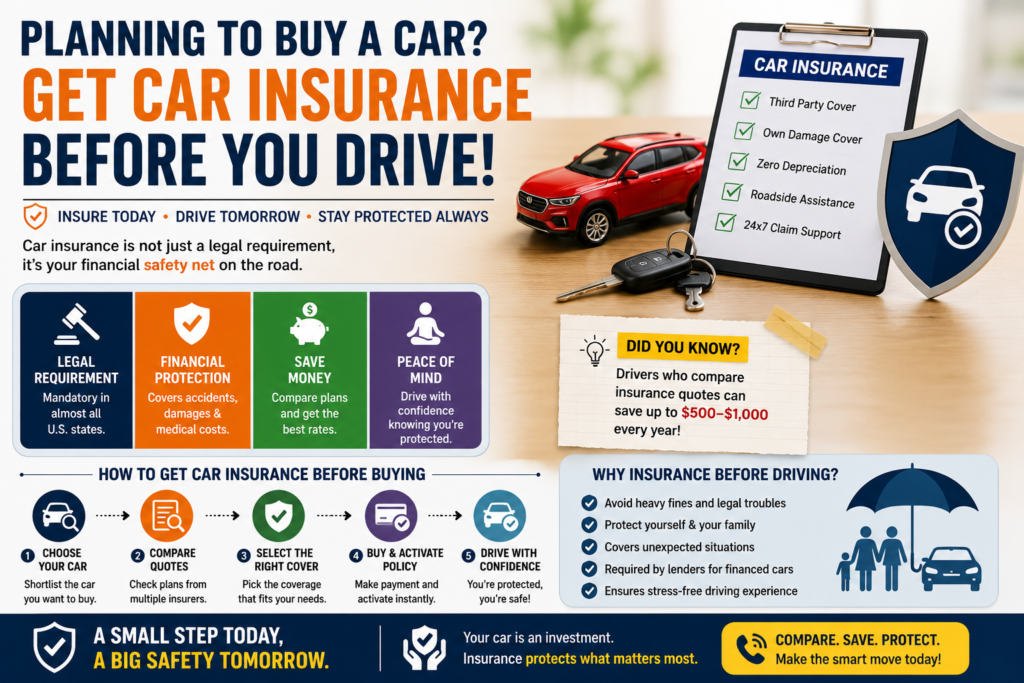
Frequently Asked Questions (FAQs)
Q1. Do I need car insurance before buying a car?
Not necessarily before purchasing the vehicle, but you do need insurance before driving it on public roads in almost every U.S. state. Most dealerships also require proof of insurance before handing over the keys.
Q2. Can I buy insurance if I don’t own the car yet?
Yes. Once you know the vehicle’s VIN (Vehicle Identification Number), make, model, and purchase details, an insurance company can prepare your policy before you take possession of the car.
Q3. Can I drive a newly purchased car home without insurance?
In most states, no. Driving without insurance is illegal and can result in fines, license suspension, vehicle impoundment, or significant financial liability if you’re involved in an accident.
Q4. What is the minimum insurance required in the U.S.?
Minimum requirements vary by state, but most require liability insurance, which covers damages and injuries you cause to others. Check your state’s insurance laws for exact requirements.
Q5. Is full coverage required?
If you’re financing or leasing a vehicle, lenders almost always require full coverage, including liability, collision, and comprehensive insurance.
Q6. Does insurance start immediately?
Yes. Most insurance companies allow you to activate coverage instantly once you purchase your policy.
Q7. Is car insurance more expensive for first-time buyers?
Usually, yes. Drivers with little or no insurance history often pay higher premiums because insurers consider them a higher risk.
Q8. Can I change my insurance company later?
Absolutely. You can switch insurers whenever you find better coverage or lower premiums. Just make sure there’s no gap between your old and new policies.
Q9. Should I compare insurance before choosing a car?
Yes. Two vehicles with similar purchase prices can have vastly different insurance costs. Comparing premiums beforehand helps you understand the true cost of ownership.
Q10. Does my credit score affect car insurance?
In many states, insurers use a credit-based insurance score as one factor when calculating premiums. However, some states restrict or prohibit this practice.
Q11. What happens if I finance a car and only buy liability insurance?
Your lender will likely reject this because financed vehicles usually require full coverage. Failing to maintain the required coverage may result in the lender purchasing insurance on your behalf, which is often much more expensive.
Q12. Is insurance cheaper for used cars?
Not always. While used cars often cost less to insure, factors like theft rates, repair costs, and safety features can sometimes make a used car more expensive to insure than a newer model.
Q13. What documents do I need to buy car insurance?
Typically, you’ll need:
a) Driver’s license
b) Vehicle Identification Number (VIN)
c) Vehicle details (year, make, model)
d) Address
e) Estimated annual mileage
f) Payment method
Q14. Can I insure a car on weekends or holidays?
Yes. Most major insurance companies allow you to purchase and activate a policy online 24/7.
Q15. What is the biggest mistake first-time buyers make?
The biggest mistake is focusing only on the vehicle’s purchase price and forgetting to compare insurance costs. This can lead to paying hundreds or even thousands of dollars more each year than necessary.
First-Time Car Buyer Checklist
Before buying your car, make sure you’ve completed these steps:
✔ Decide on your budget.
✔ Research the vehicle’s reliability and safety ratings.
✔ Compare insurance quotes for multiple vehicles.
✔ Understand your state’s insurance requirements.
✔ Choose the right coverage.
✔ Activate your insurance policy.
✔ Carry proof of insurance.
✔ Review your deductible.
✔ Ask about available discounts.
✔ Drive away with confidence.
Final Thoughts
Buying a car is more than a financial transaction—it’s a milestone.
Whether it’s your first vehicle after college, a family SUV, or the car you’ve dreamed about for years, the excitement of driving it home is something you’ll always remember.
But along with that excitement comes responsibility.
Car insurance isn’t just another monthly bill. It’s a financial safety net that protects you, your loved ones, and your future.
A few minutes spent comparing insurance quotes before buying your vehicle can save you thousands of dollars over the years. More importantly, it gives you peace of mind every time you start the engine.
Instead of asking, “Do I really need insurance before buying a car?”, ask yourself a better question:
“Am I prepared if something unexpected happens on my very first drive?”
The answer to that question can make all the difference.
Call to Action
Planning to buy a car soon?
Take a few minutes to compare insurance quotes before making your final decision. Understanding your coverage options today can help you avoid expensive surprises tomorrow.
If you’re a first-time buyer, bookmark this guide and share it with friends or family who are preparing to purchase their next vehicle. A little planning now can lead to years of financial protection and confidence on the road.