
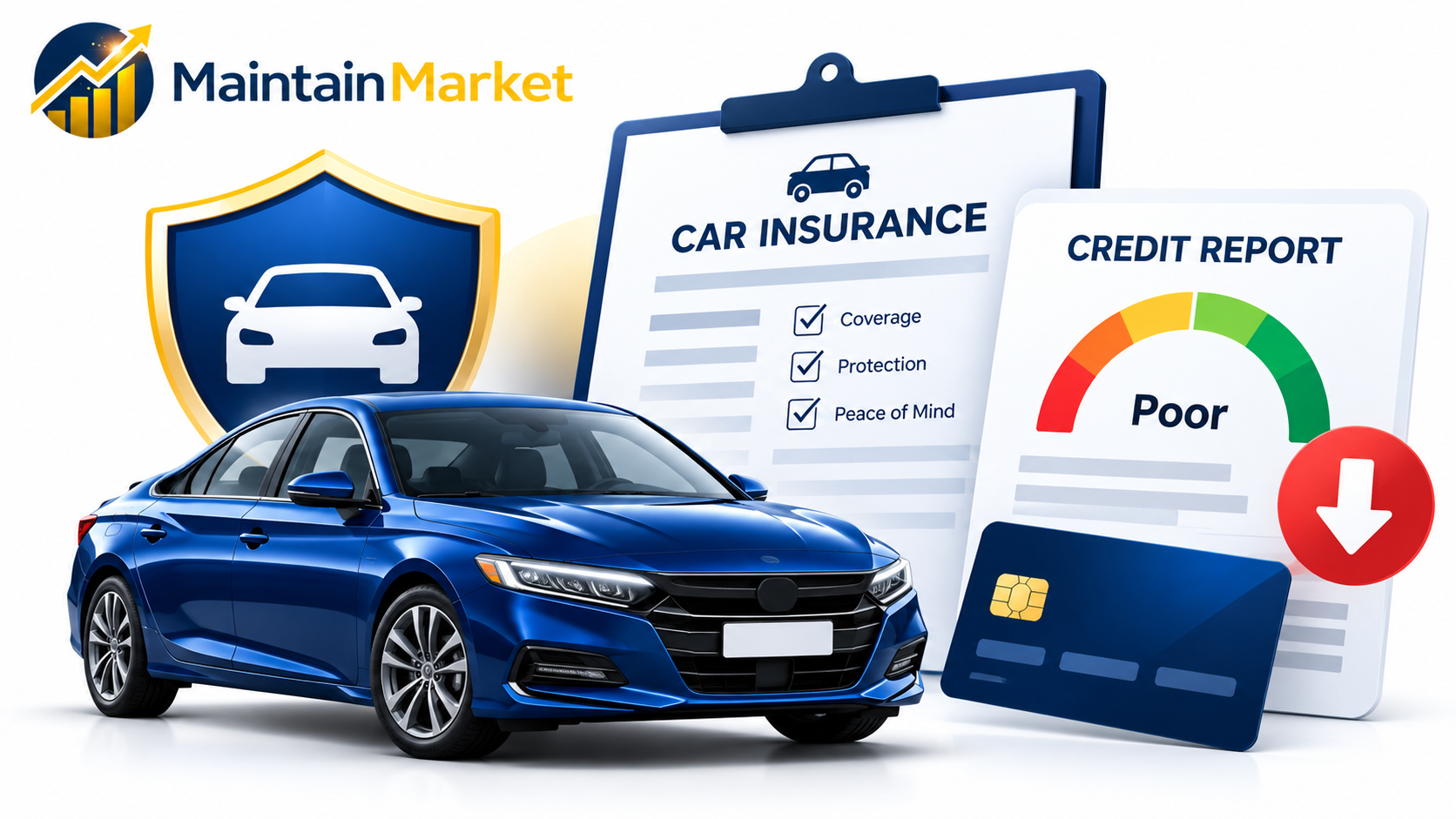
Does bad credit affect car insurance rates? Yes, it can. In many U.S. states, car insurance companies may use credit information to help calculate premiums through a credit-based insurance score. Drivers with less favorable credit information may pay more than otherwise similar drivers with stronger credit profiles. However, the effect depends on the state, insurer, and other rating factors.
Your regular credit score is not the same as a credit-based insurance score. Understanding that difference can help you shop for coverage, check your credit reports, and look for ways to reduce your insurance costs.
Quick Answer: Can Bad Credit Make Car Insurance More Expensive?
Yes, in states where insurers are permitted to use credit-based insurance scores, less favorable credit information can contribute to higher premiums. But it does not automatically mean you will pay more with every insurer.
Car insurance companies also consider factors such as your driving record, location, vehicle, annual mileage, claims history, coverage choices, and deductible. Some states restrict or prohibit the use of credit-based insurance scores for auto insurance pricing.
The most practical step is to compare quotes from multiple insurers using the same coverage limits and deductibles.
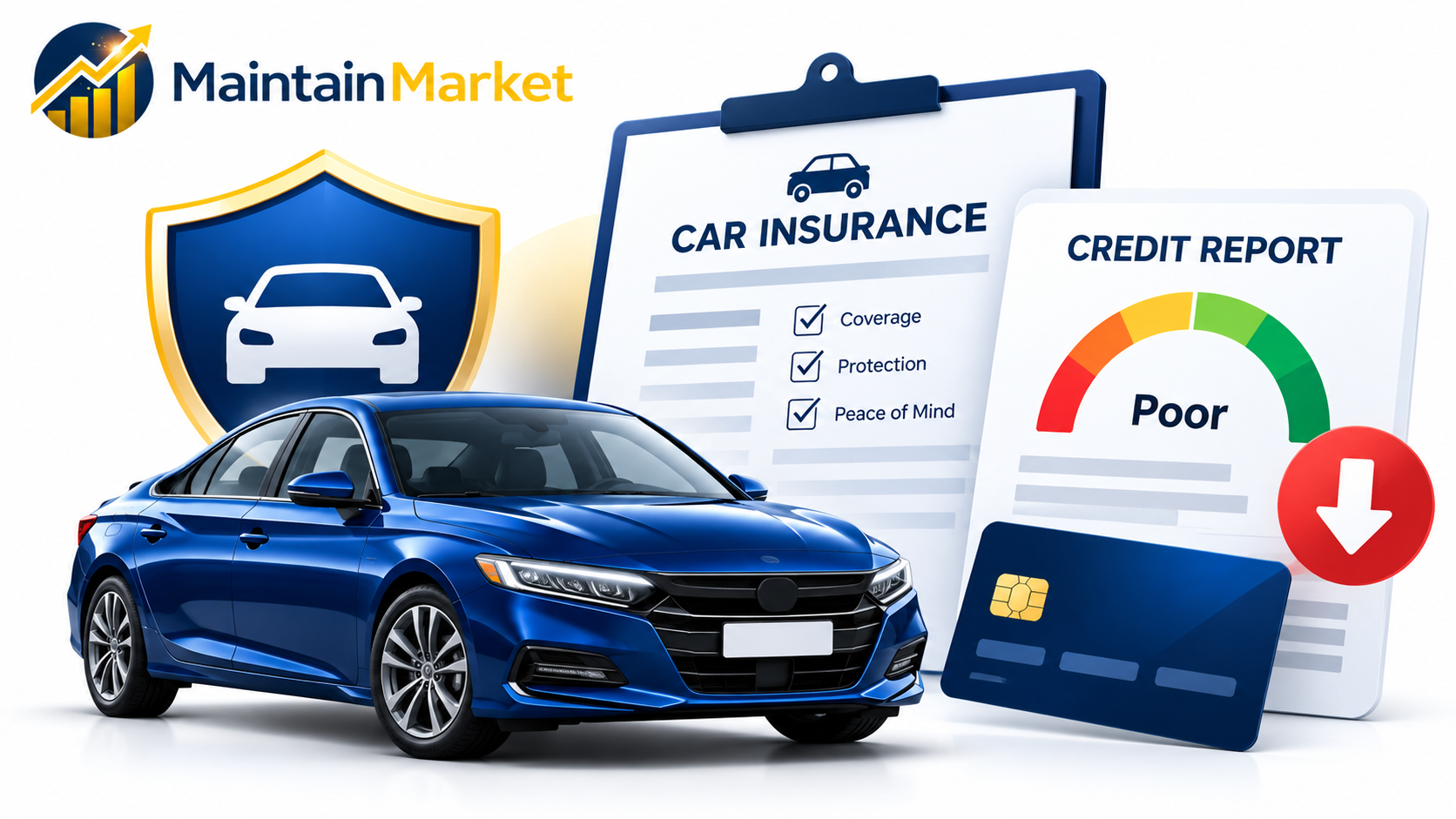
How Does Credit Affect Car Insurance Rates?
In states where it is permitted, an insurer may review information from your credit history and use a specialized model to produce a credit-based insurance score.
Insurers use this score to help estimate the likelihood of insurance losses. It is not intended to measure whether you are a good driver or whether you will repay a loan.
A credit-based insurance score may consider aspects of your credit history, such as:
- Payment history
- Outstanding debt and credit utilization
- Length of credit history
- Recent applications for credit
- Types of credit accounts
The factors and their relative importance vary by scoring model and insurer. Not every insurer uses the same model, and a consumer’s ordinary credit score cannot reliably predict their insurance score.
The National Association of Insurance Commissioners (NAIC) explains the distinction between traditional credit scores and credit-based insurance scores in its consumer guidance.
Source: https://content.naic.org/insurance-topics/credit-based-insurance-scores
Credit Score vs. Credit-Based Insurance Score
| Feature | Regular credit score | Credit-based insurance score |
|---|---|---|
| Main purpose | Help lenders assess credit risk | Help insurers assess insurance-loss risk |
| Typical use | Credit cards, loans, and other lending decisions | Insurance underwriting and pricing where allowed |
| Information used | Credit-report information | Credit-report information processed through an insurance-specific model |
| Effect on auto insurance | Not necessarily used directly | May influence premiums where state law permits |
| Scoring model | Depends on the scoring provider | Depends on the insurer and its model |
Your FICO score, for example, is not necessarily the score an insurer uses. Even if you know your regular credit score, you may not be able to determine your car insurance premium from it alone.
Which States Restrict Credit-Based Insurance Scores?
State rules matter. The NAIC’s current overview identifies restrictions or prohibitions on credit-based insurance scoring for insurance pricing in several states.
States listed by the NAIC as prohibiting insurers’ use of credit-based insurance scores in determining rates or offering or renewing policies include:
- California
- Hawaii
- Maryland
- Massachusetts
- Michigan
- Nevada
- Oregon
- Utah
The exact legal restrictions differ by state and may apply differently to new applications, renewals, underwriting, and rating. Check the current rules with your state insurance department before relying on this list.
In states that permit credit-based insurance scores, insurers generally cannot use the score as the sole basis for every adverse underwriting or pricing decision. State laws may also provide disclosure requirements or protections for consumers affected by extraordinary life circumstances.
Important: Do not assume that the same credit-scoring rules apply throughout the United States. Always check the rules for the state where the vehicle is insured.
Sources:
- https://content.naic.org/insurance-topics/credit-based-insurance-scores
- https://content.naic.org/sites/default/files/model-law-chart-mc-20-use-of-credit-reports-scoring-in-underwriting.pdf
How Much More Can Drivers With Bad Credit Pay?
There is no single nationwide dollar amount that accurately describes the effect of bad credit on every driver’s premium.
The difference depends on several variables, including:
- State insurance regulations
- Insurer pricing models
- Your credit-based insurance score
- Driving record and claims history
- Vehicle type and location
- Coverage limits and deductibles
Two drivers with similar vehicles and driving records may receive different quotes because insurers use different rating models. One company might place more weight on credit-related factors than another.
Rather than relying on a national average, request quotes from several insurers using the same coverage details. This will show you the prices actually available to you.
Illustrative example
Suppose two insurers quote the following annual premiums for the same driver and comparable coverage:
| Quote | Annual premium |
|---|---|
| Insurer A | $1,800 |
| Insurer B | $1,550 |
| Difference | $250 |
These figures are hypothetical and do not represent an observed credit-related price difference. They illustrate why comparing quotes matters: different insurers can offer different prices for comparable coverage.
You should not assume the difference is caused by credit alone unless the insurer’s rating explanation confirms that.
Does Bad Credit Affect Every Type of Car Insurance?
Credit information may affect pricing for different types of auto insurance coverage when state law permits, but the effect is not necessarily the same for every policy or insurer.
Liability coverage
Liability insurance helps cover eligible injuries or property damage you cause to others, subject to your policy limits and terms. Credit-based insurance scoring may be considered in pricing where permitted.
Collision coverage
Collision coverage generally helps pay for covered damage to your vehicle resulting from a collision, subject to your deductible and policy terms. Credit information may influence the premium in states where it is allowed.
Comprehensive coverage
Comprehensive coverage generally applies to certain non-collision losses, such as theft, hail, or falling objects. Pricing may also be affected by factors such as the vehicle, location, and insurer’s rating rules.
Full coverage
“Full coverage” is an informal term, often referring to a combination of liability, collision, and comprehensive coverage. It does not describe one standardized policy. Your total premium depends on the coverages selected and the rating factors permitted in your state.
7 Ways to Lower Car Insurance Costs With Bad Credit
You may not be able to change your insurance price immediately by improving your credit, but these steps can help you find more affordable coverage.
1. Compare quotes from multiple insurers
This is one of the most useful steps. Insurers use different rating models and may offer different premiums for similar coverage.
Request quotes with the same liability limits, collision and comprehensive selections, deductibles, drivers, and vehicle details. Otherwise, a cheaper quote may simply provide less protection.
2. Check your credit reports for errors
Incorrect account balances, accounts that do not belong to you, or outdated negative information may affect credit-based insurance scoring where credit is used.
Review your credit reports and dispute inaccurate information with the relevant credit reporting company.
You can access your federally authorized free credit reports at:
https://www.annualcreditreport.com
Correcting an error does not guarantee an immediate insurance discount, but accurate credit information is important.
3. Pay bills on time
Payment history is one element that may be considered by credit-scoring models. Keeping accounts current can help you build a stronger credit profile over time.
Avoid taking on new debt simply to improve your insurance score.
4. Keep credit card balances manageable
High revolving balances can affect traditional credit scores and may also be relevant to some credit-based insurance models. If possible, reduce balances while keeping up with required payments.
Do not use money needed for rent, food, insurance, or other essential expenses solely to pay down debt faster.
5. Ask about discounts
Depending on the insurer and your eligibility, discounts may be available for:
- Bundling eligible insurance policies
- Insuring multiple vehicles
- Maintaining a qualifying safe-driving record
- Completing an approved defensive-driving course
- Driving fewer miles
- Using an insurer’s approved telematics program
Discount availability varies by company and state. Ask which discounts apply to your situation and whether they can be combined.
6. Review your deductible carefully
A higher deductible may lower the premium for collision or comprehensive coverage. However, you would need to pay more out of pocket for a covered claim.
Choose a deductible you could realistically afford after an unexpected accident or other covered loss. Do not increase it just to reduce the premium if you cannot cover the additional expense.
7. Ask your insurer how credit information affects your policy
If credit information is used, ask the insurer whether it affected your quote or renewal and what options are available under your state’s law.
Some states provide specific protections for consumers affected by exceptional circumstances, such as certain serious illnesses, job losses, or identity theft. Eligibility and procedures vary, so ask your insurer or state insurance department about the rules that apply.
Can Improving Your Credit Score Lower Car Insurance Rates?
It may help in states where insurers use credit-based insurance scores, but there is no guarantee that a higher traditional credit score will produce a lower premium.
An insurer may use a separate scoring model, and other factors can affect the final price. Your premium might not change at all if your insurer does not use credit information or if state law prohibits the relevant use.
If you improve your credit profile, consider requesting a new quote or asking your insurer whether it periodically reassesses credit-related information. Do not assume that a premium will automatically decrease when your credit score rises.
Can You Get Affordable Car Insurance With Bad Credit?
Yes. Having bad credit does not mean you cannot find affordable coverage, although your options and prices depend on your location, driving history, vehicle, and insurer.
To compare options effectively:
- Decide what coverage limits you need and what you can afford.
- Get quotes from several insurers.
- Compare the same limits and deductibles.
- Check whether discounts apply.
- Review the insurer’s financial strength, service reputation, and claims process—not just the price.
- Confirm the policy’s exclusions, payment terms, and required down payment.
Avoid choosing a policy solely because it has the lowest monthly payment. A low payment may reflect a different coverage level, a larger deductible, or a payment plan with additional fees.
Frequently Asked Questions
Does bad credit affect car insurance rates in every state?
No. State laws differ. Some states prohibit the use of credit-based insurance scores in auto insurance pricing, while others permit their use subject to restrictions. Check your state’s current insurance rules.
Do car insurance companies check your regular credit score?
Some insurers review credit information to create a credit-based insurance score where permitted. That score is different from the regular score lenders use, and insurers may use different models.
Can I get car insurance with a 500 credit score?
You may be able to obtain coverage, but eligibility and price depend on the insurer, state law, driving history, and other factors. A 500 traditional credit score does not directly determine your insurance premium.
Will paying off debt immediately lower my car insurance?
Not necessarily. Credit-report updates and insurance scoring models vary, and a lower debt balance does not guarantee an immediate premium reduction. Ask your insurer how it evaluates credit information and when it may reassess your policy.
Can an insurer deny car insurance because of bad credit?
The answer depends on state law and the insurer’s underwriting rules. In many states, credit-based insurance scores cannot be the sole basis for certain adverse decisions. Check the applicable state rules and ask the insurer for an explanation.
Does bad credit affect car insurance for new drivers?
It may, where credit-based insurance scoring is permitted and the insurer uses it. New drivers may also face higher premiums because of limited driving experience. The relative impact of each factor varies.
How can I find cheap car insurance with bad credit?
Compare quotes from several insurers, check available discounts, review your credit reports for errors, and select appropriate coverage and deductibles. Never assume that one insurer will be cheapest for every driver with bad credit.
Why Maintain Market Is Different
Maintain Market focuses on practical financial decisions, not just headline prices. For car insurance, that means explaining how credit-related scoring differs from a traditional credit score, why state laws matter, and how to compare quotes without sacrificing necessary coverage.
We encourage readers to verify current rules with their state insurance department and confirm policy details directly with insurers. Insurance pricing is individual, and no single credit score or tip can guarantee a lower premium.
References
- National Association of Insurance Commissioners: Credit-Based Insurance Scores
- NAIC: State Laws on Credit Reports and Scoring in Underwriting
- NAIC: Auto Insurance Consumer Guide
- AnnualCreditReport.com: Official Credit Report Access
- Consumer Reports: How Credit Scores Affect Auto Insurance
Editorial Review
This article provides general educational information for U.S. consumers. State laws, insurer pricing practices, and policy terms can change. Confirm current requirements with your state insurance department and verify individual quotes and coverage details with the insurer before making a decision.