
Hailstorms can cause unexpected damage to your vehicle, from minor dents to shattered windshields. If you’re wondering “Does car insurance cover hail damage?”, the answer is usually yes—if you have comprehensive coverage. In this guide, we’ll explain what hail damage insurance covers, when claims are approved, how deductibles work, and what steps you should take after a storm to protect both your car and your finances.
Quick Answer
Yes, car insurance typically covers hail damage if you have comprehensive coverage. Comprehensive insurance pays for weather-related damage, including hailstorms, subject to your deductible and policy terms. Liability insurance does not cover damage to your own vehicle caused by hail.
AI Overview Answer
If your vehicle is damaged by a hailstorm, comprehensive car insurance generally covers repairs after any applicable deductible. Coverage can include dents, broken windows, cracked windshields, damaged mirrors, paint damage, and other weather-related losses. Whether you’ll pay out of pocket depends on your deductible, insurer, and policy.
Key Takeaways
- Comprehensive insurance usually covers hail damage.
- Liability insurance does not cover weather-related damage to your own vehicle.
- Hail claims generally don’t count as at-fault accidents.
- Repair costs can range from a few hundred dollars to several thousand.
- File your claim quickly and document the damage with photos.
- Parking in covered areas and monitoring weather alerts can reduce future damage.
Does Car Insurance Cover Hail Damage?
You walk outside after a violent thunderstorm.
The sky has finally cleared.
The rain has stopped.
But as you approach your car, your heart sinks.
The hood is covered with dozens of dents.
The roof looks like someone struck it repeatedly with a hammer.
Your windshield has a long crack stretching from one corner to the other.
The excitement of surviving the storm quickly turns into worry.
“How much is this going to cost?”
“Will my insurance pay for it?”
These are the same questions thousands of Americans ask every year after severe hailstorms sweep across states like Texas, Colorado, Nebraska, Oklahoma, Kansas, and Missouri.
The good news?
In many cases, yes—your insurance will help cover the cost.
But there’s one important condition:
You generally need comprehensive insurance.
Without it, even a storm that causes thousands of dollars in damage could leave you paying the repair bill yourself.
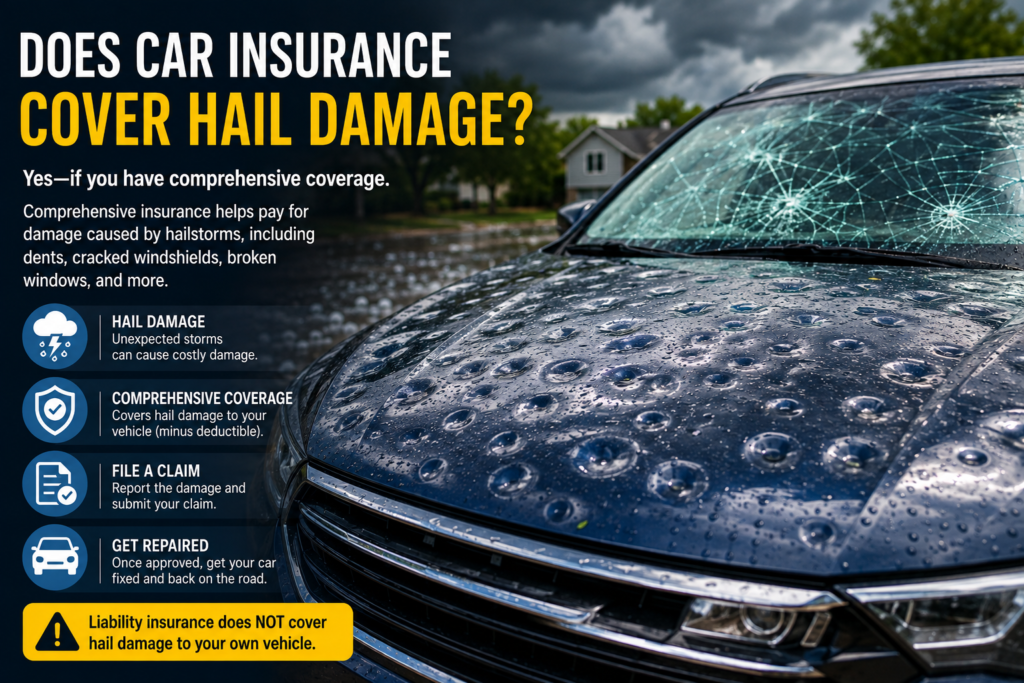
Let’s understand exactly how hail damage coverage works and what every vehicle owner should know before the next storm arrives.
Why Hail Damage Is More Common Than You Think
Many people believe hailstorms are rare.
The reality is quite different.
Every year, thousands of hailstorms strike different parts of the United States, causing billions of dollars in property and vehicle damage.
Unlike collisions, hail arrives without warning.
You could be:
- Shopping at the grocery store.
- Sitting inside your office.
- Watching your child’s baseball game.
- Sleeping peacefully at night.
Meanwhile, your vehicle may be sitting completely exposed.
Within minutes, hailstones can leave behind:
- Deep dents
- Broken side mirrors
- Cracked windshields
- Shattered rear glass
- Chipped paint
- Damaged sunroofs
Many drivers don’t realize just how expensive these repairs can become until they receive an estimate.
Why Even Small Hailstones Can Cause Major Damage
One of the biggest misconceptions is that only golf-ball-sized hail damages vehicles.
That’s not always true.
Damage depends on several factors, including:
- Wind speed
- Storm intensity
- Vehicle speed
- Hail density
- Vehicle material
- Point of impact
For example:
A small hailstone traveling at high speed can easily crack a windshield.
Larger hailstones may dent the roof, hood, trunk, and doors within seconds.
Luxury vehicles with panoramic glass roofs and advanced safety sensors often require more expensive repairs because additional components may need replacement or recalibration.
Which Car Insurance Covers Hail Damage?
Understanding your insurance coverage is the first step toward avoiding unexpected repair bills.
Here’s a quick comparison:
| Insurance Type | Covers Hail Damage? | Explanation |
|---|---|---|
| Liability Insurance | ❌ No | Pays for damage you cause to others, not your own vehicle. |
| Collision Coverage | ❌ No | Covers collision-related accidents, not weather events. |
| Comprehensive Coverage | ✅ Yes | Covers hailstorms, floods, vandalism, theft, falling objects, fire, and other non-collision events. |
| Full Coverage | ✅ Usually Yes | Typically includes comprehensive coverage, depending on your policy. |
If your vehicle is financed or leased, your lender may already require comprehensive coverage.
If you own your vehicle outright, comprehensive coverage is usually optional—but it can be invaluable if you live in an area prone to severe weather.
Understanding Comprehensive Coverage
Think of comprehensive insurance as protection against events beyond your control.
Unlike collision coverage, which applies when you hit another vehicle or object, comprehensive coverage helps pay for damage caused by unexpected incidents such as:
- Hailstorms
- Tornadoes
- Hurricanes
- Flooding
- Falling tree branches
- Fire
- Theft
- Vandalism
- Animal collisions
- Broken glass from weather events
Hail damage is one of the most common reasons drivers file comprehensive insurance claims in many parts of the country.
Real-Life Story: Jennifer’s Unexpected Morning
Jennifer, a school teacher from Oklahoma, checked the weather forecast before going to bed.
It predicted light rain overnight.
Nothing unusual.
Around 2 a.m., however, the weather changed dramatically.
Powerful winds arrived.
Then came the hail.
By morning, the neighborhood looked like it had been hit by hundreds of golf balls.
Jennifer stepped outside carrying her coffee.
She immediately noticed the damage.
Her SUV had:
- More than 80 dents.
- A cracked windshield.
- Broken side mirror.
- Paint chips across the hood.
She froze.
Her first thought wasn’t about the car.
It was about the money.
As a teacher supporting two children, she worried she couldn’t afford thousands of dollars in repairs.
Fortunately, Jennifer had purchased comprehensive insurance just six months earlier after her insurance agent recommended it because Oklahoma frequently experiences severe hailstorms.
After paying her deductible, her insurer covered nearly all repair costs.
Instead of facing a repair bill exceeding several thousand dollars, Jennifer was able to get her SUV restored and safely return to work.
Later, she admitted,
“I almost removed comprehensive coverage to save money. That one decision would have cost me far more than I ever imagined.”
Her experience is a powerful reminder that insurance often feels unnecessary—until the day you truly need it.
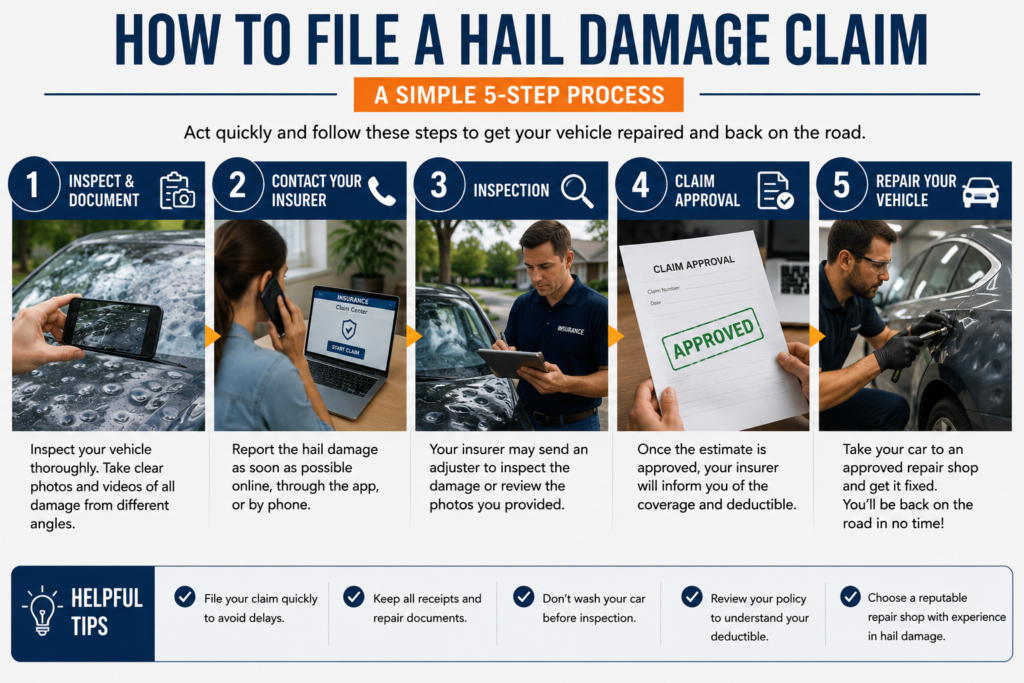
What Types of Hail Damage Are Usually Covered?
If you have comprehensive coverage, insurance generally helps pay for many forms of hail-related vehicle damage, including:
Dented Hood
The hood is often the first part of a vehicle struck by hail, making dents one of the most common types of damage.
Roof Damage
Vehicles parked outdoors during storms frequently suffer dozens of dents across the roof panel.
Broken Windshield
Large hailstones can crack or completely shatter your windshield, requiring repair or replacement.
Side Windows and Rear Glass
Strong hailstorms may also damage side windows and rear windshields, especially when combined with high winds.
Paint Damage
Repeated hail impacts can chip paint, exposing metal underneath and increasing the risk of rust if left untreated.
Damaged Mirrors
Side mirrors are especially vulnerable because they extend outward from the vehicle.
Replacing modern mirrors with built-in cameras or sensors can be expensive.
Sunroof Damage
Vehicles equipped with panoramic glass roofs or sunroofs may require complete glass replacement if hail causes cracks or shattering.
Body Panel Damage
Doors, fenders, quarter panels, and the trunk can all sustain dents severe enough to require paintless dent repair (PDR) or traditional bodywork.
What Happens After the Storm Matters Too
One mistake many drivers make is waiting several days before inspecting their vehicle.
Even if the damage seems minor, delaying action can create additional problems.
For example:
- Water may seep through cracked glass.
- Exposed paint chips can begin to rust.
- Small windshield cracks can spread due to temperature changes.
- Delays in filing a claim after a widespread hailstorm may make it harder to schedule repairs promptly because repair shops often become extremely busy.
Taking photos and documenting the damage as soon as it’s safe to do so can help support your insurance claim.
When Does Car Insurance Not Cover Hail Damage?
Although comprehensive insurance usually covers hail damage, there are situations where your claim may be denied or you may have to pay for repairs yourself.
1. You Only Have Liability Insurance
Liability insurance is designed to pay for injuries or property damage you cause to others. It does not cover damage to your own vehicle caused by hail, storms, or other weather events.
Example:
If a hailstorm dents your car while it’s parked outside and you only carry liability coverage, you’ll likely be responsible for the full repair cost.
2. You Dropped Comprehensive Coverage
Some drivers remove comprehensive coverage to lower their insurance premium. While this saves money in the short term, it can become expensive if a severe hailstorm damages your vehicle.
3. Pre-Existing Damage
Insurance companies generally won’t pay for dents or cracks that existed before your policy started or before the hailstorm occurred.
4. Missed Claim Deadlines
Most insurers require claims to be reported within a reasonable timeframe. Waiting too long could complicate the claims process or result in additional damage that isn’t covered.
How Much Does Hail Damage Cost to Repair?
Repair costs depend on:
- The size of the hailstones
- The number of dents
- Vehicle make and model
- Paint damage
- Glass damage
- Whether advanced sensors or cameras need recalibration
Average Hail Damage Repair Costs (2026)
| Damage Type | Estimated Cost |
|---|---|
| Minor Paintless Dent Repair (PDR) | $150–$800 |
| Moderate Dent Repair | $800–$2,500 |
| Severe Body Damage | $2,500–$7,000+ |
| Windshield Replacement | $300–$1,200+ |
| Side Window Replacement | $250–$700 |
| Panoramic Sunroof Replacement | $1,000–$3,500+ |
For newer vehicles equipped with ADAS (Advanced Driver Assistance Systems), repair costs may increase because cameras and sensors often require recalibration after windshield replacement.
Paintless Dent Repair (PDR) vs. Traditional Body Repair
After a hailstorm, repair shops generally recommend one of two methods.
Paintless Dent Repair (PDR)
PDR removes dents without repainting the vehicle.
Advantages
- Faster repairs
- Lower cost
- Preserves the factory paint
- Often preferred by insurers
- Helps maintain resale value
PDR works best when the paint hasn’t been cracked or chipped.
Traditional Body Repair
Traditional repair is used when hail damage is more severe.
It may involve:
- Filling dents
- Sanding
- Repainting
- Replacing damaged body panels
This method is typically more expensive and takes longer than PDR.
Will You Have to Pay a Deductible?
In many cases, yes.
A deductible is the amount you pay before your insurance company contributes to a covered claim.
Example
Suppose:
- Repair Cost: $3,200
- Comprehensive Deductible: $500
You pay $500, and your insurer pays the remaining $2,700, subject to your policy terms.
Some policies include optional glass coverage or other endorsements that may reduce or eliminate out-of-pocket costs for specific repairs. Review your policy to understand exactly what’s included.
Does Filing a Hail Damage Claim Increase Your Insurance Premium?
One of the biggest concerns drivers have is whether filing a claim will cause their insurance rates to rise.
The answer is:
Usually not because hail is considered a weather-related event outside your control.
Since hail damage is generally treated as a comprehensive claim rather than an at-fault accident, a single hail claim often has little or no direct impact on your premium.
However, insurance companies consider several factors, including:
- Your claims history
- The number of recent claims
- Your insurer’s underwriting guidelines
- Regional weather risks
If hailstorms become more common in your area, premiums for many policyholders may increase over time due to higher overall claim costs—not because of one individual’s claim.
Real-Life Story: Mark’s Weekend Surprise
Mark, a software engineer in Colorado, parked his pickup truck outside while visiting friends for the weekend.
Late Saturday afternoon, a severe hailstorm swept through the area.
When he returned to his truck, he found:
- More than 100 dents across the hood and roof
- A cracked windshield
- Broken passenger-side mirror
Mark expected repair costs to exceed $6,000.
Fortunately, he had comprehensive insurance with a manageable deductible.
His insurer approved the claim, and the repairs were completed using a combination of Paintless Dent Repair and windshield replacement.
Mark later said,
“Paying for comprehensive coverage felt like an unnecessary expense—until the day I actually needed it.”
Case Study #1: The New SUV
Driver: Amanda
Location: Texas
The Problem
Amanda purchased a brand-new SUV just three months before a spring hailstorm.
Golf-ball-sized hail damaged nearly every body panel and shattered the windshield.
The repair estimate exceeded $8,000.
The Solution
Amanda carried comprehensive insurance.
After paying her deductible, the insurer covered the remaining repair costs.
Lesson Learned
New vehicles can become extremely expensive to repair after severe hailstorms, making comprehensive coverage an important consideration in hail-prone regions.
Case Study #2: Waiting Too Long
Driver: Brian
Location: Nebraska
The Problem
Brian noticed several small dents after a storm but assumed they were cosmetic.
Weeks later, he discovered that a cracked windshield had allowed water to seep into the cabin, causing additional interior damage.
The Solution
Although his comprehensive policy covered the original hail damage, the insurer questioned whether some of the later water damage could have been prevented if repairs had been arranged sooner.
Lesson Learned
Inspect your vehicle promptly after a storm and begin the claims process as soon as practical to help avoid further damage.
Common Mistakes Drivers Make After a Hailstorm
Avoid these common errors:
Waiting Too Long to Inspect the Vehicle
Some damage is easier to identify in good lighting or by a repair professional.
Washing the Vehicle Before Taking Photos
Always document the damage before cleaning or repairing your car.
Assuming Every Dent Is Covered
Coverage depends on your policy, deductible, and the cause of the damage.
Ignoring Windshield Cracks
Even small cracks can spread quickly, reducing visibility and increasing repair costs.
Choosing the Cheapest Repair Shop
Look for reputable repair facilities with experience in hail damage and, if applicable, ADAS-equipped vehicles.
Expert Tips to Save Money
- Park in a garage or covered parking whenever severe weather is forecast.
- Monitor local weather alerts during storm season.
- Repair windshield chips before they spread.
- Review your comprehensive deductible each year.
- Keep photos of your vehicle’s condition before storm season.
- Consider optional endorsements if you live in an area that frequently experiences hail.
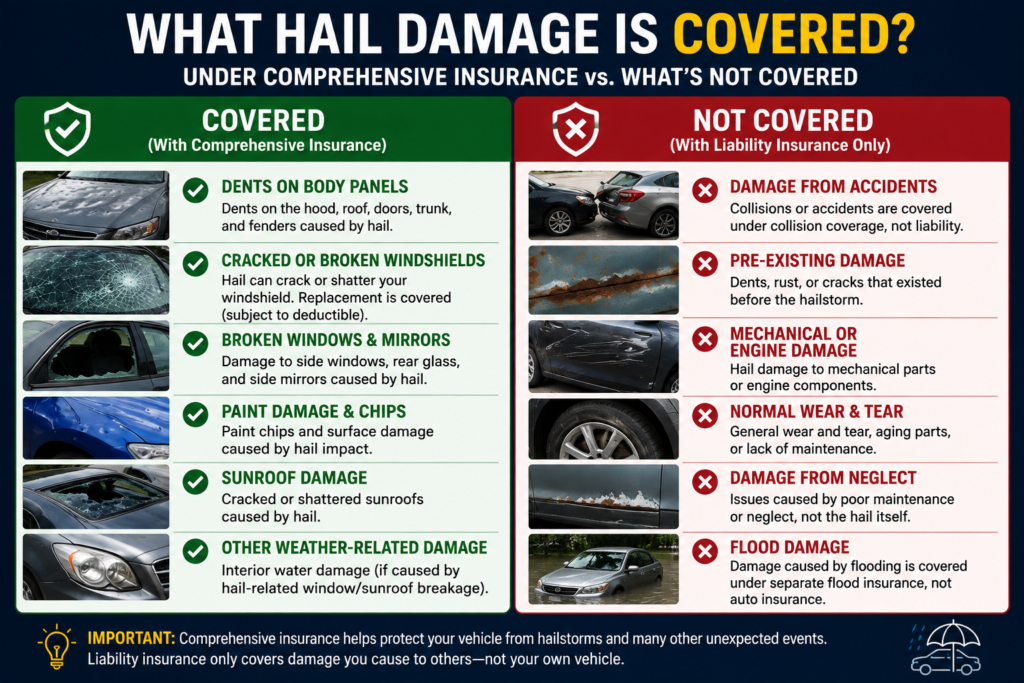
How to File a Hail Damage Insurance Claim
If your vehicle has been damaged by a hailstorm, filing your claim promptly can help speed up the repair process and prevent further damage.
Step 1: Inspect Your Vehicle Safely
Once the storm has passed and it’s safe to go outside, carefully inspect your vehicle.
Look for:
- Dents on the hood, roof, doors, and trunk
- Cracked or shattered windshield
- Broken side windows
- Damaged mirrors
- Paint chips or scratches
- Broken sunroof (if equipped)
Step 2: Take Clear Photos
Before cleaning or repairing your vehicle, take multiple photos from different angles.
Capture:
- The entire vehicle
- Close-up images of dents
- Windshield or glass damage
- The surrounding area, if relevant
These photos can help support your insurance claim.
Step 3: Contact Your Insurance Company
Most insurers allow you to file a claim through:
- Their mobile app
- Online customer portal
- Customer service phone line
- Local insurance agent
Provide:
- Your policy number
- Date and location of the hailstorm
- Photos of the damage
- A brief description of what happened
Step 4: Schedule an Inspection
Your insurance company may:
- Send an adjuster to inspect the vehicle
- Request photos through a virtual inspection
- Direct you to an approved repair facility
Once the damage is assessed, you’ll receive an estimate or repair authorization.
Step 5: Get Your Vehicle Repaired
After claim approval, schedule repairs with a trusted auto body shop or paintless dent repair (PDR) specialist.
If your windshield or ADAS-equipped glass is replaced, confirm that any required sensor calibration is completed before driving.
Also read: Does Car Insurance Cover Windshield Replacement? The Complete 2026 Guide for U.S. Drivers
What If Your Car Is Declared a Total Loss?
In severe hailstorms, repair costs may exceed the vehicle’s value.
If this happens, your insurer may declare the vehicle a total loss.
Generally, the insurer compares:
- The vehicle’s actual cash value (ACV)
- Estimated repair costs
- Applicable deductible
- Salvage value
If repairs are not economically practical, the insurer may offer a settlement based on your policy and the vehicle’s value at the time of the loss.
Frequently Asked Questions (FAQs)
Q1. Does car insurance cover hail damage?
Yes. If you have comprehensive coverage, hail damage is generally covered, subject to your policy terms and deductible.
Q2. Is hail damage covered under liability insurance?
No. Liability insurance only covers damage or injuries you cause to others, not weather-related damage to your own vehicle.
Q3. Will I have to pay a deductible?
In many cases, yes. The amount depends on your comprehensive deductible and policy.
Q4. Does hail damage increase insurance premiums?
Because hail is generally considered a non-fault weather event, a single hail claim often has little or no direct impact on your premium. However, rates can vary based on your insurer, location, and claims history.
Q5. Should I file a claim for minor hail damage?
If repair costs are significantly higher than your deductible, filing a claim may be worthwhile. Compare repair estimates before deciding.
Q6. Can hail crack a windshield?
Yes. Even relatively small hailstones can crack or shatter a windshield, particularly during severe storms.
Q7. What is Paintless Dent Repair (PDR)?
PDR is a repair method that removes dents without repainting the vehicle, helping preserve the original factory finish.
Q8. How long does hail damage repair take?
Minor repairs may take a few days, while extensive damage or parts shortages can extend repair times.
Q9. Can I choose my own repair shop?
Many insurers allow you to choose your repair facility, although using a preferred repair network may streamline the process.
Q10. What happens if I don’t repair hail damage?
Ignoring hail damage can lead to additional issues such as rust, worsening windshield cracks, reduced resale value, and further deterioration
Q11. Is hail damage considered an accident?
No. Hail damage is generally classified as a weather-related comprehensive claim rather than a collision or at-fault accident.
Q12. Does comprehensive insurance cover broken windows from hail?
Yes. Broken windows caused by hail are commonly covered under comprehensive insurance, subject to your policy.
Q13. Can I drive with hail damage?
Minor dents may not affect drivability, but cracked windshields, broken glass, or damaged visibility should be repaired before driving.
Q14. How can I protect my vehicle from future hailstorms?
Whenever possible:
1. Park in a garage or covered parking.
2. Use a hail protection cover.
3. Monitor severe weather alerts.
4. Move your vehicle to shelter before storms arrive.
Q15. Is comprehensive insurance worth it if I live in a hail-prone state?
For many drivers in areas that experience frequent severe weather, comprehensive coverage can provide valuable financial protection against hail, falling objects, theft, vandalism, and other non-collision events.
Expert Tips Before Storm Season
Preparing in advance can save time, money, and stress.
Consider these practical tips:
- Review your insurance policy before storm season begins.
- Know your comprehensive deductible.
- Keep your insurance card and policy information easily accessible.
- Take photos of your vehicle periodically to document its condition.
- Sign up for local weather alerts.
- Store your vehicle in covered parking whenever possible during severe weather.
A few minutes of preparation today could save you thousands of dollars after the next storm.
Final Thoughts
Hailstorms are unpredictable, but the financial impact doesn’t have to be.
If you carry comprehensive car insurance, you’re generally protected against hail-related damage, including dents, broken glass, and other weather-related repairs. Understanding your policy, knowing your deductible, and acting quickly after a storm can make the claims process much smoother.
Before the next storm season arrives, take a few minutes to review your coverage. That small step today could save you significant time, money, and stress in the future.
Call to Action
Has your vehicle ever been damaged by a hailstorm?
Share your experience in the comments below. Your story could help other drivers understand what to expect during the insurance claims process.
If you found this guide helpful, explore our other car insurance resources on Maintain Market to learn how to choose the right coverage, reduce insurance costs, and make smarter financial decisions as a vehicle owner.
Also read: Car Insurance Before Buying a Car: Do You Need It? (2026 Best Guide)