
If you are wondering does homeowners insurance cover plumbing, the answer is: sometimes. Homeowners insurance may cover water damage caused by a sudden and accidental plumbing failure, such as a burst pipe, but it usually does not pay to replace old or deteriorating pipes simply because they need maintenance. Your exact coverage depends on your policy, the cause of the plumbing problem, and whether you properly maintained your home.
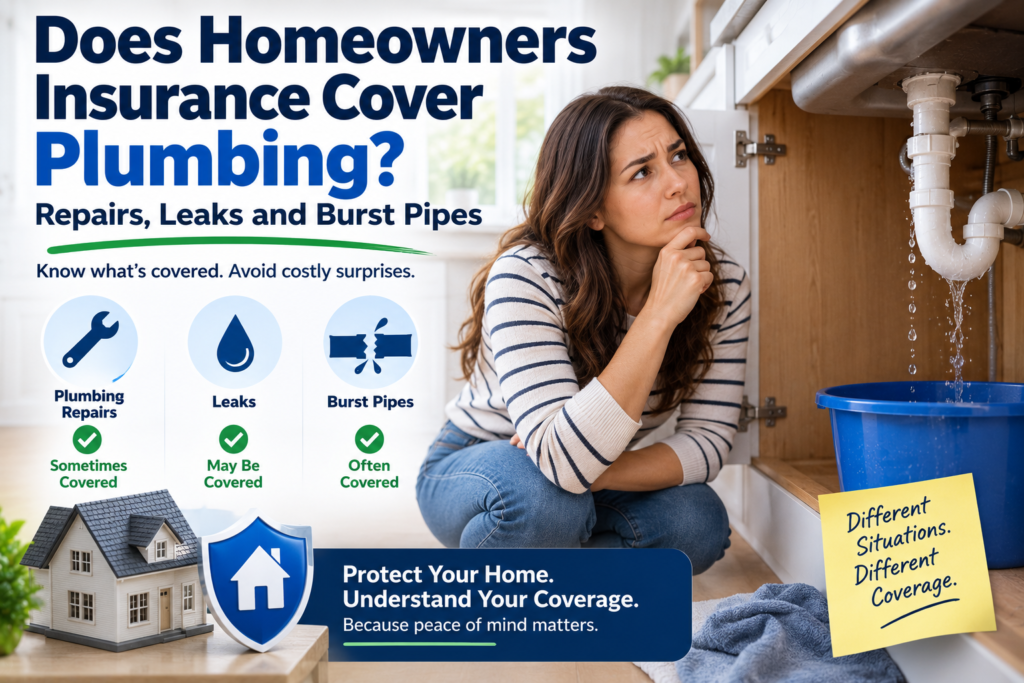
The most important distinction is between the plumbing problem itself and the damage caused by that problem.
For example, if a pipe suddenly bursts and damages your walls, flooring, or furniture, your homeowners insurance may cover the resulting damage. However, the cost of replacing the failed pipe itself may not be covered.
Quick Answer: Does Homeowners Insurance Cover Plumbing?
Homeowners insurance may cover plumbing-related damage when the loss is sudden and accidental and results from a covered peril.
| Plumbing Problem | Usually Covered? |
|---|---|
| Sudden burst pipe | ✅ Often |
| Water damage from burst pipe | ✅ Often |
| Sudden plumbing leak | ✅ May be |
| Old/deteriorated pipes | ❌ Usually not |
| Normal wear and tear | ❌ Usually not |
| Poor maintenance | ❌ Usually not |
| Gradual/long-term leak | ❌ Usually not |
| Frozen pipe | ✅ May be, if reasonable precautions were taken |
| Sewer backup | ⚠️ Usually requires additional coverage |
| Flooding | ❌ Not covered by standard homeowners insurance |
| Replacing plumbing because it is old | ❌ Usually not |
Policies vary, so always check the specific language of your homeowners insurance policy.
Does Homeowners Insurance Cover Burst Pipes?
Usually, a sudden and accidental burst pipe can result in a covered claim, particularly when the homeowner took reasonable steps to maintain the property.
The National Association of Insurance Commissioners (NAIC) explains that homeowners policies generally cover damage resulting from a sudden and accidental discharge of water from a plumbing system.
For example, imagine a pipe inside your wall suddenly bursts while you are away. Water damages:
- Drywall
- Flooring
- Cabinets
- Furniture
- Electronics
- Personal belongings
Your homeowners insurance may help pay for the covered damage, subject to your deductible and policy limits.
However, that does not necessarily mean the insurer will pay for every plumbing repair.
NAIC: Burst Pipe and Homeowners Insurance
Does Homeowners Insurance Pay to Replace the Broken Pipe?
Usually, not automatically.
This is one of the biggest misunderstandings homeowners have about plumbing insurance.
Your policy may cover the resulting water damage, while excluding the cost of repairing the failed plumbing component because of wear, deterioration, corrosion, or lack of maintenance.
Example
A pipe suddenly breaks behind your bathroom wall.
The resulting damage includes:
- $2,000 in drywall and wall repairs
- $1,500 in flooring damage
- $800 in damaged belongings
- $500 to repair the plumbing
Your policy might cover eligible damage to the home and belongings, but the plumbing repair itself could be treated differently depending on why the pipe failed and what your policy says.
Allstate similarly explains that homeowners insurance may cover sudden water damage while generally not covering the source of the damage when it results from deterioration or a maintenance problem.
Allstate: Homeowners Insurance and Water Damage
Does Homeowners Insurance Cover Leaking Pipes?
It depends on why the pipe is leaking and how quickly the problem occurred.
Sudden leak
A pipe suddenly cracks or breaks and releases a large amount of water.
Coverage may apply if the event is covered under your policy.
Gradual leak
A pipe has been slowly leaking behind a cabinet for several months.
Coverage is much less likely, particularly if the homeowner knew about the problem and failed to repair it.
Insurance is generally designed to cover unexpected losses, not routine maintenance.
Does Homeowners Insurance Cover Old Plumbing?
Generally, homeowners insurance does not pay simply because your plumbing system is old.
Plumbing systems naturally deteriorate over time.
Problems such as:
- Corrosion
- Rust
- Deterioration
- Normal wear and tear
- Old pipes
- Poor maintenance
are generally considered maintenance issues rather than sudden insured events.
That means you usually cannot file a claim simply because your home’s plumbing system needs to be replaced due to age.
The Insurance Information Institute notes that maintenance-related damage is generally the homeowner’s responsibility.
Triple-I: Which Disasters Are Covered by Homeowners Insurance?
Does Homeowners Insurance Cover Frozen Pipes?
It can, but there is an important condition.
Frozen pipes can burst and cause significant water damage. Insurance may cover the resulting damage if you took reasonable precautions to protect the plumbing.
For example, homeowners may be expected to:
- Maintain adequate heat
- Winterize the property when necessary
- Shut off the water when leaving a vacant home for an extended period
- Take reasonable steps to prevent freezing
- Insulate vulnerable pipes where appropriate
If the insurer determines that the homeowner failed to take reasonable precautions, coverage could be denied or limited.
The NAIC specifically warns homeowners to take preventative measures to reduce the risk of frozen and burst pipes.
NAIC: Frozen and Burst Pipe Coverage
Does Homeowners Insurance Cover Water Damage From Plumbing?
Often, yes, when the water damage results from a sudden and accidental covered event.
This can include damage to:
Your home
- Walls
- Ceilings
- Floors
- Cabinets
- Built-in fixtures
Your belongings
- Furniture
- Clothing
- Electronics
- Books
- Other personal property
For example, if a pipe suddenly bursts upstairs and water damages the ceiling and flooring below, the resulting damage may be covered under the appropriate parts of your homeowners policy.
NAIC consumer guidance states that water damage from a home’s plumbing or a roof leak is typically covered, while groundwater, rain runoff and snowmelt are generally treated differently because they fall under flood exclusions.
NAIC: Consumer Homeowners Insurance Guide
Does Homeowners Insurance Cover Plumbing Under the Slab?
This can be more complicated.
A plumbing line underneath a concrete slab can be expensive to access and repair.
Your homeowners policy may potentially cover resulting damage from a sudden and accidental plumbing failure, but whether the broken underground pipe, access costs, and related repairs are covered depends heavily on the policy language and cause of loss.
Some policies may provide limited coverage for certain types of hidden water damage or access-related expenses, while others may exclude particular plumbing failures.
What to do
If you discover a suspected slab leak:
- Shut off the water if necessary.
- Contact a qualified plumber.
- Document the damage.
- Take photographs and videos.
- Contact your insurer before making major permanent repairs.
- Review your policy for applicable exclusions and endorsements.
Do not assume that because water damage is covered, every plumbing repair expense will automatically be covered.
Does Homeowners Insurance Cover Sewer Backup?
Standard homeowners insurance typically does not cover sewer or drain backup unless you have additional coverage.
Sewer backup coverage is often available as an endorsement or optional coverage.
For example, water could enter your basement because a municipal sewer backs up into your home. A standard homeowners policy may not cover the resulting damage unless your policy includes appropriate water-backup protection.
The NAIC identifies water backup of sewer as an optional coverage that can pay for losses resulting from sewer or drain backup.
NAIC: Homeowners Insurance Coverage Types
Does Homeowners Insurance Cover a Clogged Pipe?
Usually, no—not simply because the pipe is clogged.
A clogged drain is generally considered a maintenance or plumbing issue rather than an insured disaster.
However, the situation can become more complicated if a sudden covered event causes resulting property damage.
For example:
Simple clogged drain:
Usually a homeowner maintenance expense.
Sudden plumbing failure causing covered water damage:
The resulting property damage may potentially be covered.
The cause of the loss matters.
Does Homeowners Insurance Cover Plumbing Leaks in the Ceiling?
It may.
Suppose a plumbing pipe above your ceiling suddenly breaks and water damages the ceiling, insulation, walls, or flooring.
The resulting damage may be covered if the pipe failure was sudden and accidental and falls within your policy’s covered perils.
However, if the ceiling has been showing signs of a slow leak for months and the problem was ignored, the insurer may treat it as a maintenance issue.
Does Homeowners Insurance Cover Water Damage From a Water Heater?
Often, sudden and accidental water damage from a failed water heater may be covered.
For example, if your water heater suddenly ruptures and floods part of your home, your homeowners policy may cover eligible damage to the structure and personal property.
But the policy may not pay to replace the water heater itself if the failure resulted from age, corrosion, deterioration, or another excluded condition.
Plumbing Problems Homeowners Insurance May Cover
Here are some common scenarios where coverage may potentially apply:
1. A pipe suddenly bursts
Water damages your walls and flooring.
Potentially covered.
2. A plumbing line suddenly breaks
The resulting water damage spreads through your home.
Potentially covered.
3. A frozen pipe bursts
The pipe freezes and then breaks, causing water damage.
Potentially covered if reasonable precautions were taken.
4. A washing machine supply hose suddenly fails
Water damages your floor and nearby belongings.
Potentially covered.
5. A water heater suddenly ruptures
Water damages drywall and flooring.
Potentially covered.
The key phrase in many of these situations is sudden and accidental.
Also read: Does Homeowners Insurance Cover Water Damage?
Plumbing Problems Homeowners Insurance Usually Does Not Cover
Coverage is generally less likely for:
- Normal wear and tear
- Corroded pipes
- Rust
- Deteriorated plumbing
- Poor maintenance
- Long-term leaks
- Known plumbing problems
- Replacing old pipes
- Routine plumbing maintenance
- Clogged drains
- Sewer backup without appropriate coverage
- Flood damage
Your policy’s exclusions ultimately control the claim.
Plumbing Insurance Coverage: Damage vs. Repair
This distinction is worth remembering:
| Expense | Possible Coverage |
|---|---|
| Water damage to walls | ✅ May be covered |
| Water-damaged flooring | ✅ May be covered |
| Damaged furniture | ✅ May be covered |
| Damaged electronics | ✅ May be covered |
| Mold resulting from a covered water event | ⚠️ Depends on policy |
| Emergency water mitigation | ⚠️ May be covered |
| Broken pipe itself | ⚠️ Depends on cause/policy |
| Replacing old plumbing | ❌ Usually not |
| Corroded pipes | ❌ Usually not |
| Routine plumbing maintenance | ❌ No |
| Sewer backup | ⚠️ Usually needs additional coverage |
| Flooding | ❌ Standard homeowners insurance generally does not cover it |
What Should You Do If a Pipe Bursts?
If you suddenly discover water coming from a broken pipe, act quickly.
Step 1: Shut off the water
If it is safe to do so, turn off the home’s main water supply or the relevant valve.
Step 2: Protect your property
Move furniture, electronics and other belongings away from the water if possible.
Step 3: Take pictures and videos
Document:
- The broken pipe
- Water source
- Damaged walls
- Flooring
- Ceiling
- Furniture
- Personal belongings
Step 4: Prevent further damage
Take reasonable temporary steps to prevent additional damage.
Step 5: Contact your insurer
Ask whether the loss appears to fall under your policy and what documentation they need.
Step 6: Keep receipts
Save receipts for emergency repairs, water extraction, temporary materials and other claim-related expenses.
Do not make major permanent repairs before discussing the situation with your insurer unless necessary to prevent further damage.
Will Filing a Plumbing Insurance Claim Increase Your Premium?
It can, but there is no universal rule.
Insurance companies consider claims history when determining risk and pricing, and the impact of a claim can vary by insurer and state.
Before filing a relatively small claim, consider:
- Your deductible
- Estimated repair cost
- Whether the damage is actually covered
- Your previous claims history
- Whether the damage is significantly greater than your deductible
For example, if your deductible is $2,000 and the covered damage is estimated at $2,500, filing a claim may provide relatively little financial benefit compared with a large covered loss.
However, you should not avoid reporting a serious loss simply because you are worried about premiums.
What If Homeowners Insurance Denies a Plumbing Claim?
A denied claim does not necessarily mean you have no options.
First, ask the insurer for the reason for the denial in writing.
Then:
- Read the relevant policy exclusion.
- Compare it with the facts of your loss.
- Gather photographs, plumber reports and receipts.
- Ask the insurer to reconsider if you believe the facts were misunderstood.
- Contact your state’s insurance department if you need assistance understanding your rights.
Insurance policies are contracts, and the exact wording can matter significantly.
How to Prevent Plumbing Insurance Problems
The best insurance claim is often the one you never have to make.
Maintain your plumbing
Have plumbing problems inspected rather than allowing small leaks to continue.
Know where your main water shutoff is
Every homeowner should know how to shut off the home’s main water supply.
Protect pipes during freezing weather
Insulate vulnerable pipes and take reasonable precautions during cold weather.
Check under sinks
Look for:
- Moisture
- Rust
- Dripping connections
- Damaged supply lines
- Water stains
Replace aging components when necessary
Insurance should not be treated as a substitute for routine home maintenance.
Consider water-backup coverage
If sewer or drain backup is a concern, ask your insurer whether an endorsement is available.
Does Homeowners Insurance Cover Plumbing? Real-Life Examples
Example 1: Sudden burst pipe
A pipe suddenly bursts inside the wall.
Water damages the drywall and flooring.
Result: The resulting property damage may be covered, subject to the policy, deductible and limits.
Example 2: Old pipe slowly leaking
A homeowner notices a small leak but ignores it for six months.
Eventually, the wall develops extensive water damage.
Result: Coverage may be denied because the damage developed gradually and resulted from an unresolved maintenance issue.
Example 3: Frozen pipe
A pipe freezes during winter and bursts.
The homeowner maintained reasonable heat in the property and took appropriate precautions.
Result: The resulting damage may be covered.
Example 4: Sewer backup
A sewer line backs up and floods the basement.
The homeowner does not have water-backup coverage.
Result: A standard homeowners policy may not cover the damage.
Example 5: Flooding from outside
Heavy rain causes nearby water to enter the home from outside and flood the property.
Result: Standard homeowners insurance generally does not cover flood damage. Separate flood insurance may be necessary.
Does Homeowners Insurance Cover Plumbing? 10 FAQs
Q1. Does homeowners insurance cover plumbing repairs?
It may cover certain plumbing-related losses, but routine repairs and maintenance are generally not covered. Sudden and accidental damage may receive coverage depending on the policy.
Q2. Does homeowners insurance cover burst pipes?
Usually, the resulting water damage from a sudden burst pipe may be covered, subject to the policy and deductible.
Q3. Does homeowners insurance pay to replace pipes?
Not necessarily. If pipes need replacement because of age, corrosion or deterioration, the cost is generally considered maintenance.
Q4. Does homeowners insurance cover leaking pipes?
A sudden and accidental leak may be covered, while gradual leaks caused by poor maintenance generally are not.
Q5. Does homeowners insurance cover frozen pipes?
It may cover resulting damage if the homeowner took reasonable steps to prevent the pipes from freezing.
Q6. Does homeowners insurance cover old plumbing?
Generally, homeowners insurance does not pay simply because an old plumbing system needs replacement.
Q7. Does homeowners insurance cover sewer backup?
Usually not under standard coverage. Water-backup or sewer-backup coverage may need to be added separately.
Q8. Does homeowners insurance cover clogged pipes?
Routine clogged pipes are generally considered a maintenance issue rather than an insured loss.
Q9. Does homeowners insurance cover water damage from plumbing?
It often may cover sudden and accidental water damage caused by plumbing, subject to policy terms, exclusions and deductibles.
Q10. What should I do if my pipe bursts?
Shut off the water if safe, prevent further damage, photograph everything, contact your insurer and keep receipts for emergency work.
Homeowners Insurance Plumbing Checklist
Before you assume your plumbing problem is covered, ask:
☐ Was the damage sudden and accidental?
☐ What caused the pipe or plumbing component to fail?
☐ Was there a long-term leak?
☐ Was the plumbing properly maintained?
☐ Did freezing contribute to the loss?
☐ Did I take reasonable steps to prevent freezing?
☐ Is sewer-backup coverage included?
☐ Is the damage actually flood-related?
☐ What is my deductible?
☐ What does my policy exclude?
This checklist can help you understand the situation before deciding whether to file a claim.
Final Verdict: Does Homeowners Insurance Cover Plumbing?
So, does homeowners insurance cover plumbing?
Sometimes—but it depends heavily on the cause of the plumbing problem.
The easiest way to remember it is:
Sudden + accidental plumbing failure → resulting damage may be covered.
Old + gradual + poor maintenance → generally not covered.
A burst pipe can potentially lead to a covered water-damage claim, while replacing old or corroded plumbing is generally considered a homeowner maintenance expense. Sewer backups may require additional coverage, and flooding normally requires separate flood insurance.
Before filing a claim, check your policy’s coverage, exclusions, deductible and applicable endorsements. When the loss is significant, documenting the damage and contacting your insurer promptly can make the claims process much easier.
Why Maintain Market Is Different
At Maintain Market, we focus on explaining insurance in practical terms rather than simply saying whether something is “covered” or “not covered.”
For homeowners insurance, the important question is often why the damage happened.
Our approach focuses on:
- Explaining complicated insurance terms in simple language
- Separating covered damage from maintenance expenses
- Highlighting common exclusions
- Answering real homeowner questions
- Using authoritative insurance sources
- Helping readers understand deductibles and policy limits
- Providing practical steps after a loss
Insurance policies can differ by insurer and state, so readers should always review their own policy and speak with their insurance professional when necessary.
Authoritative Sources
For additional information about homeowners insurance and plumbing-related water damage, see:
- National Association of Insurance Commissioners (NAIC) – Homeowners Insurance
- NAIC – Will My Homeowners Insurance Policy Cover Water Damage From a Burst Pipe?
- NAIC – Consumer Homeowners Insurance Guide
- Insurance Information Institute – Which Disasters Are Covered by Homeowners Insurance?
- Allstate – Does Homeowners Insurance Cover Water Damage?
Also read: Does Homeowners Insurance Cover Roof Replacement? What Homeowners Need to Know