
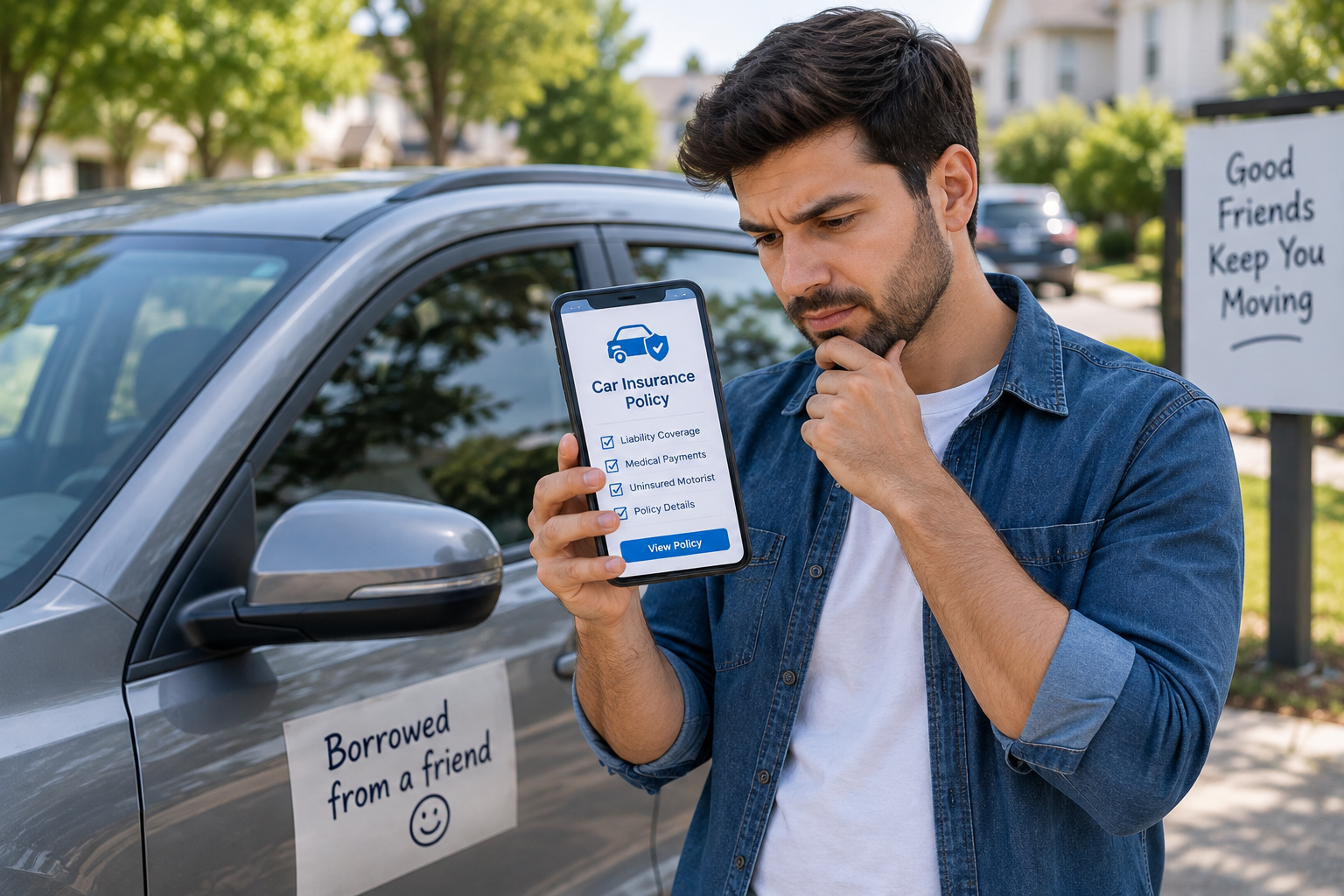
If you’re looking for a non owner car insurance policy, you may need coverage even though you don’t own a vehicle. A non-owner policy is generally designed for drivers who regularly borrow or rent cars and want liability protection while driving a vehicle they don’t own. It typically doesn’t cover damage to the vehicle being driven. (NAIC)
A non-owner policy can be useful for people who rent cars frequently, borrow vehicles from friends or family, use car-sharing services or want to maintain continuous insurance coverage before purchasing a vehicle.
But it isn’t the right policy for everyone.
This guide explains what non-owner car insurance covers, what it doesn’t cover, who needs it, how it works with the vehicle owner’s insurance, how much it may cost and when you may not need one.
Quick Answer: What Is a Non Owner Car Insurance Policy?
A non-owner car insurance policy is generally a liability policy for someone who drives but doesn’t own a vehicle.
It can provide coverage for certain bodily injury and property damage you cause to others while driving an eligible vehicle you don’t own.
However, it generally does not cover damage to the vehicle you’re driving.
Progressive and GEICO both describe non-owner insurance primarily as liability protection for people who drive vehicles they don’t own. (Progressive · GEICO)
In simple terms:
You don’t own a car → but you drive regularly → a non-owner policy may give you your own liability coverage.
How Does Non Owner Car Insurance Work?
Let’s say you don’t own a car but regularly borrow your friend’s vehicle.
One day, you cause an accident.
There are potentially two insurance policies involved:
1. The vehicle owner’s insurance
The owner’s auto insurance may provide the primary coverage, depending on the circumstances and policy.
2. Your non-owner policy
Your non-owner insurance may provide secondary liability coverage if the owner’s policy doesn’t fully cover the eligible claim and your policy applies.
Progressive describes non-owner insurance as coverage that may help when the vehicle owner’s insurance limits aren’t enough. (Progressive)
The exact order and availability of coverage can depend on the state, policies and circumstances.
That’s why you should read the actual policy rather than assuming your non-owner policy will always pay first.
Who Needs Non Owner Car Insurance?
A non-owner policy may make sense if you:
- Frequently rent cars
- Regularly borrow cars
- Use car-sharing services
- Don’t own a vehicle
- Want to maintain continuous insurance coverage
- Need an SR-22 or similar proof of financial responsibility
- Drive other people’s vehicles often
The NAIC specifically notes that people who don’t own a car but need rental-vehicle coverage may want to consider a non-owner auto insurance policy. (NAIC)
1. People Who Frequently Rent Cars
If you rent cars regularly, a non-owner policy may be worth considering.
For example, imagine you travel for work several times a month and rent a vehicle each time.
Instead of purchasing liability protection from the rental company every time, you could potentially have your own non-owner liability policy.
However, non-owner insurance usually doesn’t cover physical damage to the rental vehicle.
You may need a separate collision damage waiver or another form of rental-car protection for the rental vehicle itself. (Progressive)
2. People Who Frequently Borrow Cars
If you don’t own a vehicle but regularly borrow a friend’s car, non-owner insurance may provide an additional layer of liability protection.
But there’s an important distinction.
Occasional borrowing
If you borrow someone’s car once in a while, the owner’s policy may already provide coverage for permissive use, depending on the policy and state.
Regular borrowing
If you regularly use the same person’s vehicle, the owner may need to add you to their policy instead.
Progressive specifically notes that people who regularly borrow a household member’s vehicle generally should be added to the owner’s policy rather than relying on non-owner insurance. (Progressive)
3. People Who Use Car-Sharing Services
Car-sharing services can create different insurance considerations.
If you regularly use shared vehicles but don’t own a car, a non-owner policy may provide additional liability protection depending on the service and policy.
However, always check the car-sharing company’s insurance terms first.
Don’t assume your non-owner policy covers every type of car-sharing activity.
4. People Between Cars
Suppose you sold your old car but haven’t purchased another one yet.
You may still want to maintain continuous auto insurance coverage.
A non-owner policy can potentially provide liability protection during that period.
This can also help avoid a long gap in your insurance history.
GEICO notes that maintaining continuous insurance coverage may help prevent a gap that could contribute to higher premiums when you later purchase a vehicle. (GEICO)
5. Drivers Who Need an SR-22
Some drivers who have been required by their state to provide an SR-22 or similar proof of financial responsibility may be able to satisfy that requirement through a non-owner policy.
This can be relevant when someone:
- Doesn’t own a vehicle
- Has a license-related requirement
- Needs proof of insurance
- Still needs to drive occasionally
The exact rules vary by state, so confirm the requirement with your state’s DMV or insurance regulator.
Also read: Best Car Insurance Companies for Low Credit Score
What Does Non Owner Car Insurance Cover?
The core purpose of a non-owner policy is generally liability protection.
Depending on the policy and state, it may include:
Bodily Injury Liability
This can help pay for injuries to other people when you’re legally responsible for an accident, subject to your policy limits.
Property Damage Liability
This can help pay for damage you cause to another person’s vehicle or property.
The NAIC explains that liability insurance generally consists of bodily injury and property damage coverage. (NAIC)
Optional Medical Coverage
Some non-owner policies may offer:
- Medical Payments (MedPay)
- Personal Injury Protection (PIP)
Availability depends on the state and insurer.
Uninsured/Underinsured Motorist Coverage
Some insurers may also offer uninsured or underinsured motorist protection with a non-owner policy.
Progressive and GEICO both identify these types of optional coverages as potentially available depending on the policy and state. (Progressive · GEICO)
What Does Non Owner Car Insurance NOT Cover?
This is one of the most important things to understand.
A non-owner policy generally does not provide physical damage coverage for the car you’re driving.
That means it typically doesn’t pay for:
- Damage to the borrowed car
- Damage to a rental car
- Theft of the vehicle
- Hail damage to the vehicle
- Vandalism to the vehicle
- Mechanical repairs
- Maintenance
Progressive specifically states that non-owner insurance doesn’t cover damage to the vehicle you’re driving. (Progressive)
Example
You borrow your friend’s $30,000 car.
You accidentally hit a pole.
Your non-owner policy may provide liability protection for damage you cause to someone else’s property, but it generally doesn’t pay to repair your friend’s car.
The friend’s own collision coverage may be relevant.
Non Owner Car Insurance vs Regular Car Insurance
The difference is straightforward.
| Feature | Non-Owner Policy | Standard Auto Policy |
|---|---|---|
| Own a vehicle required? | No | Usually yes |
| Liability coverage | Yes | Yes |
| Covers your own vehicle | No | Can, with appropriate coverage |
| Collision coverage | Generally no | Available |
| Comprehensive coverage | Generally no | Available |
| Rental use | Often useful | Depends on policy |
| Borrowed vehicles | Can provide liability | Depends on policy |
| Designed for vehicle owners | No | Yes |
The biggest difference is that a non-owner policy generally follows the driver, rather than insuring a specific vehicle.
Does Non Owner Insurance Cover the Car I’m Borrowing?
Generally, no.
This is one of the most common misconceptions.
Non-owner insurance is primarily designed to protect you against certain liability claims, not to protect the vehicle itself.
If you damage the borrowed car, the vehicle owner’s policy may be the primary source of coverage if it applies.
Your non-owner policy generally won’t function like collision coverage for the borrowed vehicle.
Is Non Owner Car Insurance Primary or Secondary?
It is generally secondary to the vehicle owner’s insurance when the owner’s policy applies.
For example:
You borrow your friend’s car.
You cause $50,000 of covered property damage.
The friend’s policy has a $30,000 applicable property-damage limit.
If your non-owner policy applies and provides additional liability coverage, it may potentially respond to eligible amounts beyond the owner’s applicable limit, subject to your policy terms and limits.
However, don’t treat this example as a guarantee of coverage.
Insurance coordination depends on the policies, state law and circumstances.
Does Non Owner Insurance Cover Rental Cars?
It can provide liability coverage while you’re renting a car, but it generally doesn’t cover physical damage to the rental vehicle.
This distinction matters.
A rental car agreement may leave you responsible for:
- Damage to the rental vehicle
- Theft
- Loss-of-use charges
- Other contractual costs
A non-owner policy may not cover those costs.
Progressive specifically recommends considering a collision damage waiver from the rental company if you need protection for damage to the rental vehicle. (Progressive)
[IMAGE 2 — INSERT HERE]
Filename: non-owner-insurance-rental-car.jpg
Alt text: Non owner car insurance policy for a driver renting a car in the USA
Suggested visual: A U.S. traveler receiving rental-car keys while comparing insurance options at a rental counter.
Does Non Owner Insurance Cover a Friend’s Car?
It may provide liability protection while you’re driving your friend’s car, but the owner’s insurance may be primary depending on the situation.
If you regularly drive the same friend’s vehicle, however, you should not assume a non-owner policy replaces being listed on their policy.
If you live in the same household, the insurer may have specific rules about household drivers.
The NAIC advises consumers to tell their insurer about licensed household members who drive vehicles because failing to disclose regular drivers can create coverage problems. (NAIC)
Can You Get Non Owner Insurance If You Own a Car?
Generally, a non-owner policy is intended for people who don’t own a vehicle.
If you own a car, a standard personal auto policy is usually the appropriate starting point.
There can be exceptions and insurer-specific situations, so ask the insurer about your circumstances rather than purchasing a policy based solely on the name.
How Much Does Non Owner Car Insurance Cost?
There is no single nationwide price for non-owner car insurance.
Your premium can depend on:
- State
- Age
- Driving record
- Coverage limits
- Insurance history
- Claims history
- Whether you need an SR-22
- Insurer
- Optional coverage
Non-owner policies are generally less expensive than standard auto insurance because you’re not insuring a specific vehicle with comprehensive and collision coverage. (Progressive · GEICO)
But don’t assume every driver will receive a cheap quote.
A driver with a serious violation history may pay considerably more than someone with a clean record.
How to Get a Non Owner Car Insurance Policy
Getting a non-owner policy usually starts with finding an insurer that offers this type of coverage in your state.
Step 1: Determine Whether You Actually Need It
Ask yourself:
- How often do I drive?
- Do I regularly rent cars?
- Do I regularly borrow vehicles?
- Do I live with the vehicle owner?
- Do I need an SR-22?
- Do I want continuous insurance coverage?
Step 2: Compare Insurers
Not every insurer offers non-owner coverage in every state.
Get quotes from multiple insurers when possible.
Step 3: Compare Coverage Limits
Don’t compare policies solely by premium.
Look at:
- Bodily injury limits
- Property damage limits
- UM/UIM coverage
- PIP/MedPay
- Deductibles where applicable
Step 4: Ask About Exclusions
Ask specifically about:
- Household vehicles
- Regularly used vehicles
- Rental vehicles
- Car-sharing
- Business use
- Delivery work
- Rideshare driving
Step 5: Confirm Your State Requirements
Each state has its own insurance requirements. (NAIC)
What Information Do You Need to Buy Non Owner Insurance?
An insurer may ask for information such as:
- Full name
- Address
- Date of birth
- Driver’s license
- Driving history
- Claims history
- Insurance history
- SR-22 requirement, if applicable
- Desired coverage limits
You generally don’t need to provide a vehicle VIN for a policy that isn’t insuring a specific car, although requirements vary by insurer.
Is Non Owner Car Insurance Worth It?
It can be worthwhile if you drive regularly but don’t own a car.
It may be worth considering if you:
✔ Rent cars frequently
✔ Borrow vehicles regularly
✔ Use car-sharing services
✔ Need an SR-22
✔ Want continuous insurance coverage
✔ Want liability protection beyond the owner’s policy
It may not be worth it if you:
✘ Rarely drive
✘ Already have adequate coverage through another policy
✘ Regularly drive a household member’s vehicle and should be added to their policy
✘ Don’t expect to drive at all
Progressive notes that drivers who rarely drive may not benefit enough from a non-owner policy to justify the cost. (Progressive)
Non Owner Insurance for College Students
College students sometimes find themselves in a situation where they don’t own a car but occasionally drive.
For example, you may:
- Borrow a friend’s car
- Rent a car for a trip
- Use a car-sharing service
- Drive home during holidays
A non-owner policy can potentially provide liability coverage when appropriate.
However, if you’re driving a parent’s car regularly, staying on the parent’s policy or being added to the appropriate policy may be a better solution.
Internal linking opportunity: Link this section to your Maintain Market article on car insurance for college students.
Non Owner Car Insurance for International Students
International students may also consider non-owner insurance if they don’t own a car but regularly rent or borrow vehicles in the United States.
The same basic questions apply:
- Is your foreign driver’s license valid?
- Does the insurer accept your documentation?
- Do you need an IDP?
- How frequently do you drive?
- Do you rent or borrow vehicles?
- What coverage does the rental company provide?
Requirements can vary by state and insurer.
Internal linking opportunity: Link this section to your Maintain Market article on car insurance for international students.
Non Owner Insurance and Rideshare Driving
This is an important warning.
A standard non-owner personal policy may not automatically cover you while driving for Uber, Lyft or another rideshare service.
Business or rideshare activity can require specialized coverage.
The NAIC notes that personal auto policies may not provide appropriate coverage for rideshare activities and that coverage can vary depending on whether the app is on, a ride has been accepted and other circumstances. (NAIC)
If you’re driving passengers for money, tell your insurer exactly how you use the vehicle.
Don’t assume a non-owner policy automatically covers commercial driving.
Can Non Owner Insurance Help You Build an Insurance History?
It can help you maintain continuous insurance coverage even when you don’t own a vehicle.
This may be useful if you’re between cars and expect to purchase one later.
GEICO notes that maintaining continuous coverage may help avoid a gap that could contribute to higher premiums in the future. (GEICO)
However, insurers calculate premiums differently, so don’t assume a non-owner policy will guarantee a lower future rate.
Non Owner Insurance vs Rental Car Insurance
These are not necessarily the same thing.
Non-owner insurance
Primarily provides liability protection for the driver.
Rental company’s liability coverage
May protect you under the rental agreement, depending on what you purchase.
Collision Damage Waiver
Can address certain damage to the rental vehicle itself, subject to the rental agreement.
Credit card rental coverage
Some credit cards offer rental-car benefits, but the terms, exclusions and whether coverage is primary or secondary vary.
The NAIC recommends checking your credit card benefits before relying on them for rental-car protection. (NAIC)
Common Non Owner Car Insurance Mistakes
Mistake 1: Thinking It Covers the Car
It generally doesn’t.
Mistake 2: Assuming It Is Always Primary
The vehicle owner’s policy may be primary when it applies.
Mistake 3: Using It for Rideshare Work
Commercial use may be excluded.
Mistake 4: Not Telling the Insurer About Regular Household Driving
If you regularly drive a household member’s car, you may need to be added to that policy.
Mistake 5: Buying the Lowest Liability Limits
Saving a few dollars isn’t necessarily worth exposing yourself to significantly greater financial risk.
Mistake 6: Assuming It Covers Rental-Car Damage
Non-owner insurance generally doesn’t provide physical-damage coverage for the rental vehicle.
Mistake 7: Buying It When You Rarely Drive
If you drive only a few times a year, another option may make more financial sense.
Frequently Asked Questions About Non Owner Car Insurance
Q1. What is a non owner car insurance policy?
A non-owner car insurance policy is generally a liability policy for drivers who don’t own a vehicle but drive borrowed, rented or shared vehicles.
Q2. Does non owner car insurance cover the car I’m driving?
Generally, no. It typically provides liability coverage rather than physical-damage coverage for the vehicle you’re driving. (Progressive)
Q3. Is non owner car insurance cheaper than regular insurance?
It is generally less expensive than a standard policy because it doesn’t insure a specific vehicle with comprehensive and collision coverage. (Progressive)
Q4. Do I need non owner insurance if I occasionally borrow a friend’s car?
Not necessarily. The owner’s policy may provide coverage for permissive use, depending on the policy and state. If you regularly borrow the vehicle, however, you may need to be added to the owner’s policy.
Q5. Does non owner insurance cover rental cars?
It may provide liability coverage while you’re renting, but it generally doesn’t cover damage to the rental vehicle itself. (Progressive)
Q6. Can non owner insurance cover someone else’s car?
It can provide liability protection while you drive an eligible vehicle you don’t own, but it generally doesn’t insure the vehicle itself.
Q7. Is non owner insurance required?
State insurance laws generally require certain liability coverage when driving, but whether you specifically need a non-owner policy depends on your circumstances and state requirements.
Q8. Does non owner insurance cover my injuries?
Usually not through basic liability coverage. Some policies may offer PIP or MedPay depending on the state and insurer. (Progressive)
Q9. Can non owner insurance help keep my insurance history active?
It can maintain continuous insurance coverage while you don’t own a vehicle, although insurers differ in how they use insurance history when setting future rates. (GEICO)
Q10. Is non owner insurance worth it?
It can be worthwhile for people who regularly rent or borrow vehicles but don’t own one. If you rarely drive, the cost may not justify the benefit.
Final Verdict: Is a Non Owner Car Insurance Policy Right for You?
A non owner car insurance policy can be a smart option if you regularly drive but don’t own a vehicle.
It can provide liability protection when you’re:
- Renting cars
- Borrowing vehicles
- Using car-sharing services
- Between vehicles
- Maintaining continuous insurance coverage
- Meeting certain financial-responsibility requirements
But remember what it doesn’t generally do:
It doesn’t insure the car you’re driving against physical damage.
Before buying one, ask yourself:
How often do I drive?
Whose cars do I drive?
Does the vehicle owner’s policy already cover me?
Do I need an SR-22?
Do I need rental-car protection beyond liability?
Does my insurer cover the type of driving I do?
If you regularly drive but don’t own a car, comparing a non-owner policy with your other available options can help you find the right balance between protection and cost.
Why Maintain Market Is Different
At Maintain Market, we don’t believe insurance questions should be answered with a simple “yes” or “no.”
For non-owner insurance, the important question isn’t just:
“Can I buy a policy without owning a car?”
It’s:
“What protection do I actually need when I drive someone else’s vehicle?”
That’s why our guides explain the difference between liability coverage, vehicle protection, rental coverage and the owner’s existing insurance.
We focus on:
- Clear explanations
- Real-world examples
- Practical comparisons
- Important exclusions
- Questions readers should ask insurers
- Authoritative sources
- U.S.-specific insurance considerations
- Information that helps readers make informed financial decisions
We also avoid pretending that one insurance company or one policy is automatically the best for everyone.
Your driving situation is different from someone else’s.
Our goal is to help you understand your options before you spend your money.
Maintain Market — Clear information. Smarter financial decisions.