
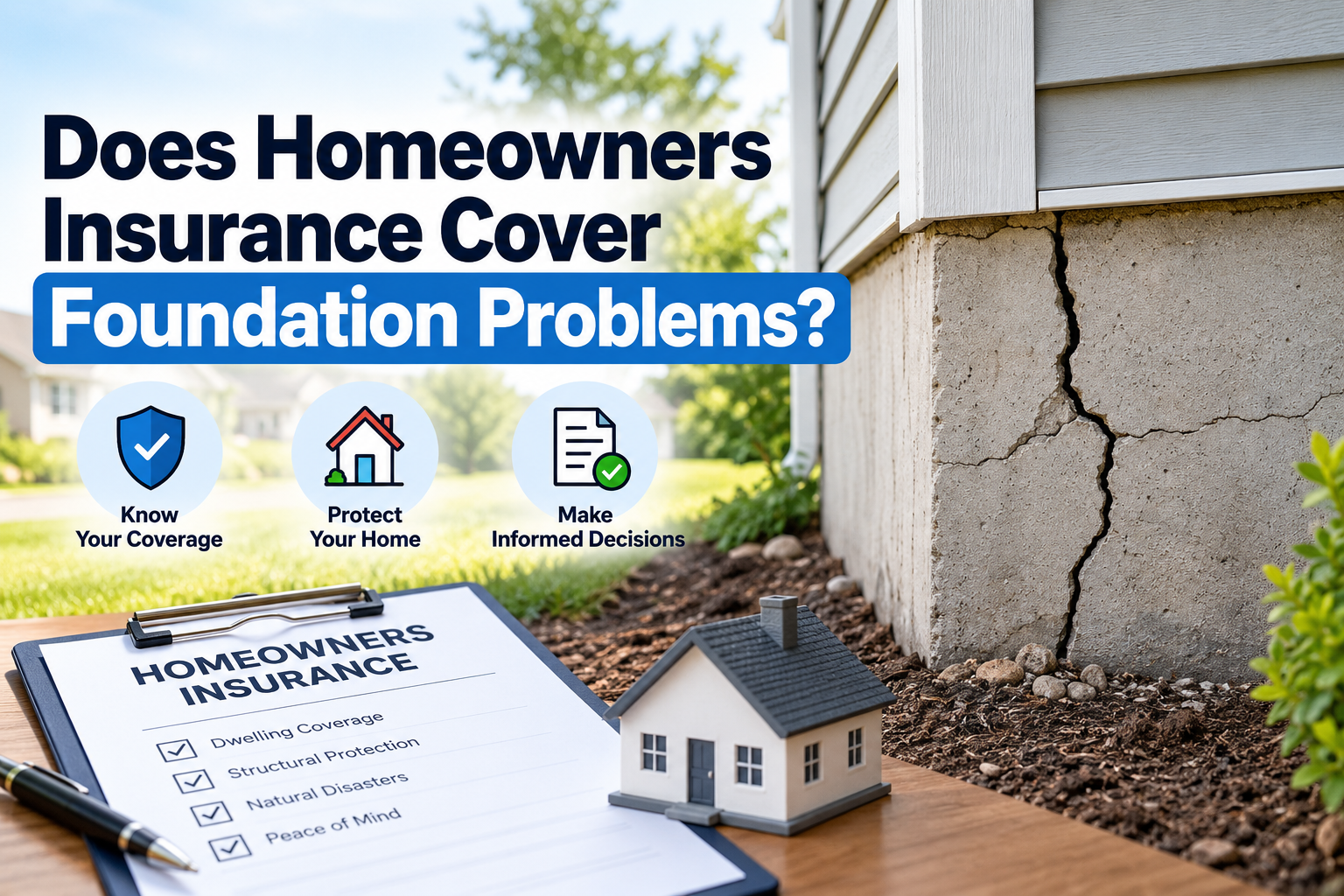
Foundation damage can be expensive to repair, especially when cracks, shifting soil, or water damage affect your home’s structure. If you are asking does homeowners insurance cover foundation problems, the answer depends mainly on what caused the damage. Some sudden, covered events may qualify for insurance protection, while normal settling, poor maintenance, and certain natural disasters are often excluded.
Does Homeowners Insurance Cover Foundation Problems?
Homeowners insurance may cover foundation problems when a covered event suddenly and accidentally causes the damage. For example, foundation damage caused by a covered fire, falling tree, or certain plumbing incidents may qualify for coverage under the dwelling portion of your policy.
However, standard homeowners insurance generally does not cover foundation problems caused by normal settling, gradual deterioration, poor construction, flooding, or earthquakes.
Your policy language, exclusions, deductible, coverage limits, and the cause of the damage all matter.
Quick Answer
| Cause of Foundation Damage | Is It Usually Covered? |
|---|---|
| Fire damage | May be covered |
| Lightning damage | May be covered |
| Falling tree | May be covered |
| Sudden covered plumbing damage | May be covered |
| Normal foundation settling | Usually not covered |
| Poor construction | Usually not covered |
| Long-term water leakage | Usually not covered |
| Flooding | Generally not covered by standard homeowners insurance |
| Earthquake damage | Generally not covered by standard homeowners insurance |
| Tree root damage | Usually not covered |
| Soil movement | Often excluded, depending on the cause and policy |
These are general guidelines. Your insurance company will review the actual cause of the damage and your policy terms before making a coverage decision.
1. When Does Homeowners Insurance Cover Foundation Problems?
Homeowners insurance may cover foundation damage when a covered peril causes the problem.
A covered peril means an event that your insurance policy protects against. The exact list depends on your policy and state.
Potential examples include:
- Fire
- Lightning
- Certain windstorms
- Falling objects
- Vehicle impact
- Explosion
- Sudden and accidental water damage
- Other events specifically listed in your policy
Foundation damage generally falls under dwelling coverage, often called Coverage A. This part of homeowners insurance protects the physical structure of your home, including eligible damage to the foundation.
Example
A large tree falls on your house during a severe storm. The impact damages part of the structure and causes foundation damage.
If the storm and resulting damage are covered by your policy, your insurer may pay for eligible repairs, subject to your deductible, limits, and exclusions.
However, the insurer may investigate whether the foundation damage was directly caused by the covered event or whether it existed before the incident.
2. Does Homeowners Insurance Cover Foundation Cracks?
Foundation cracks are not automatically covered by homeowners insurance.
Coverage depends on what caused the cracks.
Some cracks develop because of:
- Normal settling
- Soil movement
- Poor drainage
- Water pressure
- Tree roots
- Poor construction
- Temperature changes
- Structural problems
These causes are often excluded or treated as maintenance-related issues.
However, if a covered event directly causes sudden structural damage, the claim may be treated differently.
Small Cracks vs. Serious Cracks
Small cracks do not always indicate a major structural problem. However, certain warning signs deserve professional attention:
- Cracks that become wider
- Stair-step cracks in brickwork
- Uneven floors
- Doors or windows that suddenly stick
- Gaps around windows or doors
- Water entering through foundation walls
- Walls that appear to bow or shift
An insurance company does not determine coverage solely by looking at the size of a crack. The cause and policy wording are important.
Tip: If you notice new or worsening cracks, document them and consider getting an inspection from a qualified foundation or structural professional.
3. Does Homeowners Insurance Cover Foundation Problems Caused by Water?
Water-related foundation damage can be complicated because the coverage often depends on where the water came from and how quickly the damage occurred.
Sudden Plumbing Damage
A pipe suddenly bursts and releases water near your foundation. If the incident is covered, some resulting damage may qualify for insurance protection.
Long-Term Leakage
A pipe has been leaking for months, gradually weakening the foundation. The insurer may deny the claim because gradual damage and neglected maintenance are commonly excluded.
Floodwater
Water enters your basement after flooding. Standard homeowners insurance generally does not cover flood damage. Separate flood insurance may provide protection for eligible flood-related losses, subject to its own terms and exclusions.
Groundwater Seepage
Water gradually enters through foundation cracks or basement walls. This type of seepage is often excluded under standard homeowners insurance.
Important Difference
Insurance companies usually examine the source of the water, the timing of the damage, and whether the event is covered. Simply having water damage does not guarantee that your foundation repair will be paid for.
4. Does Homeowners Insurance Cover Foundation Problems Caused by Soil Movement?
Foundation damage caused by soil movement is often not covered under standard homeowners insurance.
Soil can expand, shrink, or shift because of:
- Drought
- Heavy rainfall
- Changes in moisture
- Poor soil conditions
- Drainage problems
- Natural ground movement
As soil changes, it can place pressure on the foundation and cause cracks or movement.
Many policies exclude damage caused by earth movement, although the exact exclusion and its application vary.
Example
A homeowner notices that the foundation has shifted after several months of drought. A professional determines that the soil beneath the home has contracted.
The insurer may deny the claim if the policy excludes the relevant earth movement or settling damage.
Do not assume that every foundation problem caused by ground movement is treated the same way. Review the specific policy language and any applicable state rules.
5. Does Homeowners Insurance Cover Foundation Problems Caused by Flooding?
Standard homeowners insurance generally does not cover flooding.
Flood-related foundation damage may include:
- Foundation shifting
- Basement water damage
- Soil erosion
- Structural damage caused by floodwater
- Damage to certain building components
A separate flood insurance policy may provide coverage for eligible flood damage, but it does not necessarily cover every type of foundation problem.
Flood insurance has its own definitions, exclusions, waiting periods, and coverage limits.
What Should You Do?
If you live in an area exposed to flooding, consider:
- Checking your flood risk.
- Reviewing whether your mortgage lender requires flood insurance.
- Asking an insurance professional about available policies.
- Understanding what the flood policy actually covers.
- Reviewing exclusions before purchasing coverage.
Buying flood insurance after a flood begins will generally not protect you against damage that has already occurred.
6. Does Homeowners Insurance Cover Foundation Problems Caused by Earthquakes?
Standard homeowners insurance generally excludes earthquake damage.
An earthquake can cause:
- Foundation cracks
- Structural movement
- Uneven floors
- Wall separation
- Shifting or sinking sections of the home
Some homeowners may purchase separate earthquake insurance or an earthquake endorsement, depending on availability and location.
Earthquake policies may have special deductibles, coverage limits, and exclusions. Foundation coverage depends on the policy and the type of damage.
Example
An earthquake causes a home’s foundation to shift. The homeowner has standard homeowners insurance but no earthquake coverage.
The standard policy may exclude the damage because earthquakes are commonly excluded perils.
Important: Review earthquake coverage before an event occurs. Coverage generally cannot be added retroactively to pay for existing damage.
7. Does Homeowners Insurance Cover Foundation Problems Caused by Poor Construction?
Foundation problems caused by faulty construction or defective materials are generally not covered by standard homeowners insurance.
Examples may include:
- Incorrect foundation design
- Poor soil preparation
- Improper construction techniques
- Defective building materials
- Incorrect drainage installation
- Construction-related structural defects
Homeowners insurance is designed to protect against covered risks, not to act as a warranty for construction quality.
Depending on the circumstances, other options may include:
- Builder warranties
- Contractor liability
- Construction defect claims
- Legal remedies
- Manufacturer warranties
The appropriate option depends on the facts, contracts, and applicable state law.
Example
A homeowner discovers that the foundation was improperly installed during construction. An inspection identifies construction defects as the primary cause.
The homeowners insurer may exclude the damage because it resulted from faulty construction rather than a covered event.
8. How Much Does Foundation Repair Cost?
Foundation repair costs vary significantly based on the type of damage, location, repair method, and extent of the problem.
Possible expenses include:
- Professional inspection
- Structural engineering assessment
- Crack repair
- Waterproofing
- Drainage improvements
- Foundation stabilization
- Pier installation
- Soil-related work
- Partial or extensive structural repairs
There is no single price that applies to every home.
Before estimating your insurance claim, obtain a detailed written assessment from a qualified professional. The report should explain the likely cause of the problem and the recommended repairs.
Does Insurance Pay the Full Repair Cost?
Not necessarily.
Even if a claim is covered, the amount paid may depend on:
- Your coverage limit
- Your deductible
- The cause of damage
- Policy exclusions
- Repair estimates
- Whether the policy pays replacement cost or actual cash value
- Whether additional coverage conditions apply
A covered claim does not automatically mean that every related expense will be reimbursed.
9. What Should You Do If You Notice Foundation Damage?
Taking action early may help you understand the problem and prevent additional damage.
Step 1: Document the Damage
Take photographs and videos of:
- Foundation cracks
- Uneven floors
- Water intrusion
- Wall movement
- Damaged interior areas
- The outside foundation
Record when you first noticed the problem and whether it appears to be getting worse.
Step 2: Identify the Possible Cause
Think about whether the problem followed:
- A severe storm
- A plumbing incident
- A fallen tree
- Flooding
- An earthquake
- Long-term moisture
- Construction work
Do not assume the cause without professional evidence.
Step 3: Arrange a Professional Inspection
A qualified foundation specialist or structural engineer may help identify the cause and seriousness of the damage.
An inspection report can be useful when discussing a claim with your insurer.
Step 4: Review Your Policy
Look for:
- Dwelling coverage
- Covered perils
- Earth movement exclusions
- Water damage exclusions
- Maintenance exclusions
- Deductible
- Additional endorsements
Step 5: Contact Your Insurance Company
If you believe a covered event caused the damage, report it promptly and ask how to proceed.
Follow the insurer’s instructions for inspections, emergency repairs, and documentation.
10. How to File a Foundation Damage Insurance Claim
If you believe your foundation problem resulted from a covered event, follow these steps.
1. Contact Your Insurer
Explain what happened, when you noticed the damage, and what you believe caused it.
2. Collect Supporting Documents
Keep copies of:
- Photographs
- Inspection reports
- Contractor estimates
- Repair invoices
- Previous maintenance records
- Relevant communication
- Storm or incident details
3. Prevent Further Damage
Take reasonable steps to protect your property from additional damage when it is safe to do so.
Do not make unsafe structural repairs yourself.
4. Cooperate With the Inspection
The insurer may send an adjuster or request additional information to investigate the claim.
5. Review the Decision
If the insurer denies or limits the claim, ask for a written explanation identifying the relevant policy provisions.
6. Consider Further Assistance
If you disagree with the decision, you may contact your state insurance department or seek advice from a qualified professional. The available complaint and appeal processes vary by state and policy.
Foundation Problems: Covered vs. Not Covered
The following examples are illustrative scenarios, not real insurance case studies.
| Situation | Possible Insurance Result |
|---|---|
| A falling tree damages the foundation | May be covered if the event is covered |
| A sudden covered plumbing incident damages the structure | May be covered |
| Foundation settles naturally over several years | Usually not covered |
| Long-term drainage problems cause foundation damage | Usually not covered |
| Floodwater damages the foundation | Generally excluded under standard homeowners insurance |
| Earthquake causes foundation movement | Generally excluded without applicable earthquake coverage |
| Construction defect causes foundation failure | Usually excluded |
| Tree roots gradually damage the foundation | Usually not covered |
| A covered fire damages the foundation | May be covered |
The actual outcome depends on the policy, cause of damage, exclusions, and claim investigation.
How to Prevent Foundation Problems
Homeowners cannot prevent every foundation issue, but regular maintenance may help reduce certain risks.
Maintain Proper Drainage
Make sure gutters and downspouts direct water away from the foundation.
Check for Plumbing Leaks
Inspect pipes, water heaters, and appliances for signs of leakage.
Monitor Soil Moisture
Extreme changes in soil moisture can affect some types of foundations. Follow appropriate local and professional recommendations.
Inspect Foundation Walls
Look for new cracks, water intrusion, and visible changes.
Manage Tree Growth
Large roots near the foundation may create problems in some situations. Seek professional advice before removing or cutting major roots.
Repair Roof and Gutter Problems
Water flowing near the foundation can contribute to drainage issues.
Keep Records
Save inspection reports, maintenance receipts, and repair documents. These records may help you explain the condition of your home if a claim arises.
Frequently Asked Questions
Does homeowners insurance cover foundation problems caused by heavy rain?
Coverage depends on how the rain caused the damage. Certain covered storm-related damage may qualify, but flooding, groundwater seepage, and gradual soil movement are often excluded. Review your policy and identify the source of the damage.
Does homeowners insurance cover foundation cracks caused by settling?
Standard homeowners insurance generally does not cover normal settling or gradual foundation movement. If the cracks result from a sudden covered event, the insurer may assess the claim differently.
Does homeowners insurance cover foundation repair after a burst pipe?
It may cover eligible damage if the pipe burst suddenly and the event is covered by your policy. Gradual leakage, maintenance issues, and the cost of replacing the failed component may be treated differently.
Does homeowners insurance cover basement foundation problems?
It depends on the cause. Damage from a covered event may qualify, while flooding, groundwater seepage, and long-term moisture problems are often excluded under standard policies.
Does homeowners insurance cover foundation problems caused by tree roots?
Foundation damage caused by gradually growing tree roots is usually not covered. However, the exact cause and policy language should be reviewed before a claim decision is made.
Can I claim foundation damage that existed before buying the home?
Existing damage is not automatically covered by a new homeowners insurance policy. Insurers may exclude pre-existing problems, and coverage depends on when the damage occurred and the applicable policy terms.
Will homeowners insurance pay for foundation inspections?
Inspection coverage varies by policy and claim circumstances. Ask your insurer whether an inspection is covered before paying for services, unless an urgent safety issue requires immediate action.
Can I buy insurance after discovering foundation problems?
You may be able to purchase homeowners insurance, but insurers may exclude existing damage, require inspections, or decline coverage depending on the property’s condition. A new policy generally will not cover damage that occurred before coverage began.
Does homeowners insurance cover a collapsed foundation?
A foundation collapse may be covered if it results from a covered cause and meets the policy’s coverage conditions. Collapse provisions and exclusions can be complex, so review the exact policy wording.
Final Thoughts: Does Homeowners Insurance Cover Foundation Problems?
So, does homeowners insurance cover foundation problems? It can, but coverage usually depends on the cause of the damage. Foundation problems caused by sudden covered events may qualify, while normal settling, poor maintenance, flooding, earthquakes, and construction defects are commonly excluded.
If you notice foundation damage, document the problem, arrange a professional inspection, and contact your insurance company. Do not assume that every crack or structural issue will be covered.
The Moral of the story is: Understanding the cause of foundation damage and reviewing your insurance policy early can help you avoid unexpected repair costs.
Why Maintain Market Is Different
Maintain Market explains homeowners insurance in clear and practical language for readers in the United States.
We focus on helping homeowners understand coverage conditions, exclusions, deductibles, and claim procedures without promising claim approval. Because insurance policies differ by state and insurer, readers should verify important details with their insurance company or a licensed professional.
Our goal is to help readers make better-informed decisions about protecting their homes and finances.
References
- Allstate — Does Homeowners Insurance Cover Foundation Issues?
- Progressive — Does Home Insurance Cover Foundation Repairs?
- Progressive — What Is Dwelling Coverage?
- Allstate — Does Homeowners Insurance Cover Slab Leaks?
- Progressive — Does Homeowners Insurance Cover Plumbing?
Editorial Review
This article is for general educational purposes and is not personalized insurance or legal advice. Foundation coverage varies according to policy wording, exclusions, endorsements, state regulations, and the cause of the damage. Consult your insurer or a qualified professional for advice about your specific situation.
Recommended Reads
- Does Homeowners Insurance Cover Plumbing? What’s Covered and What’s Not – Check Now
- 10 Important Facts: Does Homeowners Insurance Cover Mold?
- How Much Will You Pay? Homeowners Insurance Deductible
- Does Homeowners Insurance Cover Roof Replacement? What Homeowners Need to Know
- Does Homeowners Insurance Cover Water Damage? What Is Covered and What Isn’t