
A credit card vs debit card comparison can help you decide which payment method makes more sense for everyday purchases, online shopping, travel, and managing your money. Although both cards can look similar and work at many of the same stores, they handle your money differently. A debit card generally takes money from your checking account, while a credit card lets you borrow money up to an approved credit limit and repay it later.
For most U.S. consumers, the better choice depends on the purchase, your spending habits, your ability to pay the bill, and the protections offered by your bank or card issuer. You do not necessarily need to choose only one: using both strategically can help you manage spending while taking advantage of credit card benefits.
Credit Card vs Debit Card: Quick Answer
A debit card is generally better for spending money you already have and avoiding credit card debt. A credit card can be more useful for building credit history, earning rewards, and keeping purchases separate from the money in your checking account.
Neither card is automatically the best choice for every transaction. Credit cards can become expensive if you carry a balance and pay interest. Debit cards can create cash-flow problems if fraudulent transactions or unexpected withdrawals reduce your available bank balance.
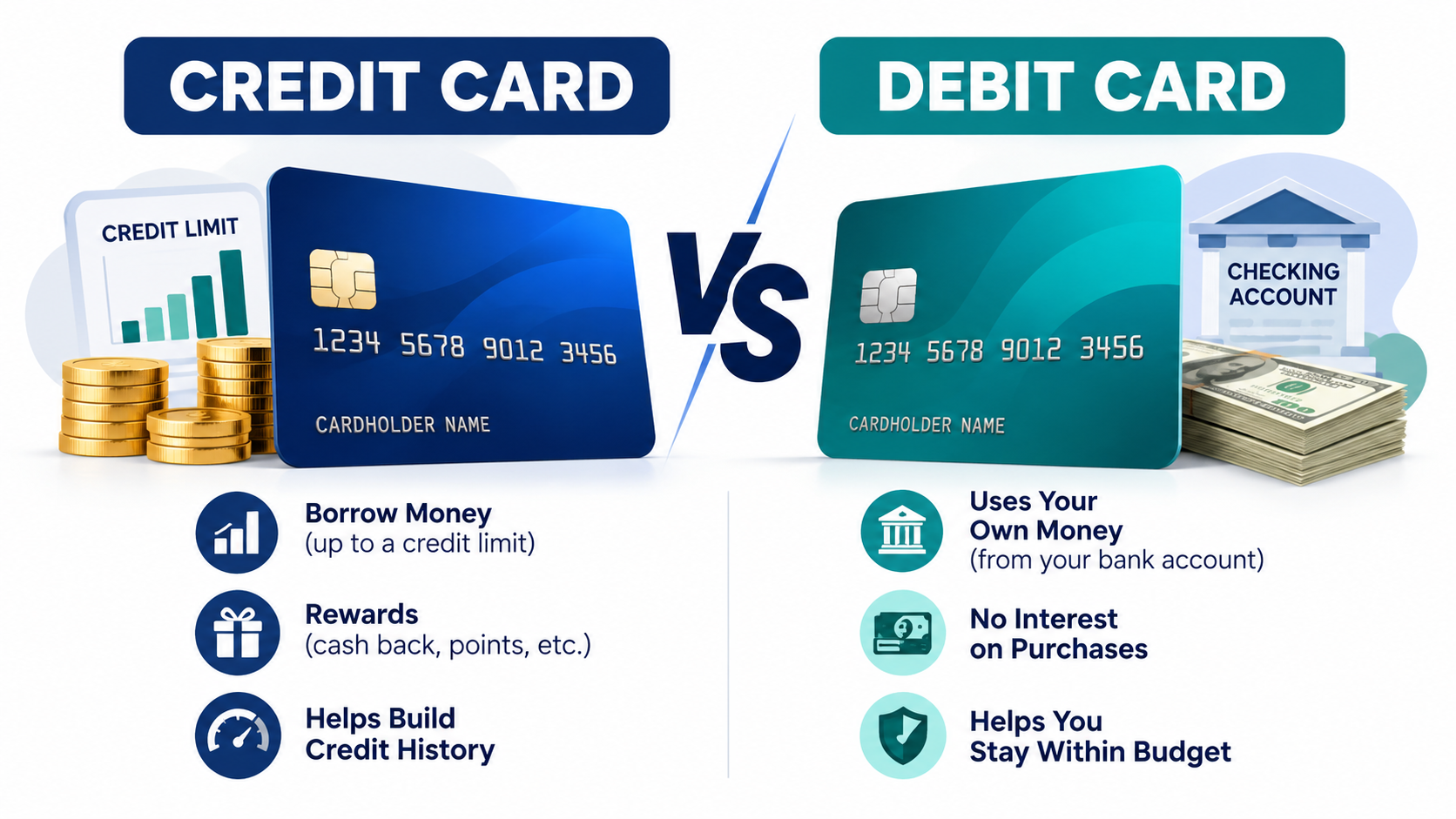
What Is the Difference Between a Credit Card and a Debit Card?
A credit card allows you to borrow money from a card issuer for eligible purchases. You receive a statement and must make at least the required minimum payment by the due date. If you carry a balance, interest may apply according to your card agreement.
A debit card generally lets you spend money held in your checking account. The transaction reduces your available bank balance, although the final timing can vary because of pending authorizations, merchant processing, and bank policies.
The Consumer Financial Protection Bureau explains the distinction in its guide to credit, debit, and prepaid cards.
Credit Card vs Debit Card: Key Differences at a Glance
| Feature | Credit card | Debit card |
|---|---|---|
| Source of money | Borrowed from the card issuer | Generally drawn from your bank account |
| Spending limit | Approved credit limit and issuer rules | Available account funds, subject to account terms |
| Repayment | Monthly bill; minimum payment required | No regular credit card bill for ordinary purchases |
| Interest | May apply when you carry a balance or under other card terms | Usually no purchase interest, but overdraft or other fees may apply |
| Credit history | Responsible use can help build credit history | Ordinary debit purchases generally do not build credit |
| Rewards | May offer cash back, points, or miles | Some accounts offer rewards, but benefits vary |
| Fraud impact | Unauthorized charges may affect your credit account while disputed | Unauthorized withdrawals can reduce available bank funds while investigated |
| Overdraft risk | Spending is constrained by the credit limit and issuer rules | Overdrafts may occur if your account and bank policies permit them |
| Best use | Credit building, rewards, and suitable purchases you can repay | Everyday spending from available money and budget control |
Important: Fees, rewards, dispute processes, and protections vary by issuer, account, and applicable law.
1. How Credit Cards and Debit Cards Affect Your Money
The biggest difference is where the money comes from.
Credit cards: Borrow now and repay later
When you buy something with a credit card, the issuer pays the merchant under the card arrangement and adds the transaction to your account. You repay the issuer according to your billing terms.
For example, suppose you buy a $200 appliance with a credit card. Your card balance generally increases by $200. If you pay the statement balance in full by the due date and your account qualifies for a grace period, you can generally avoid interest on ordinary purchases.
If you make only the minimum payment, the remaining balance can accrue interest. The exact cost depends on your APR, balance, and payment timing.
Debit cards: Spend money from your account
If you buy the same $200 appliance with a debit card, the purchase generally reduces the available funds in your linked bank account.
This makes debit cards useful when you want to spend money you already have instead of borrowing. However, keep enough money available for pending purchases and scheduled bills.
Practical tip: Check your available balance before large debit card purchases, especially if you have automatic payments scheduled.
2. Which Card Is Better for Fraud Protection?
Fraud protection is one of the most important differences to understand.
Credit and debit cards both have protections under U.S. law, but the rules and financial consequences can differ. The timing of your report matters, and your card issuer may offer additional protections beyond the legal minimum.
Credit card protection
Under federal law, your liability for unauthorized credit card use is generally limited to no more than $50. If only your account number is stolen and your physical card is not lost, federal law generally provides stronger protection against unauthorized charges.
Debit card protection
Debit card protections depend partly on when you report the loss or unauthorized activity. Under federal rules, delayed reporting can increase your potential liability. An unauthorized transaction can also reduce the money available in your checking account while your bank investigates.
For example, if a fraudulent debit transaction removes $400 from your account, that money may be unavailable until the dispute is resolved. A fraudulent credit card charge generally appears on your credit account instead, although you should still report it immediately and follow the issuer’s dispute process.
The Federal Trade Commission explains the applicable reporting timelines and liability limits in its guide to lost or stolen credit, ATM, and debit cards.
What should you do if you notice fraud?
- Lock or freeze the card using your bank’s app if that feature is available.
- Contact the issuer or bank immediately.
- Report unfamiliar transactions and ask how to submit the dispute in writing.
- Save confirmation numbers, messages, and copies of correspondence.
- Monitor your account for additional suspicious activity.
Do not wait for your next monthly statement if you notice an unauthorized transaction.
3. Which Card Helps Build Your Credit Score?
A credit card can help establish credit history when the issuer reports your account activity to the credit reporting companies and you manage the account responsibly.
Paying on time and keeping your reported balances low relative to your credit limits can help support your credit profile. Missing payments, carrying high balances, or applying for multiple accounts in a short period can have negative consequences.
Ordinary debit card purchases generally do not build credit history because you are spending money from your bank account rather than repaying borrowed money.
If you are new to credit, a secured credit card may be an option to consider. You typically provide a refundable security deposit that helps establish the account’s credit limit. Check the issuer’s fees, interest rate, and credit-reporting practices before applying.
The CFPB provides further guidance on how to rebuild your credit.
Remember: You do not need to carry a credit card balance or pay interest to build credit. Paying your statement balance in full each month can help you avoid interest on eligible purchases while maintaining responsible account habits.
4. Which Card Is Better for Rewards and Cash Back?
Credit cards often provide rewards such as cash back, travel points, or airline miles. Debit card rewards are available on some accounts, but they depend on the bank and account terms.
A rewards card is worthwhile only if the value you receive exceeds any costs and does not encourage unnecessary spending.
Illustrative example
Imagine you spend $500 per month on eligible purchases with a card offering 2% cash back.
- Monthly eligible spending: $500
- Cash-back rate: 2%
- Potential cash back: $10 per month, or $120 over 12 months
This example assumes the purchases qualify for the stated rate, you remain eligible for the rewards, and you do not account for annual fees or other costs.
If you pay interest because you carry a balance, those charges can easily outweigh the value of your rewards. Never spend more just to earn points or cash back.
Before choosing a rewards card, check the annual fee, reward exclusions, redemption rules, introductory offers, and APR.
5. Which Card Is Better for Online Shopping?
A credit card can be a practical choice for online shopping because it separates the purchase from the funds in your checking account and may offer additional purchase or dispute benefits.
However, a debit card can also be used safely for online purchases when you use trusted merchants, secure websites, and good account-monitoring practices.
For either card:
- Shop on reputable websites and check the website address carefully.
- Avoid entering card information through suspicious links in emails or text messages.
- Use transaction alerts when available.
- Review transactions regularly.
- Report unauthorized charges promptly.
Do not assume every credit card automatically provides purchase protection, extended warranties, or other benefits. Read the specific card’s terms to understand which protections apply.
6. Credit Card vs Debit Card for Travel
For travel, a credit card may be convenient for hotel reservations, rental car bookings, and other purchases that involve temporary authorization holds. The merchant may place a hold on available credit until the final amount is settled.
A debit card may also be accepted, but a hold can temporarily reduce the money available in your bank account. Rental companies, hotels, and other merchants may have their own requirements.
Before traveling, check:
- Whether the hotel or rental company accepts your card type.
- The size of any deposit or authorization hold.
- Foreign transaction fees, if applicable.
- ATM fees and cash withdrawal terms.
- The process for reporting a lost or stolen card.
Keep a backup payment method separate from your main card when practical. If you use a credit card abroad, check its foreign transaction fee before you leave.
7. What Are the Pros and Cons of Credit Cards and Debit Cards?
Credit card advantages
- Can help build credit history with responsible use.
- May offer cash back, points, or travel rewards.
- Can separate purchases from your checking account.
- May offer additional benefits, depending on the card.
- Can be useful for eligible purchases when you can repay the balance.
Credit card disadvantages
- Interest can make purchases much more expensive if you carry a balance.
- Late payments can harm your credit history.
- Annual fees and other charges may apply.
- A high credit limit can encourage overspending.
- Rewards can tempt you to buy things you do not need.
Debit card advantages
- Uses money you generally already have.
- Can make budgeting easier by limiting spending to available funds.
- Does not ordinarily require monthly repayment.
- Usually does not charge purchase interest.
- Works for many everyday purchases and ATM transactions.
Debit card disadvantages
- Does not generally build credit history through ordinary purchases.
- Fraudulent withdrawals can affect the money available in your account.
- Overdraft fees may apply under your bank’s account terms.
- Some merchants may place holds that temporarily reduce available funds.
- Rewards and purchase benefits may be more limited, depending on the account.
8. When Should You Use a Credit Card vs a Debit Card?
The best choice depends on your financial habits and the type of transaction.
| Situation | Possible choice | Why |
|---|---|---|
| Everyday groceries | Debit or credit | Use debit for budget control or credit if you can pay the bill in full |
| Online purchases | Credit may be preferable | Can separate purchases from checking funds; verify the issuer’s protections |
| Building credit history | Credit | Responsible, reported credit use can help establish a record |
| Avoiding debt | Debit | Uses available funds rather than a revolving credit line |
| Hotel reservations | Credit may be convenient | Holds may affect available credit instead of checking funds |
| Earning cash back | Credit, if suitable | Rewards may be available if costs and spending habits make the card worthwhile |
| ATM cash withdrawals | Debit | Designed to access funds in your linked account |
| Managing a tight budget | Debit or a carefully managed credit card | Choose the method that helps you stay within a realistic budget |
These are general guidelines, not universal rules. Check merchant requirements and account terms before relying on a particular card.
Common Mistakes to Avoid
Carrying a balance just to build credit: You do not need to pay credit card interest to establish credit history. Paying on time and managing balances responsibly are more useful habits.
Assuming debit cards have no fraud protection: Debit cards have legal protections, but reporting deadlines matter. Contact your bank immediately if you see suspicious activity.
Choosing a card only for its rewards: Calculate the value of the rewards after considering annual fees, interest, and other charges.
Ignoring overdraft policies: A debit transaction can sometimes overdraw an account if the account and bank rules permit it. Understand your bank’s overdraft arrangements.
Using every available credit limit: A high limit is not an invitation to spend more. Borrow only what you can reasonably repay.
Why Maintain Market Is Different
At Maintain Market, our aim is to help U.S. consumers understand financial products before choosing them. That means looking beyond reward offers and headline benefits to explain repayment obligations, fees, credit-building implications, and practical risks.
The goal is to help you make a decision that fits your finances—not to suggest that one payment method is always best for everyone.
Frequently Asked Questions
1. Is a credit card better than a debit card?
A credit card can be better for building credit, earning rewards, and separating purchases from checking account funds. A debit card may be better for people who want to spend available money without taking on revolving credit card debt. The right choice depends on your habits and the card’s terms.
2. Is it safer to use a credit card or debit card?
Credit cards generally offer more favorable federal liability rules for unauthorized use, but both types have protections. Debit card fraud can affect the money available in your bank account, and delayed reporting can increase potential liability. Report suspicious activity immediately.
3. Does using a debit card improve your credit score?
Ordinary debit card purchases generally do not improve your credit score because they are not repayments of borrowed money reported as credit account activity. A credit card may help build credit history when the issuer reports it and you manage the account responsibly.
4. Should I use a credit card for everyday purchases?
You can use a credit card for everyday purchases if you have a budget and can pay the statement balance in full. This may let you earn rewards and build credit history. If credit cards make it difficult to control spending, a debit card may be more appropriate.
5. Can I use a debit card online?
Yes. Many U.S. merchants accept debit cards online. Use reputable websites, protect your card details, monitor transactions, and report unauthorized activity to your bank as soon as possible.
6. Do credit cards charge interest every month?
Not necessarily. Many credit cards offer a grace period for eligible purchases when you meet the account terms, including paying the statement balance in full by the due date. If you carry a balance or use a transaction type with different terms, interest may apply. Check your card agreement.
7. Can a debit card have rewards?
Yes. Some debit accounts offer cash back or other rewards, but availability and terms vary. Compare account fees, eligibility rules, and rewards before opening an account.
8. Should I own both a credit card and a debit card?
Many consumers find it useful to have both. A debit card can support everyday budgeting, while a credit card can be useful for credit building and eligible purchases. Having both is only helpful if you can manage the accounts safely and avoid unnecessary fees or debt.
Final Verdict: Credit Card vs Debit Card
The main difference between a credit card and a debit card is whether you borrow money or spend money already held in your bank account.
Choose a debit card when your priority is using available funds and keeping spending simple. Consider a credit card when you want to build credit history, earn rewards, or use benefits that suit your needs—and when you can manage repayment responsibly.
For many people, using both is reasonable. The important thing is to understand the terms, monitor transactions, report fraud quickly, and avoid spending beyond your means.
References
- Consumer Financial Protection Bureau — How are prepaid cards, debit cards, and credit cards different?
- Federal Trade Commission — Lost or Stolen Credit, ATM, and Debit Cards
- Consumer Financial Protection Bureau — How to Rebuild Your Credit
Editorial Review
This article is intended for educational purposes and focuses on general U.S. consumer-finance considerations. Card benefits, APRs, fees, dispute processes, and account terms vary by issuer and product. Readers should review their card agreements and contact their bank or card issuer for account-specific information.
Recommended Reads
- Credit Score Needed for a Credit Card — Understand how credit history can affect card approval.
- Why Did My Credit Score Drop? — Learn about factors that may affect your credit score.