
Choosing the right credit card starts with understanding the credit score needed for a credit card. While some cards require good or excellent credit, others are available to people with fair credit or no credit history. Knowing your credit score can help you find suitable options and improve your chances of approval.
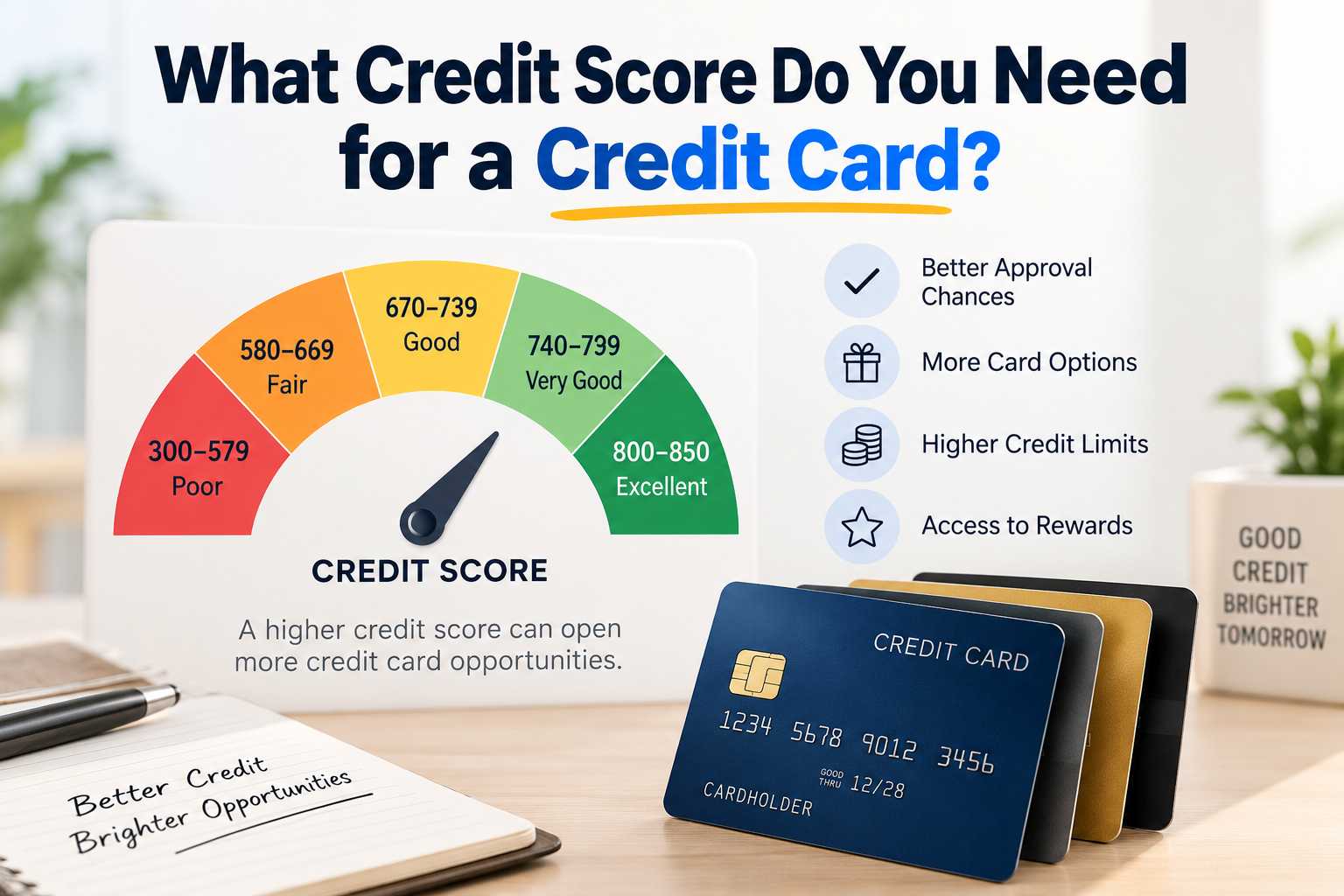
What Credit Score Do You Need for a Credit Card?
The credit score needed for a credit card depends on the card issuer, the type of card, your income, and your overall credit history. Many credit cards are available to people with fair or good credit, while secured cards may be an option for people with poor credit or no credit history. There is no single credit score that guarantees approval for every credit card.
If your credit score is around 670 or higher, you may qualify for more credit card options. However, some cards accept applicants with lower scores, and certain premium cards may require stronger credit.
The important point is that your credit score is only one part of your application.
Quick Answer
Here is a general guide to credit score ranges and possible credit card options:
| Credit Score Range | Credit Category | Possible Credit Card Options |
|---|---|---|
| 300–579 | Poor | Secured cards and some cards for poor credit |
| 580–669 | Fair | Starter cards, secured cards, and selected unsecured cards |
| 670–739 | Good | Many mainstream credit cards |
| 740–799 | Very good | More rewards and premium card options |
| 800–850 | Exceptional | Broad access to many credit card products |
These ranges are general guidelines, not approval requirements. Each card issuer uses its own approval rules.
1. Is a 600 Credit Score Enough for a Credit Card?
Yes, a 600 credit score may be enough for certain credit cards, but your options may be limited.
A score around 600 is generally considered to be in the fair or poor credit range, depending on the scoring model. You may have a better chance with:
- Secured credit cards
- Credit cards designed for building credit
- Cards for applicants with limited credit history
- Some unsecured cards for fair or poor credit
A secured credit card usually requires a refundable security deposit. The deposit may influence your credit limit, depending on the issuer’s terms.
Before applying, check whether the issuer offers prequalification. Prequalification may help you review possible offers without immediately submitting a full application. However, prequalification does not guarantee approval.
2. Can You Get a Credit Card With a 650 Credit Score?
A 650 credit score may qualify you for several credit card options, although approval is not guaranteed.
At this score level, lenders may look closely at your payment history, current debt, credit utilization, and recent applications.
You could consider:
- A secured credit card
- A starter unsecured credit card
- A credit card designed for fair credit
- A card with limited rewards and simpler approval requirements
Do not focus only on the advertised credit score. A person with a 650 score and low debt may receive a different decision from someone with the same score but several recent missed payments.
Example
Imagine two applicants both have a credit score of 650:
- Applicant A: Pays bills on time and has low credit card balances.
- Applicant B: Has recently missed payments and uses most of their available credit.
Applicant A may present a stronger overall application, even though both applicants have the same score.
3. What Credit Score Is Needed for a Credit Card With Rewards?
Many rewards credit cards are designed for applicants with good credit, although some rewards cards are available to people with fair credit.
A credit score around 670 or higher may improve your access to mainstream rewards cards, but issuers also consider other information.
They may review:
- Income
- Existing debt
- Payment history
- Credit utilization
- Length of credit history
- Recent credit applications
- Relationship with the card issuer
Rewards cards can be attractive, but they are not always the right choice for someone rebuilding credit. A card with a high annual fee or expensive interest charges may cost more than the rewards you earn.
Tip: Choose a card based on your spending habits and ability to pay the balance on time, not only on its rewards program.
4. Can You Get a Credit Card With Bad Credit?
Yes, people with bad credit may still have credit card options.
However, cards available to applicants with poor credit may include:
- Higher fees
- Lower credit limits
- Fewer rewards
- Higher interest rates
- Security deposit requirements
A secured credit card may be a useful starting point because responsible use can help build or rebuild credit when the issuer reports account activity to the credit bureaus.
Before choosing a card, review the complete fee schedule. Look for annual fees, application fees, monthly maintenance fees, late payment fees, and other charges.
Avoid applying for multiple cards at once. Several applications may create hard inquiries and can make managing new accounts more difficult.
5. What Credit Score Is Needed for a Credit Card With No Annual Fee?
There is no universal minimum score for a no-annual-fee credit card.
Some no-annual-fee cards are available to people with fair credit, while others are intended for applicants with good or excellent credit.
The phrase “no annual fee” does not mean the card has no other costs. You should still review:
- Interest rate
- Late payment fees
- Foreign transaction fees
- Balance transfer fees
- Cash advance fees
- Penalty terms, if applicable
If you regularly pay your full statement balance, the interest rate may be less important than it would be for someone who carries debt. However, it is still useful to understand the card’s terms before applying.
6. Does Income Matter More Than Your Credit Score?
Your credit score and income serve different purposes.
Your credit score is based on information in your credit report and helps lenders estimate how you have handled credit. Income helps the card issuer evaluate whether you may be able to repay the debt.
A strong credit score does not automatically guarantee approval if your income is insufficient or your existing debt is high.
Likewise, a person with a lower credit score may still qualify for a card if the issuer’s requirements allow it.
Card issuers may consider:
- Your reported income
- Monthly housing expenses
- Existing debt obligations
- Employment or income stability
- Credit history
- Recent applications
Do not report income inaccurately on a credit card application. Provide information that is truthful and permitted under the issuer’s application instructions.
7. Does Applying for a Credit Card Lower Your Credit Score?
A credit card application may cause a hard inquiry, which can affect your credit score.
The effect depends on your credit profile and the scoring model. A single hard inquiry is usually not the only factor affecting your credit score, but applying for several accounts within a short period may create additional concerns.
Before applying:
- Check your credit score.
- Review the card’s eligibility requirements.
- Use prequalification when available.
- Apply only for cards that fit your credit profile.
- Avoid submitting multiple unnecessary applications.
Checking your own credit report or score generally does not have the same effect as a hard inquiry from a credit application.
8. How Can You Improve Your Credit Score Before Applying?
If your credit score is lower than you want, improving your credit habits may increase your future options.
Pay Every Bill on Time
Payment history is an important part of many credit scoring models. Set up reminders or automatic payments to reduce the chance of missing a due date.
Lower Your Credit Utilization
Credit utilization refers to how much of your available revolving credit you are using.
For example:
- Total credit limit: $5,000
- Current credit card balance: $2,000
- Credit utilization: 40%
Lower utilization may help your credit profile, although there is no single percentage that guarantees a particular score.
Avoid Unnecessary Applications
Applying for several new accounts in a short period may lead to multiple hard inquiries and can increase your debt obligations.
Review Your Credit Reports
Check your credit reports for incorrect account information, inaccurate payment history, or accounts that do not belong to you. If you find an error, follow the dispute process provided by the relevant credit reporting company.
Keep Older Accounts Open When Appropriate
The age of your credit accounts may affect some credit scoring models. However, keeping an account open is not always the right choice if it has expensive fees or creates financial problems.
9. Can You Get a Credit Card With No Credit History?
Yes, some credit cards are designed for people with no credit history.
You may consider:
- Secured credit cards
- Student credit cards, if eligible
- Credit-builder products
- Cards designed for applicants with limited credit history
Without a credit history, an issuer may have less information about how you manage borrowed money. This can make approval more difficult for some products.
A secured card may require a deposit and may have a lower credit limit. Before opening an account, confirm whether the issuer reports your payments to the major credit bureaus.
Use the card for manageable purchases and pay on time. Do not borrow more than you can comfortably repay.
10. What Should You Do If Your Credit Card Application Is Denied?
A denied application does not mean you will never qualify for a credit card.
First, review the reason provided by the issuer. Depending on the situation, the decision may relate to:
- Low credit score
- High credit utilization
- Limited credit history
- Recent applications
- Missed payments
- High existing debt
- Income or affordability concerns
- Too many accounts with the same issuer
Under federal requirements, creditors generally provide an adverse action notice explaining the reasons for a denial or information about how to obtain those reasons.
After reviewing the decision, avoid immediately applying for several other cards. Instead, identify the problem and work on improving your application profile.
You can also consider a secured credit card or a card designed for your current credit category.
Credit Score Needed for Different Types of Credit Cards
The following table provides general guidance. These are not guaranteed minimum requirements.
| Card Type | Common Target Credit Profile | Important Considerations |
|---|---|---|
| Secured credit card | Poor, fair, or limited credit | May require a security deposit |
| Student credit card | Limited or fair credit | Eligibility may include student status |
| Starter credit card | Limited or fair credit | May have a lower credit limit |
| Cash-back card | Fair to excellent credit, depending on product | Review rewards and fees |
| Travel rewards card | Often good to excellent credit | May include annual fees and stricter approval |
| Premium credit card | Often very good or excellent credit | May require strong credit and higher income |
| Credit-building card | Poor, fair, or limited credit | Check reporting and total fees |
Always read the current terms on the issuer’s official website before submitting an application.
How to Choose the Right Credit Card for Your Credit Score
Your credit score can help you narrow down your options, but it should not be the only deciding factor.
Consider Your Main Goal
Are you trying to:
- Build credit?
- Rebuild credit?
- Earn cash back?
- Pay for everyday purchases?
- Transfer an existing balance?
- Earn travel rewards?
Your goal will help determine which card features matter most.
Review the Total Cost
A card with rewards may still be expensive if it has a high annual fee or you carry a balance at a high interest rate.
Check Prequalification Options
Some issuers allow applicants to check potential offers before completing a full application. Availability and eligibility vary, and prequalification does not guarantee approval.
Compare Credit Limits
A lower credit limit may be suitable for someone beginning to build credit. However, you should avoid spending close to the entire available limit.
Read the Fine Print
Review the annual percentage rate, fees, introductory offers, penalty terms, and eligibility requirements before applying.
Common Mistakes to Avoid When Applying for a Credit Card
Applying for Too Many Cards
Multiple applications may create several hard inquiries and make it harder to manage your accounts.
Choosing a Card Only for Rewards
Rewards are not useful if fees or interest charges outweigh their value.
Ignoring Credit Utilization
Using a large portion of your available credit may negatively affect your credit profile.
Making Only Minimum Payments
Minimum payments can keep an account current, but carrying a balance may lead to significant interest charges.
Providing Incorrect Information
Always provide accurate information about your income and other details requested on the application.
Ignoring Fees
Some cards for poor credit may charge several types of fees. Read the pricing and terms carefully before accepting an offer.
Frequently Asked Questions
What is the lowest credit score needed for a credit card?
There is no universal lowest credit score needed for a credit card. Some issuers offer secured or credit-building cards to people with poor credit, while other cards require stronger credit. Approval depends on the issuer’s rules and your complete application.
Can I get a credit card with a 500 credit score?
You may qualify for certain secured or credit-building cards with a 500 credit score. Approval is not guaranteed, and the card may require a security deposit or include fees. Compare the terms carefully before applying.
Is a 700 credit score good enough for a credit card?
A 700 credit score may qualify you for many mainstream credit cards, but approval depends on additional factors such as income, debt, payment history, and the card issuer’s requirements.
What credit score is needed for a $5,000 credit limit?
There is no fixed credit score that guarantees a $5,000 credit limit. The issuer may consider your income, existing debt, credit history, and ability to repay. Your credit limit can differ even when two applicants have similar credit scores.
Does checking my credit score hurt my credit?
Checking your own credit score generally does not hurt your credit score. However, submitting a credit card application may result in a hard inquiry, which can affect your credit profile.
Should I apply for a credit card before improving my credit score?
It depends on your current credit profile and the card you want. If you have limited options, improving payment history and reducing credit utilization may help. You can also consider cards designed for your current credit category.
How long does it take to improve a credit score?
The timeline varies. Some changes may appear after creditors update your account information, while rebuilding credit after missed payments or other serious problems may take longer. Consistent payment habits and responsible credit use are important.
Is a secured credit card a good option for rebuilding credit?
A secured credit card may be useful for rebuilding credit if the issuer reports account activity to the credit bureaus and the fees are reasonable. Always confirm the card’s terms and make payments on time.
Final Thoughts: Choosing a Credit Card Based on Your Credit Profile
The credit score needed for a credit card depends on the product and the card issuer. A lower score may limit your choices, but it does not necessarily mean you have no options. Secured cards, starter cards, and credit-building products may help some applicants begin or rebuild their credit journey.
Before applying, check your credit score, review the issuer’s requirements, compare fees, and choose a card that matches your financial situation. Responsible credit use is more important than simply getting approved.
The Moral of the story is: A credit card should support your financial goals, not create debt that you cannot comfortably repay.
Why Maintain Market Is Different
Maintain Market focuses on clear, practical, and easy-to-understand financial information for readers in the United States.
Instead of promising approval or presenting one credit score as a guaranteed requirement, we explain the factors that may influence a lender’s decision. Our goal is to help readers compare their options, understand potential costs, and make more informed financial decisions.
Information about credit cards and credit scores can change, so readers should verify current terms directly with the card issuer before applying.
References
- Consumer Financial Protection Bureau: What Is a Credit Score?
- Consumer Financial Protection Bureau: Borrower Risk Profiles
- CFPB Consumer Credit Card Market Report
Editorial Review
This article is intended for general educational purposes and does not provide personalized financial advice. Credit card eligibility, fees, interest rates, and approval standards vary by issuer. Verify current information with the card issuer and official U.S. sources before making a financial decision.